
Been thinking about tattoos that actually mean something lately — the kind that don’t just look cool but carry the nights you survived and the mornings you chose to keep going. Most people assume warrior sleeves are only for bravado and big swords, but the real point is quieter: these images are personal bookmarks for hard seasons, little monuments you wear to remember how you kept moving.
Spartans and Gladiators
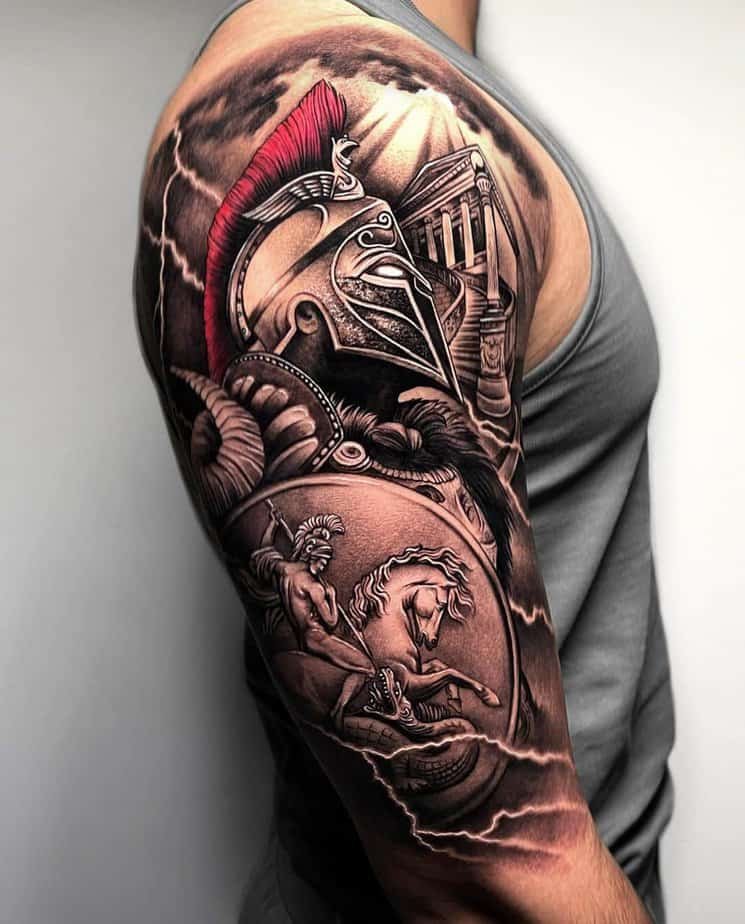
Credit: @camachotattoo
There’s this instant, heavy energy that Spartan and gladiator pieces bring — they read as endurance at a glance. Imagine the helmeted head sitting on the shoulder like a badge of honor, while shields, horses, or battle scenes cascade down the arm; that placement makes the image feel like it’s guarding you. Some artists lean into fine-line blackwork so the piece reads almost like an old etching, while others throw a touch of red into the shading to break up empty space and add that lived-in, battle-scarred look. And then there’s the softer twist: slipping in a Pegasus or a steed among the armor. That mix of the mortal and the divine lifts the design from “just a fight” to something about being tested and still rising.

Credit: @thortattoo
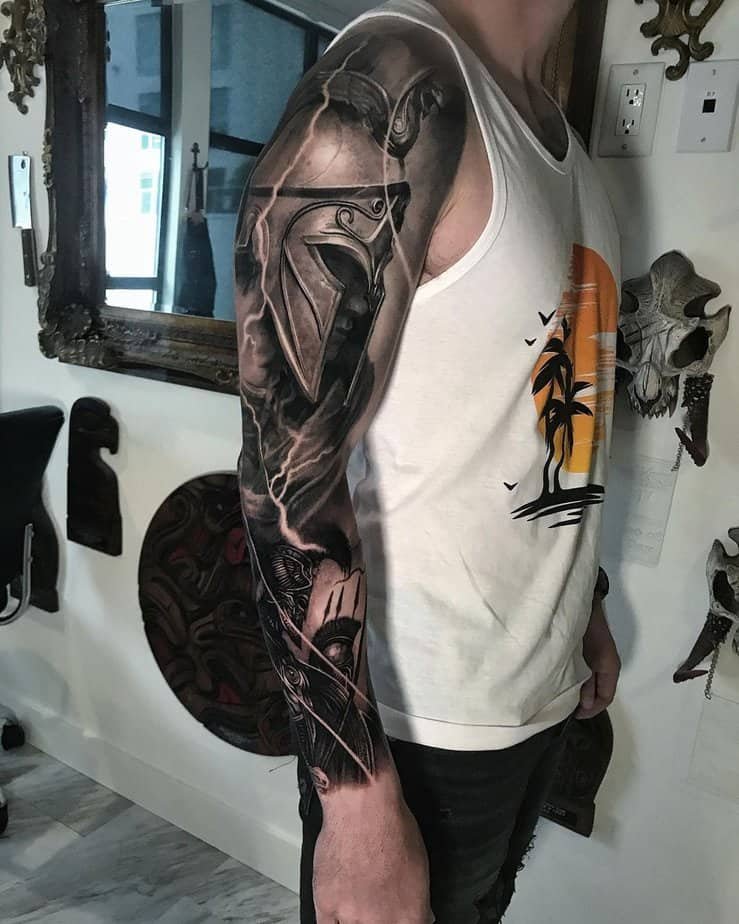
Credit: @mroytattooart

Credit: @artisan_shankey

Credit: @dmitriy.tkach

Credit: @hanz_tattoo
What does a Samurai sleeve say?
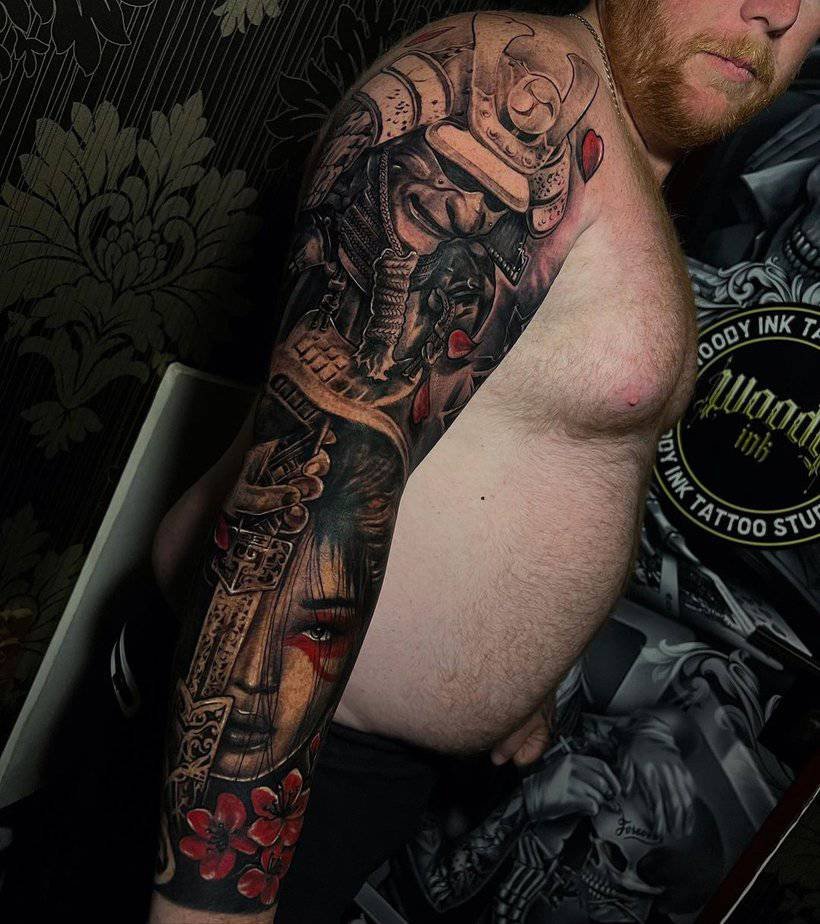
Credit: @rach_tattoo
There’s a specific kind of intensity to Japanese warrior imagery — it’s not just about fighting, it’s about a code. A samurai on your arm can read as loyalty, discipline, or a line you refused to cross. Some sleeves put a female warrior on the forearm with a drawn katana; that gaze, drawn with careful detail, hits harder than any shout. Other artists play with negative space — flames or eyes that pop out because the skin itself becomes part of the ink — which makes the whole piece breathe as it moves down your arm. And when red flowers or gold accents thread through the black-and-gray shading, the sleeve stops being a single picture and becomes a layered story you can follow from shoulder to wrist.

Credit: @phillip_whitelotus_tattoo
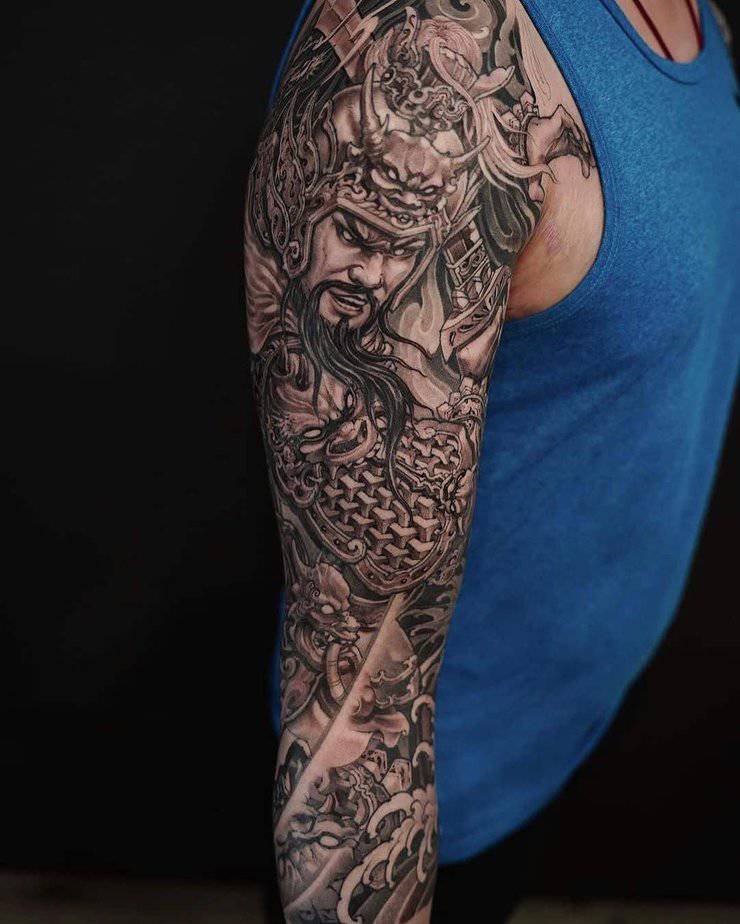
Credit: @tony_t_ink_tattoos
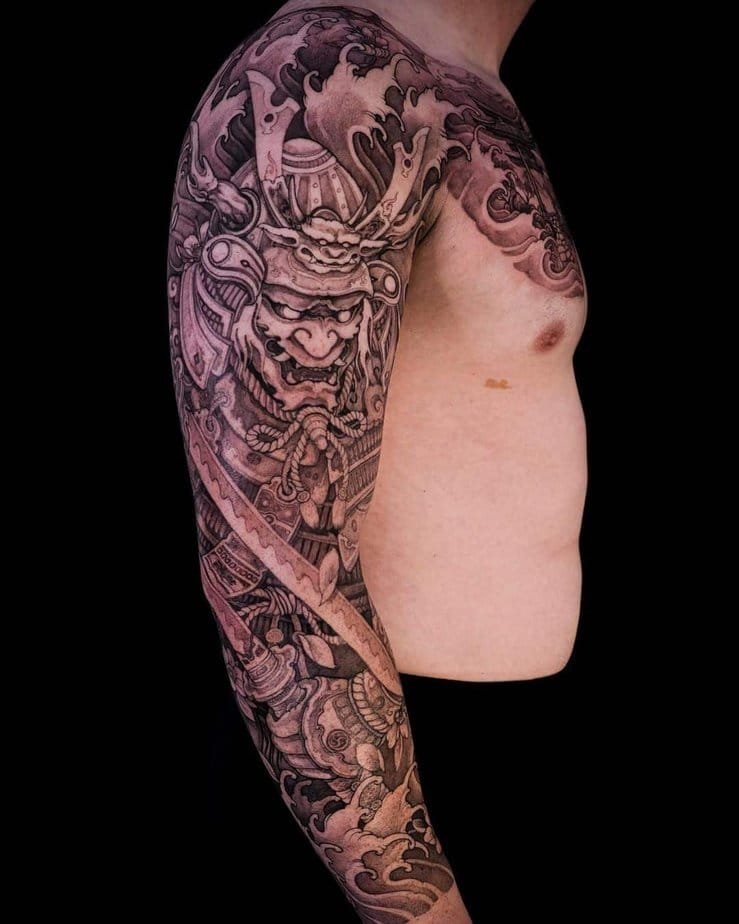
Credit: @brian__tattoos
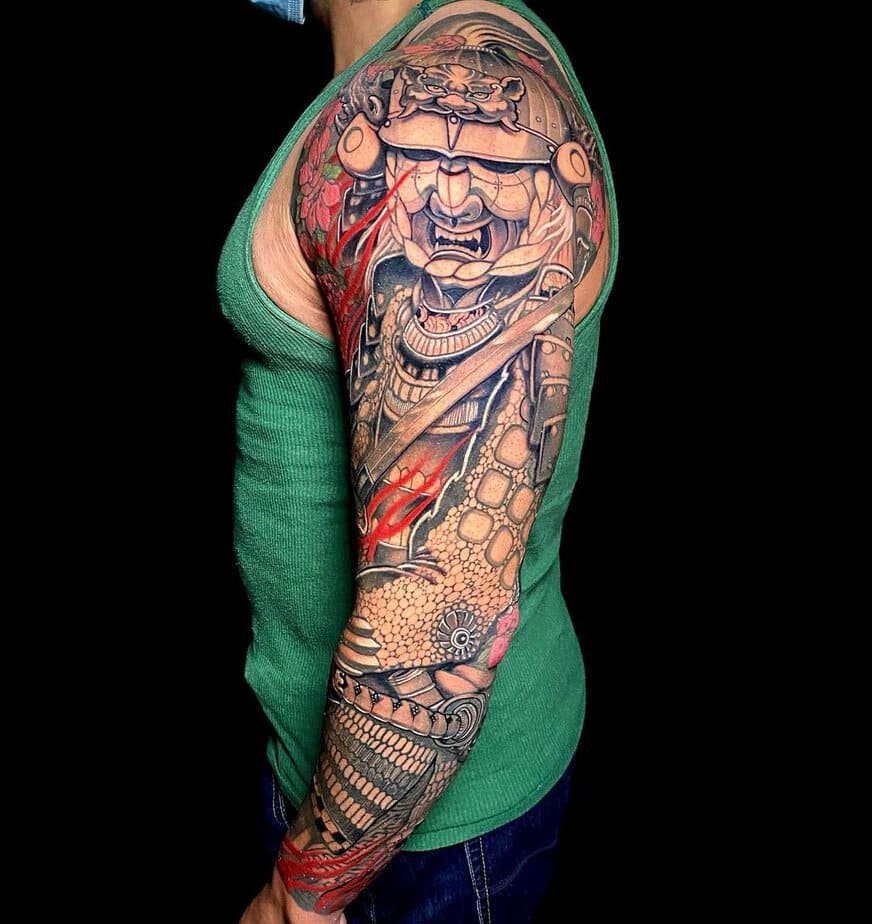
Credit: @jessyentattoo
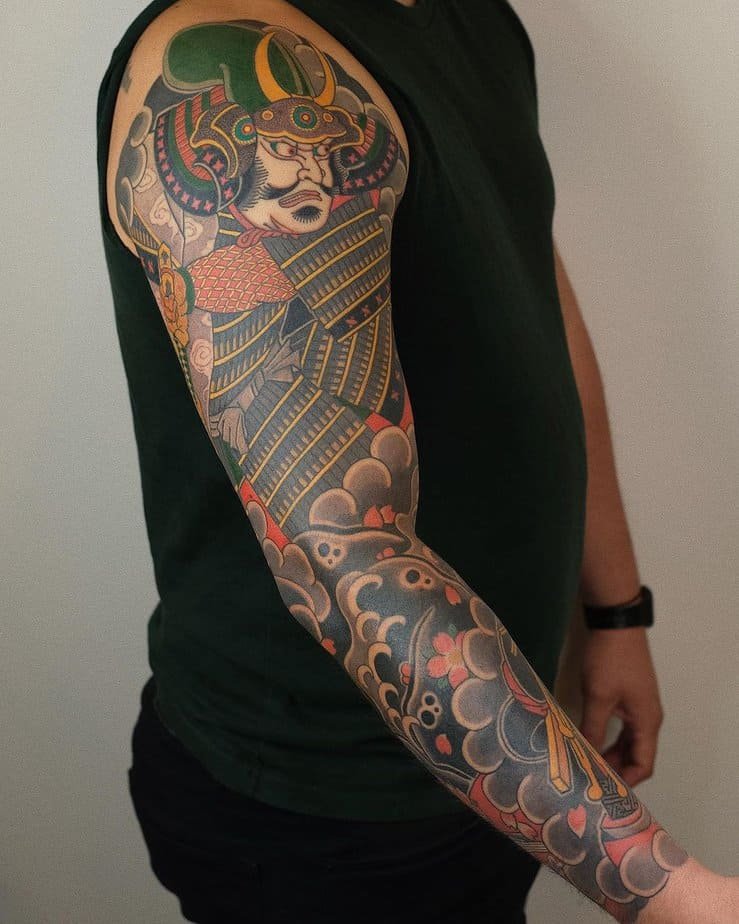
Credit: @billy.ink
Women Who Fight
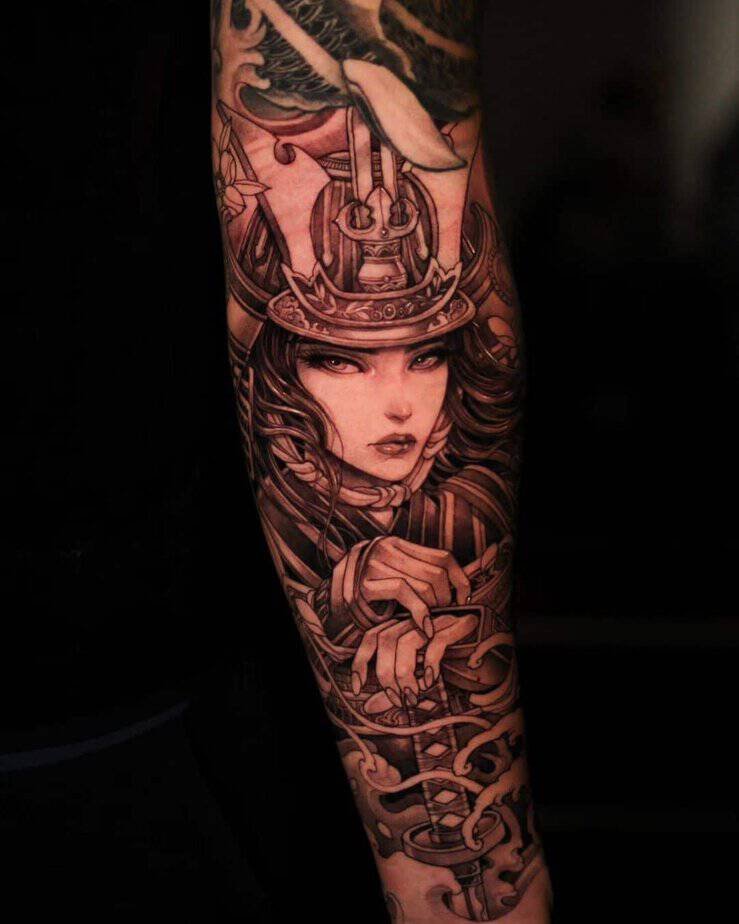
Credit: @davidhoangtattoo
You can make a sleeve that’s fierce and elegant at once. A woman with a sword and painted nails is the perfect little provocation — it says strength and care can live together. Iconography like Valkyries brings another layer: they’re fierce escorts, not just fighters, so including them emphasizes protection and passage rather than pure aggression. Viking women and their domestic-and-battle reputations are great if you want the piece to read as someone who holds many roles and refuses to be small. Little touches — runes across the cheek, braids that flow into background patterns — let you pack personal meaning into the design without shouting it.
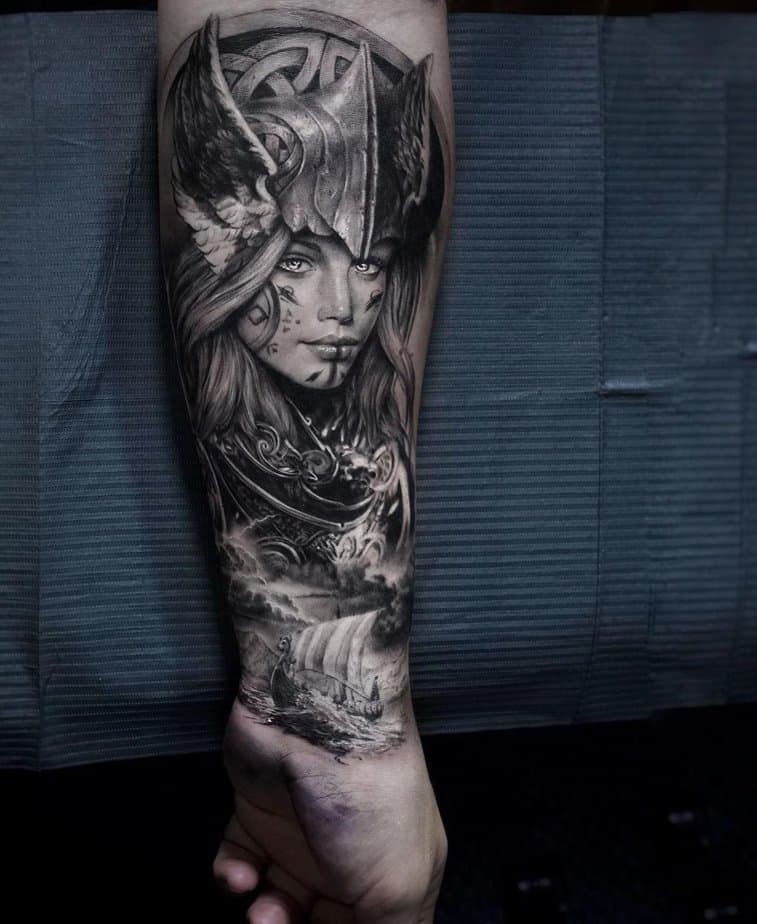
Credit: @suvorov_alexandr_tattoo
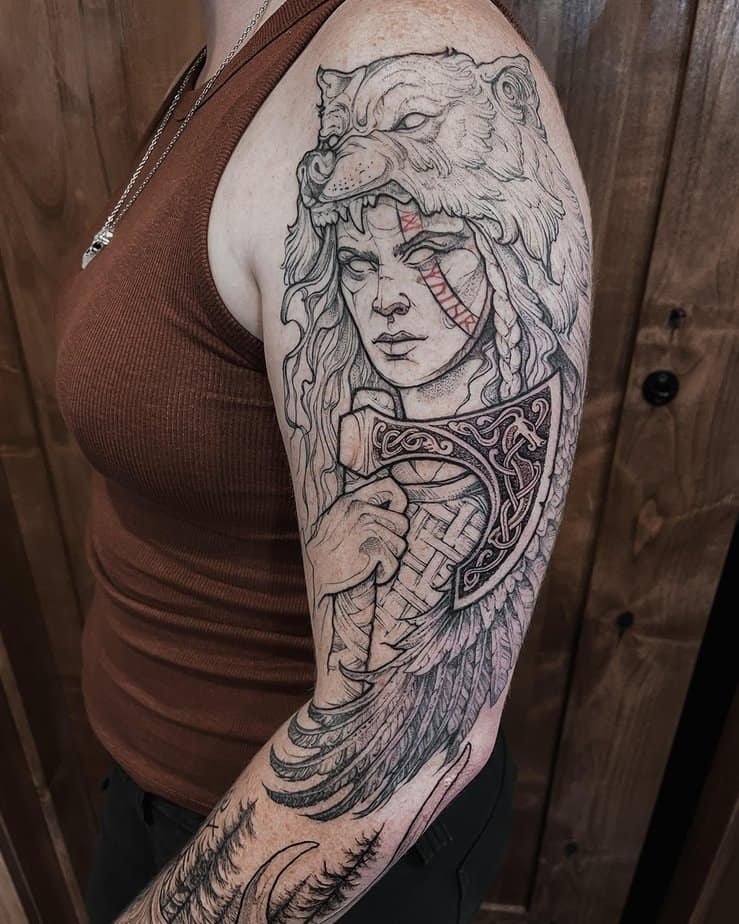
Credit: @valhallvaror
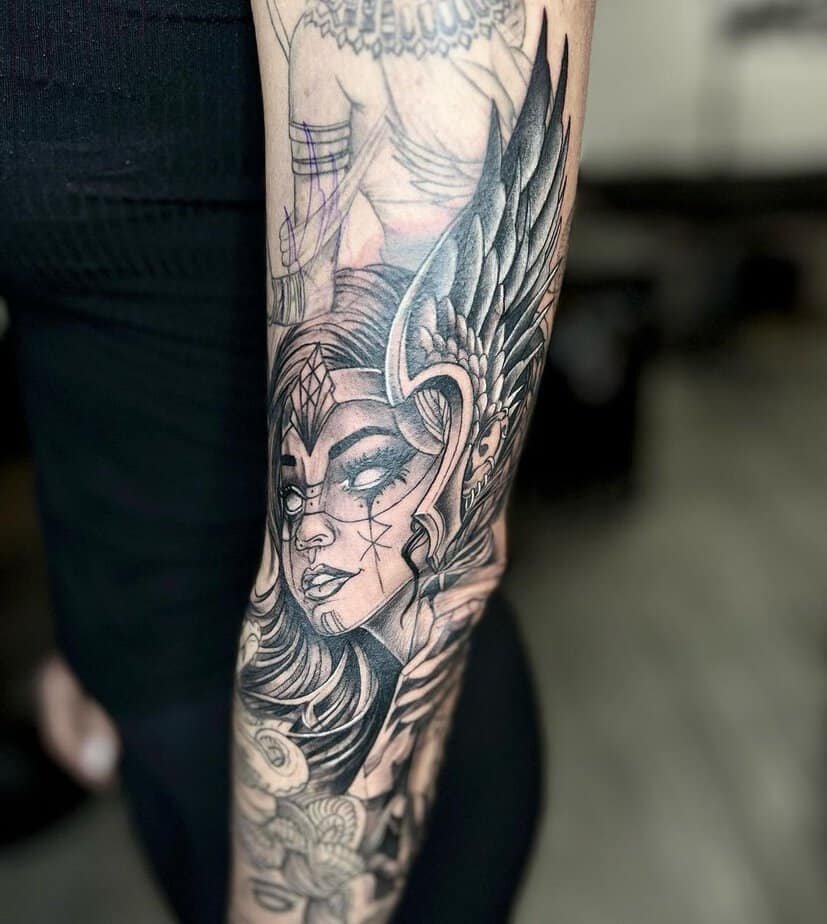
Credit: @smile_4_ink
Make myths your armor
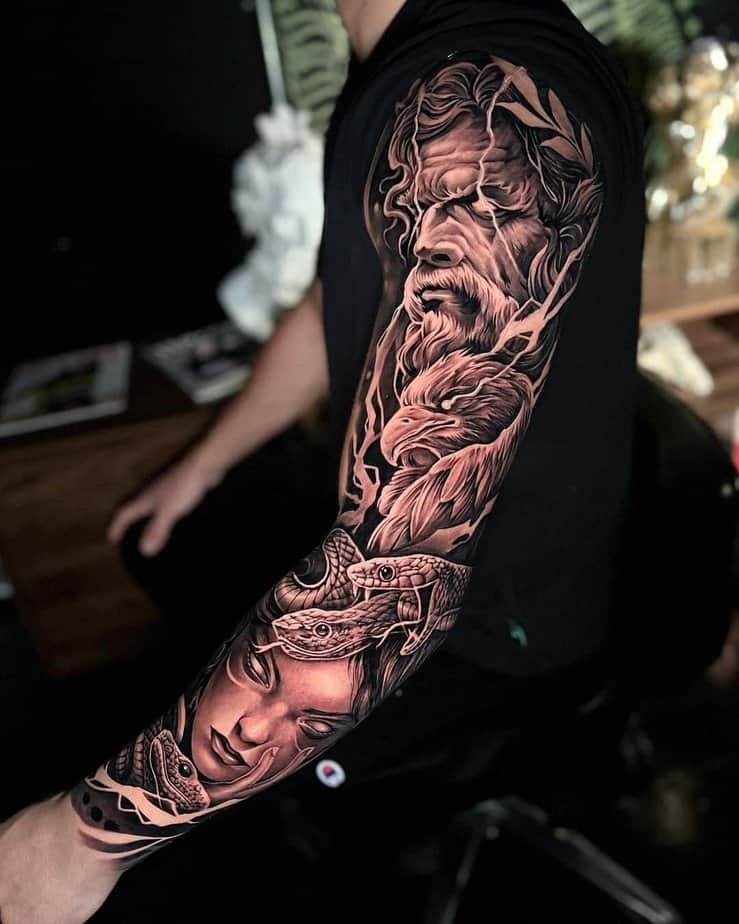
Credit: @donnylesmanatattoos
If you want a sleeve that leans into story, mythology gives you characters with instant narratives. Medusa can be reclaimed as survivor rather than monster; putting her on your forearm invites people to reconsider who they pity and who they fear. A shoulder-placed Zeus or Odin reads as authority — that top-of-shoulder space makes the god watch over you, like a herald of what you’ve weathered. Odin in particular carries that trade-off: he sacrificed an eye for knowing more, which makes him a fitting symbol if your hardship taught you something costly but true. Choosing a deity means you’re wearing a whole saga, not just a single mood.
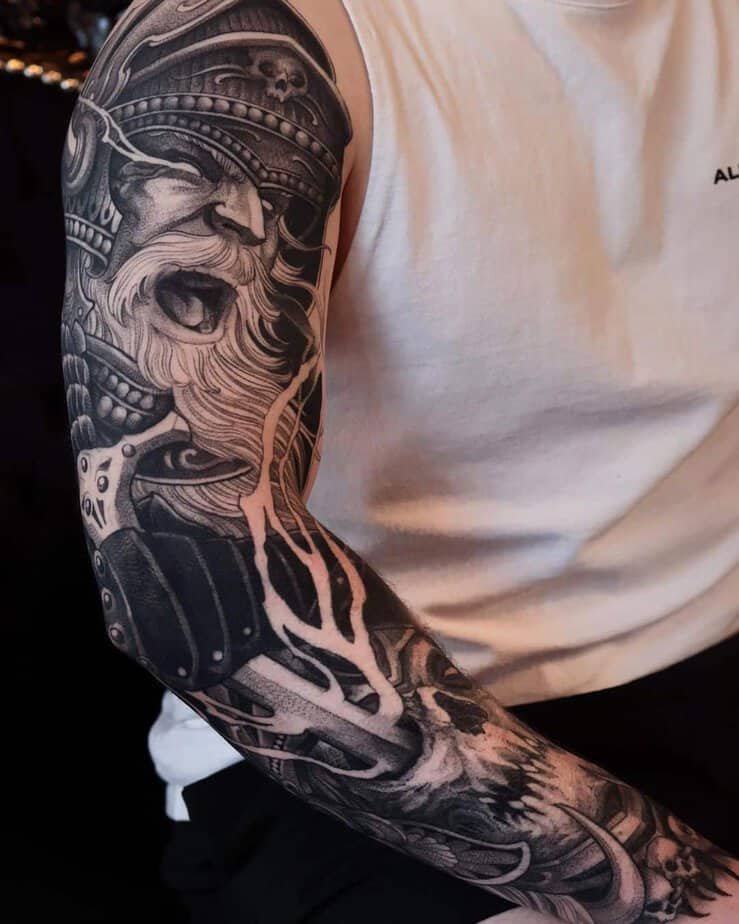
Credit: @brunosantostattoo
An elder's face on the sleeve
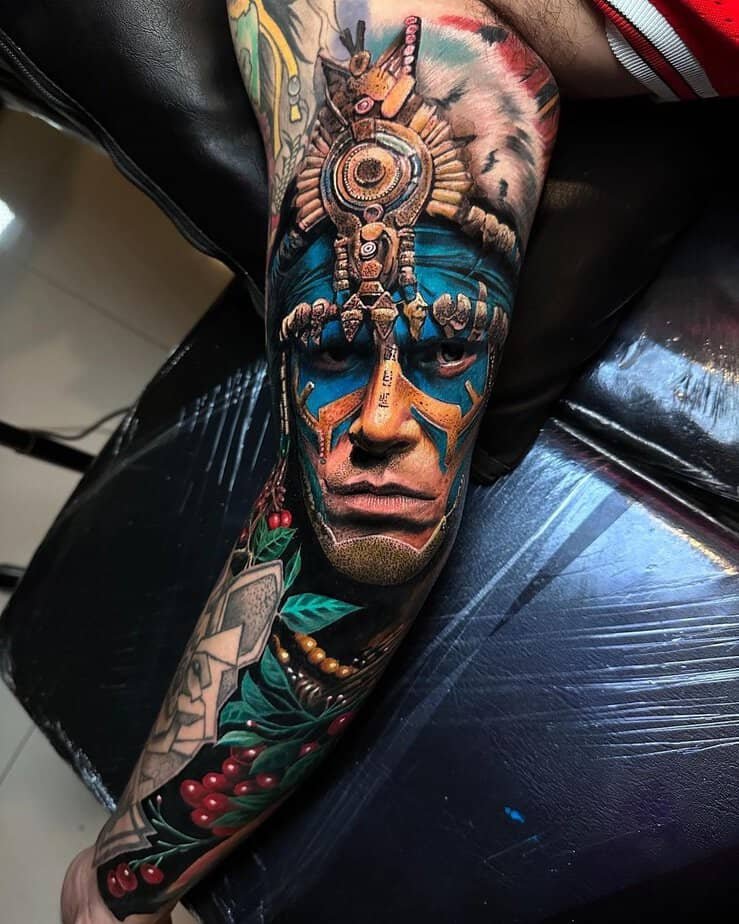
Credit: @ibarraskinart
There’s a quiet power in honoring indigenous fighters and elders through imagery. These sleeves often do more than celebrate physical toughness — they carry lineage, memory, and ongoing resistance. An older warrior’s face, mapped in heavy contrast, can read like a living history lesson; the negative space around it gives the portrait room to breathe and feel dimensional. If you’re thinking about a sleeve that’s about respect and continuity rather than just spectacle, this is a route that keeps the story at the center.

Credit: @steveupton_tattoo
Not full sleeve — still a statement
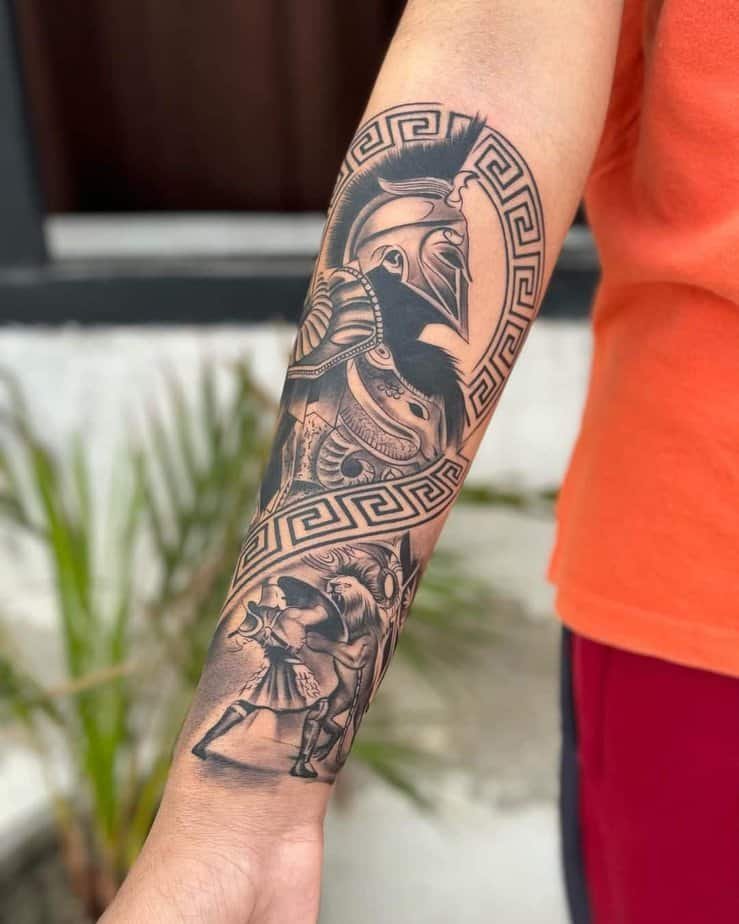
Credit: @artisteshant
Not everyone wants a full sleeve right away, and that’s perfectly fine. A half-sleeve can anchor a story — say, a Spartan helmet near the shoulder with a skirmish scene tucked lower — and you can always build on it later. Sometimes the simplest compositions convey the strongest message: a warrior looking across at their opponent, unbroken, speaks of endurance without elaborate backgrounds. If you prefer leg work, a sturdy leg sleeve with deep, sculpted shading can do the same heavy lifting; faces can be intentionally obscured so the piece reads more like a symbol than a portrait.
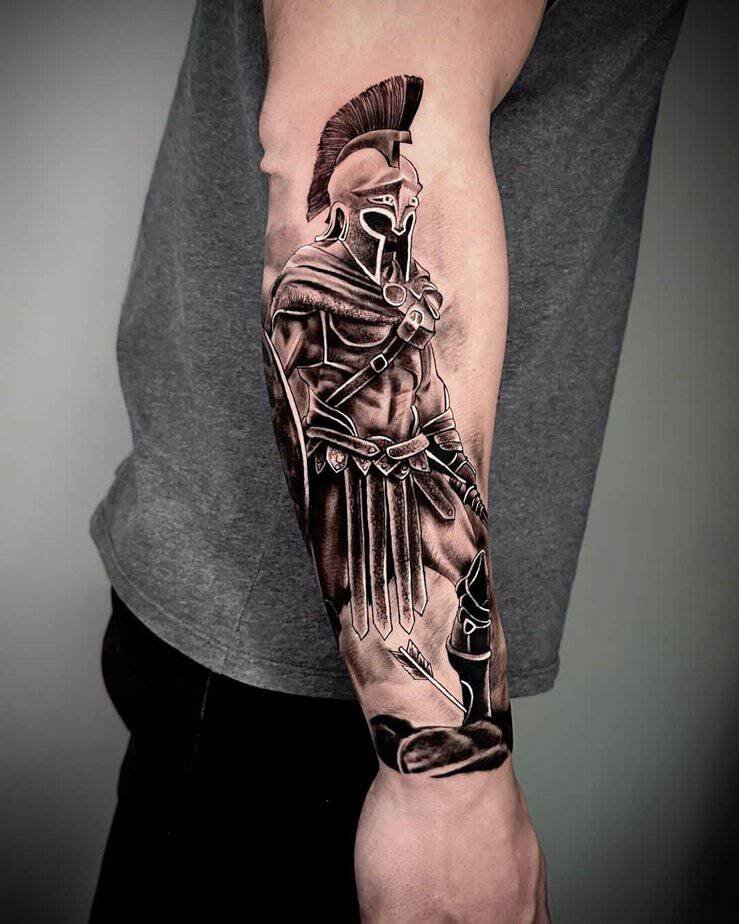
Credit: @felipedasoliveiras
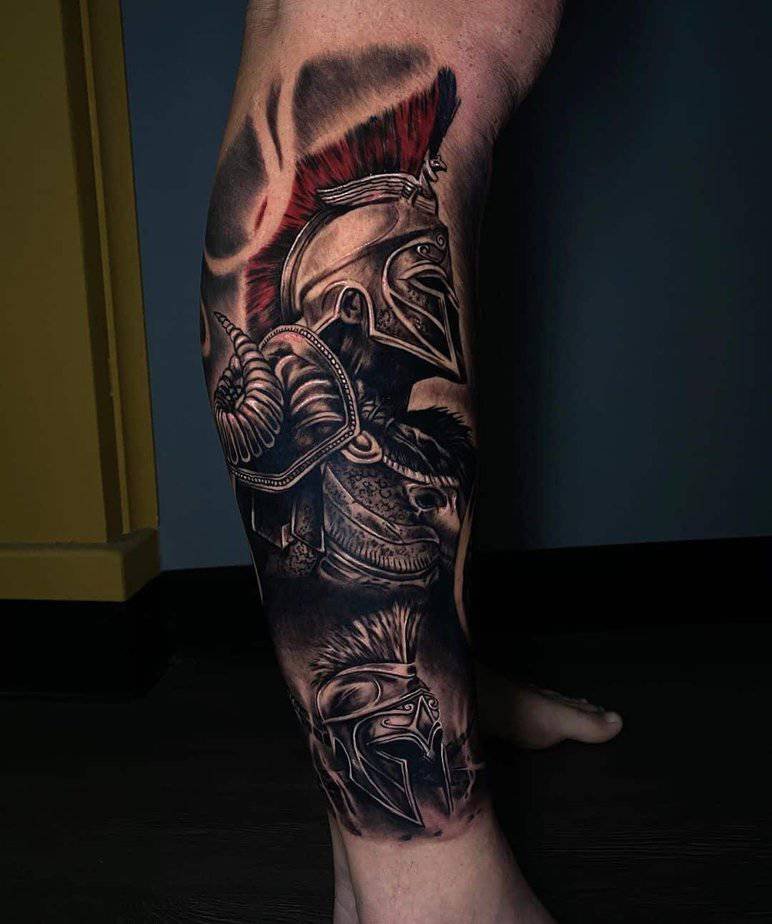
Credit: @jakewattsart
Wrap-Up
If you want a tattoo that honors what you survived, think about the story you want to tell first — is it about sacrifice, wisdom, protection, or the stubbornness to keep showing up? Pick images and placements that echo that theme, and let small details do the talking. Also, little pro tip: whether you go full sleeve or half, give the artist room to breathe — a tattoo that tells a clear story will age better than one crammed with filler. (And if you end up with a Valkyrie who winks at you from your arm, text me a photo — I’ll be jealous and genuinely proud.)