
I'll be honest, I used to think tiger tattoos were only for tough guys and rock stars—then I started scrolling and realized how many different moods they can hold. Some are soft and secretive, others roar across your skin like a manifesto. This little guide is just me showing you the best tiger ideas I’ve seen lately: placements, styles, and tiny meaning nudges so you can steal the vibe you actually want.
Black traditional forearm tiger
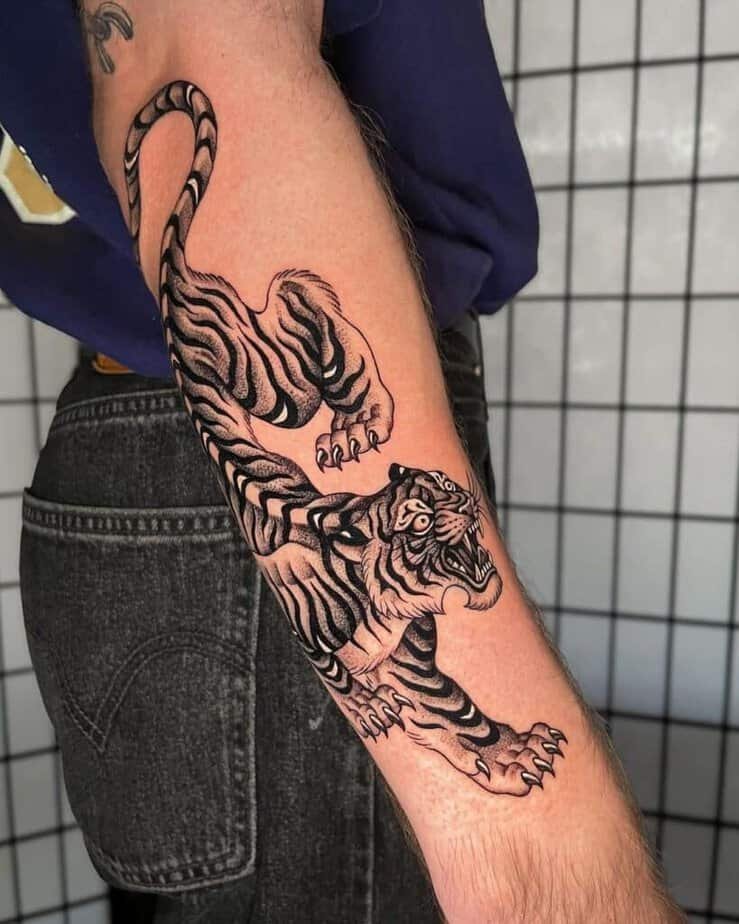
Credit: @jaeill_son
Picture a classic bold outline sitting on your forearm — thick blacks, high contrast, and a no-nonsense look. That traditional style reads as confidence: it’s the kind of tattoo you glance at and feel steadied by. Plus, forearms are great for showing off when you want and covering when you don’t, which makes this a very practical power move.
Why choose the shoulder?
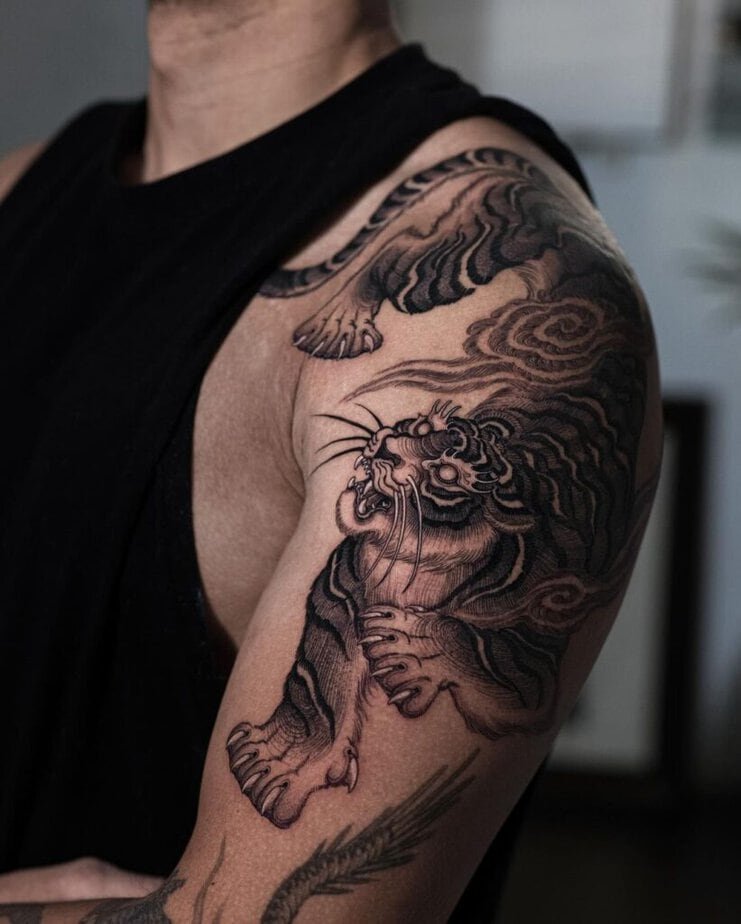
Credit: @arang_eleven
Turns out shoulders naturally carry presence — they’re literally built to hold weight, so a tiger there looks like it belongs. That placement sits between bold and wearable: big enough for detail, subtle enough to tuck under a sleeve if needed. If you want a symbol that feels like a shoulder to lean on, this is the spot.
Cute and cuddly forearm
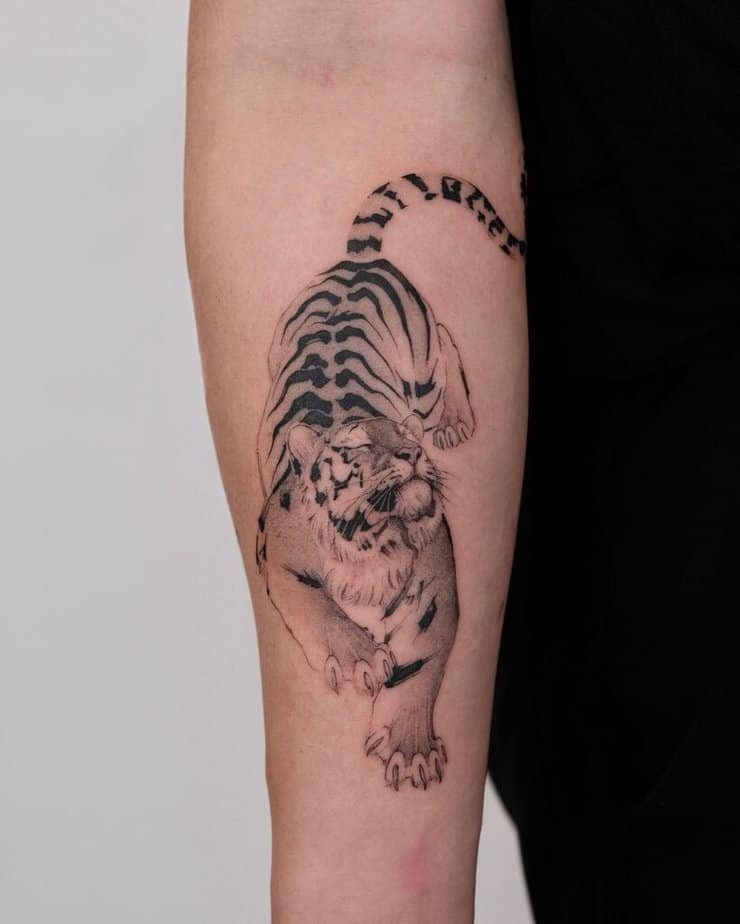
Credit: @wilwang_tatt
Not every tiger has to snarl — some read playful and gentle, which can be surprisingly disarming in a tiny, rounded style. Think softer lines, minimal shading, maybe a little smile; it looks like someone made an animal friend out of ink. If you want your tattoo to say approachable strength rather than intimidation, this one’s for you.
Let two tigers play across your back
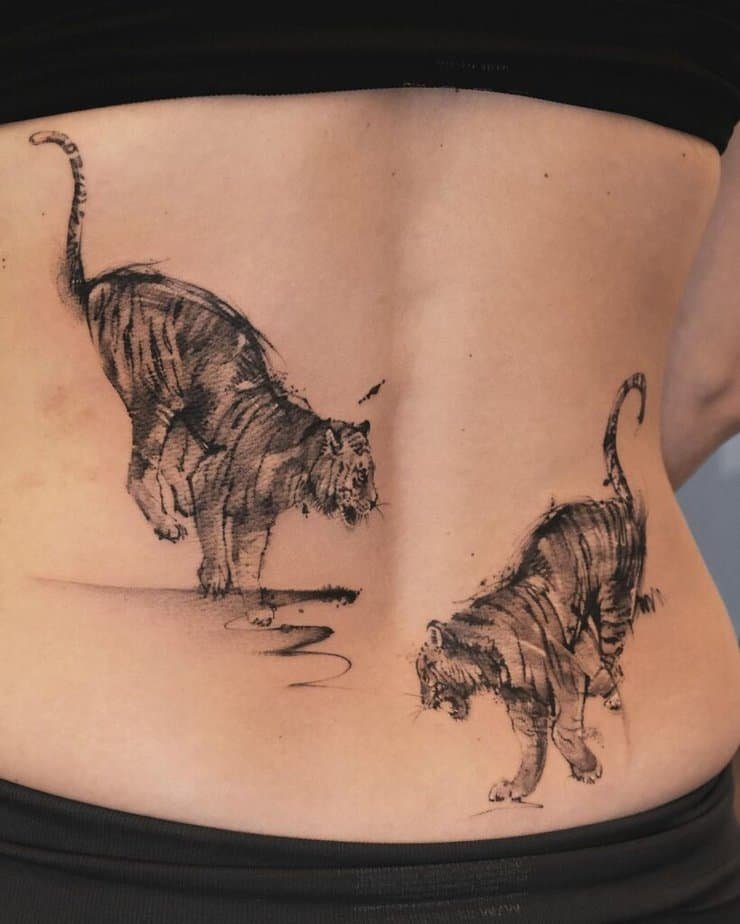
Credit: @ati.ful
I once watched a back-piece come together over three sessions and the way the tigers’ bodies echoed each other made the whole thing feel alive. Two animals let you explore relationship themes — duality, balance, companionship — without being literal about it. And on a broad canvas like the back, the motion of their play becomes part of your body language.
Tiger walking on water
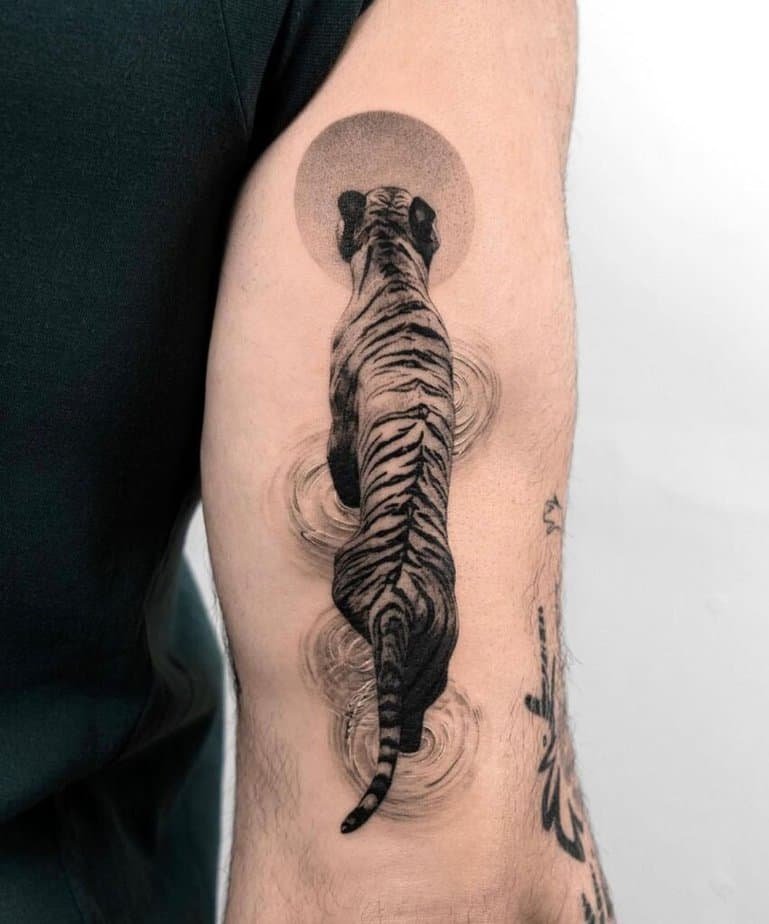
Credit: @start.your.line
Here’s the thing: add an element like water and the whole meaning shifts — it becomes mystical, calm, almost miraculous. Visually, water plays nicely with fur textures and can give motion a gentle ripple. If your goal is to mix strength with a sense of the uncanny or spiritual, this combo is quietly dramatic.
Big canvas, bold tiger: the upper arm
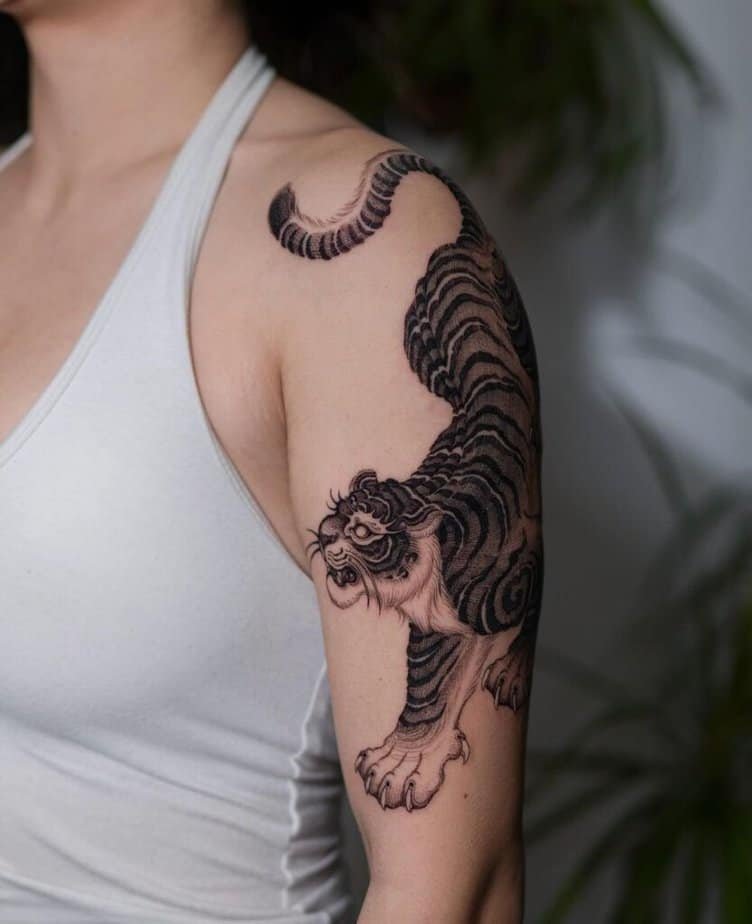
Credit: @arang_eleven
Upper arms are a favorite for a reason: they give your artist room to include texture, shading, and motion without crowding. That means a tiger there can be as detailed or as stylized as you like, from lifelike portraits to bold, graphic patterns. And honestly, it’s a forgiving area for healing and showing off.
Tiger butterfly on the chest
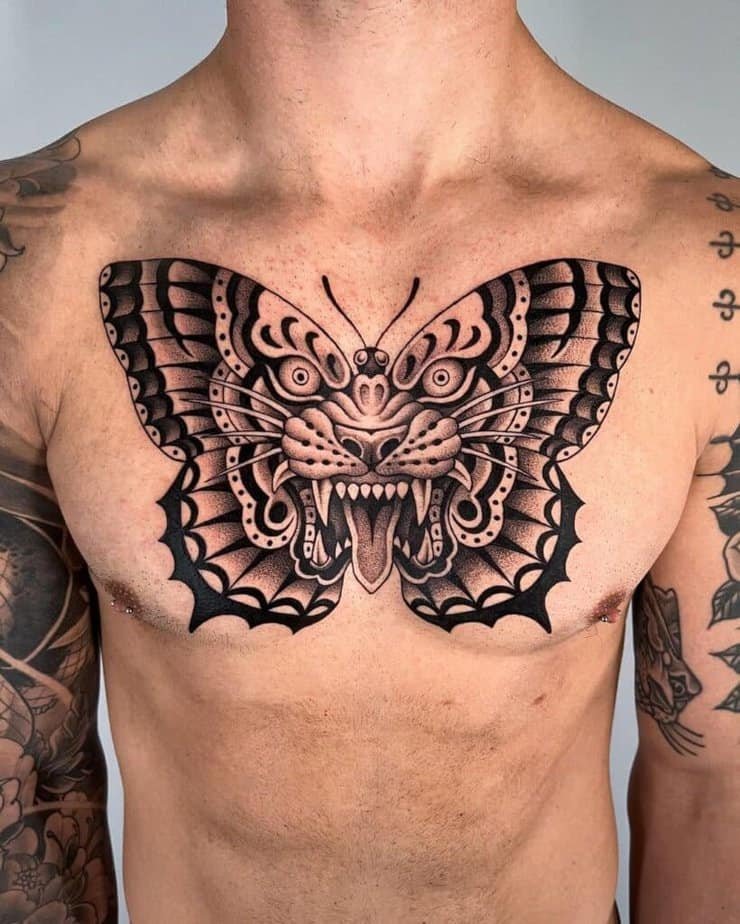
Credit: @jaeill_son
Merging a tiger with a butterfly makes for a quiet parable: fierce and delicate all at once. The chest sits close to the heart, so swapping raw power for something that also suggests transformation feels meaningful. Negative space work in that area can look elegant and personal, especially under open shirts or necklaces.
Korean tiger with red flames on the thigh
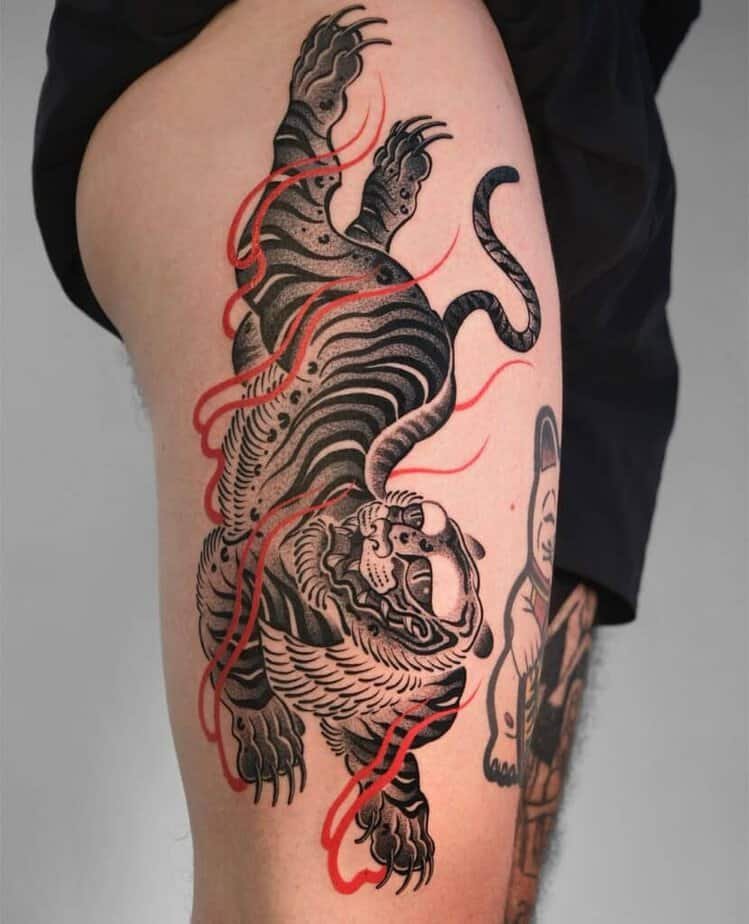
Credit: @bayun.tattoos
Cultural styles bring layers of symbolism: in Korean art the tiger is often a guardian, not just a predator, which colors how the image reads. Add red flames and the energy becomes protective and ceremonial rather than merely aggressive. Thigh placements let you go big with color and keep it intimate when you want.
Red flames on the inside of the arm
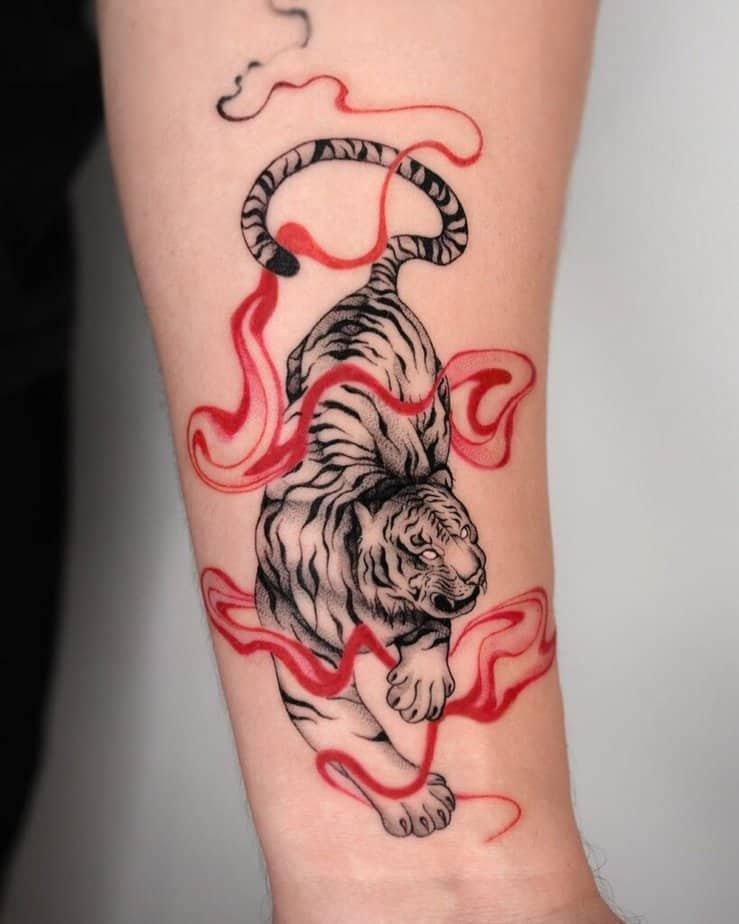
Credit: @kashatattooer
On the inner arm the tattoo reads like a secret — visible when you choose to show it, hidden most of the time. Pairing red with black gives high drama and a slightly retro-meets-traditional feel. If you like the idea of a private talisman that still punches visually, this is a solid choice.
Red dragon and black tiger on the back
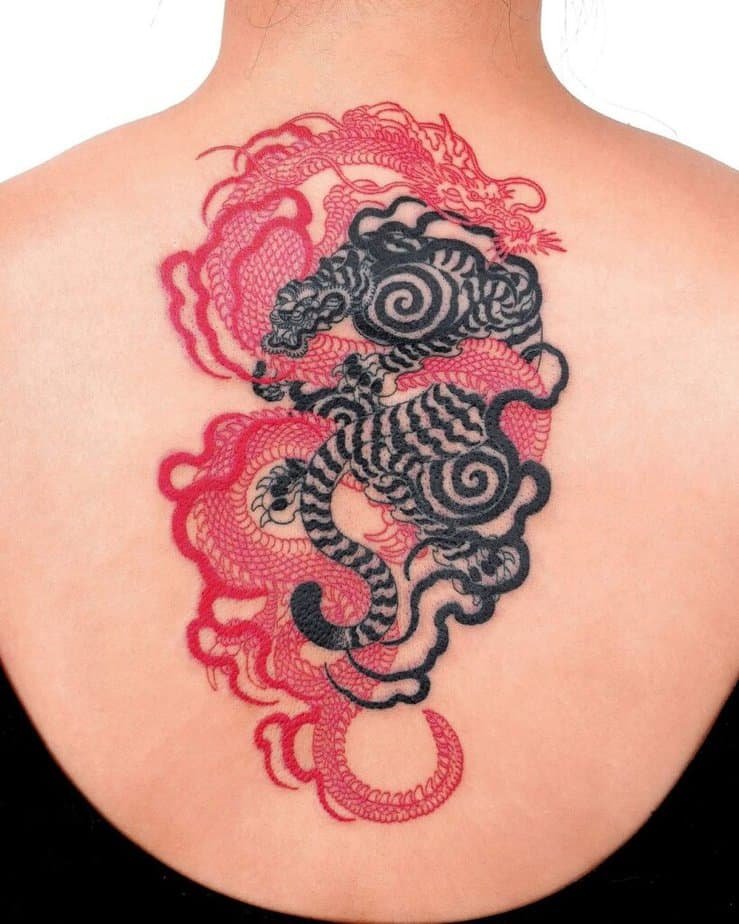
Credit: @nobodytattoo
Placing opposing figures together — dragon and tiger, red and black — creates a dynamic storyline on your skin. The contrast suggests tension and balance: chaos and control, fire and fur. A back piece is perfect for that kind of theatrical interplay where both elements get room to breathe.
Linework upper arm tiger
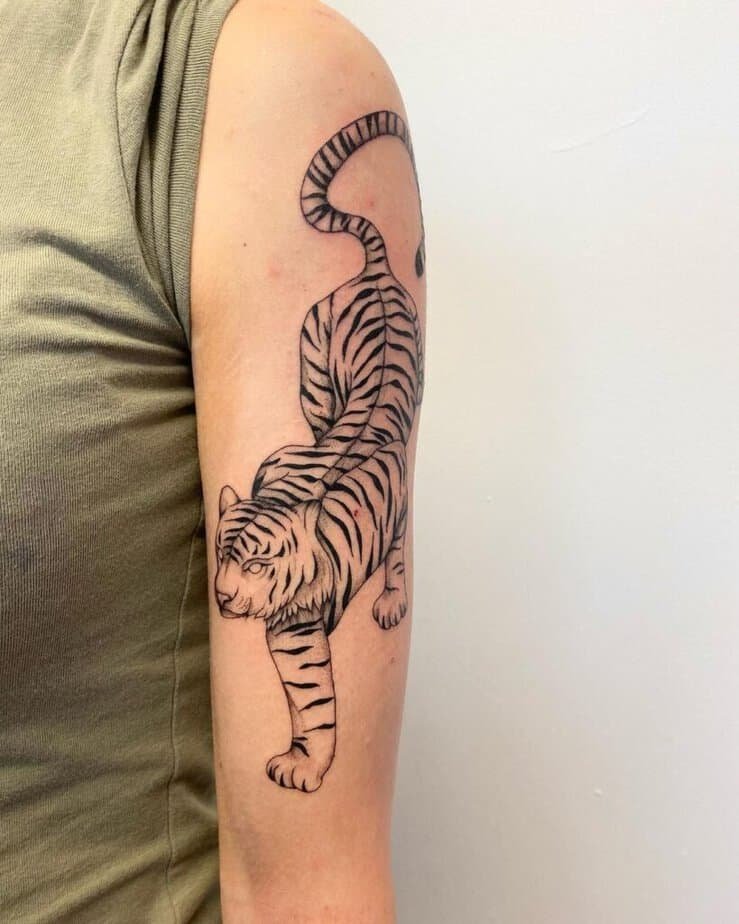
Credit: @cxitlantattoos
Linework is whisper-strong: minimal, deliberate, and modern. The simplicity means quicker sessions and a softer visual weight, which a lot of people prefer for a first piece. If you love the idea of suggestion over literal detail, thin confident lines can say more with less.
Fine-line ribcage tiger
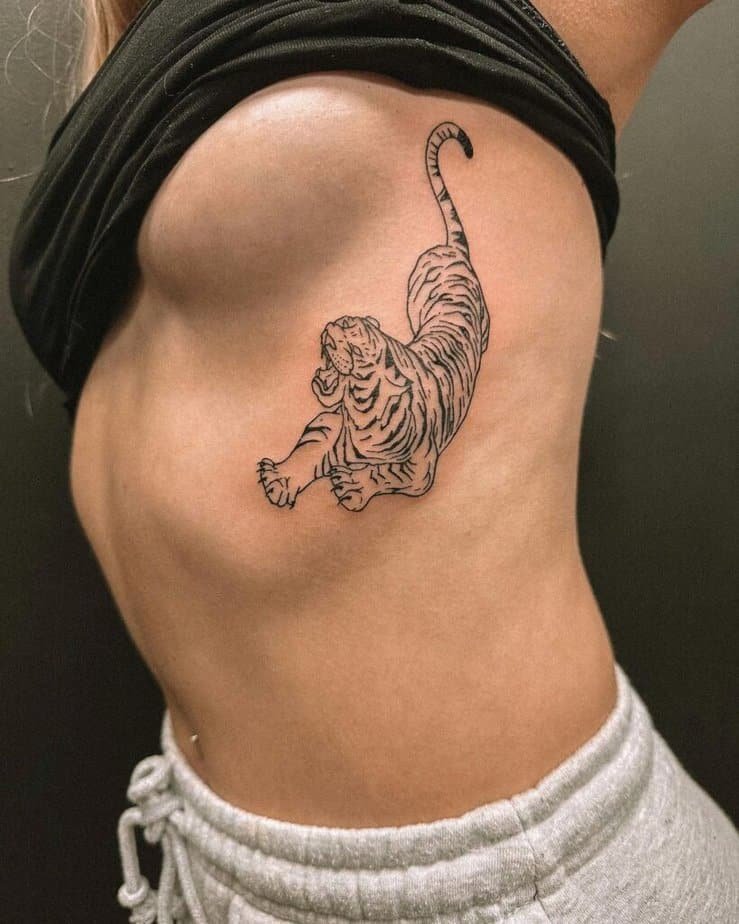
Credit: @hybridink.helsinki
Ribcage tattoos have a reputation for being intense, so choosing fine-line work there makes sense if you want something delicate rather than heavy. It hugs the body in a way that can feel intimate and private. Just be ready: healing and placement can be sensitive, but the payoff is quietly dramatic.
Blue ink on the upper arm
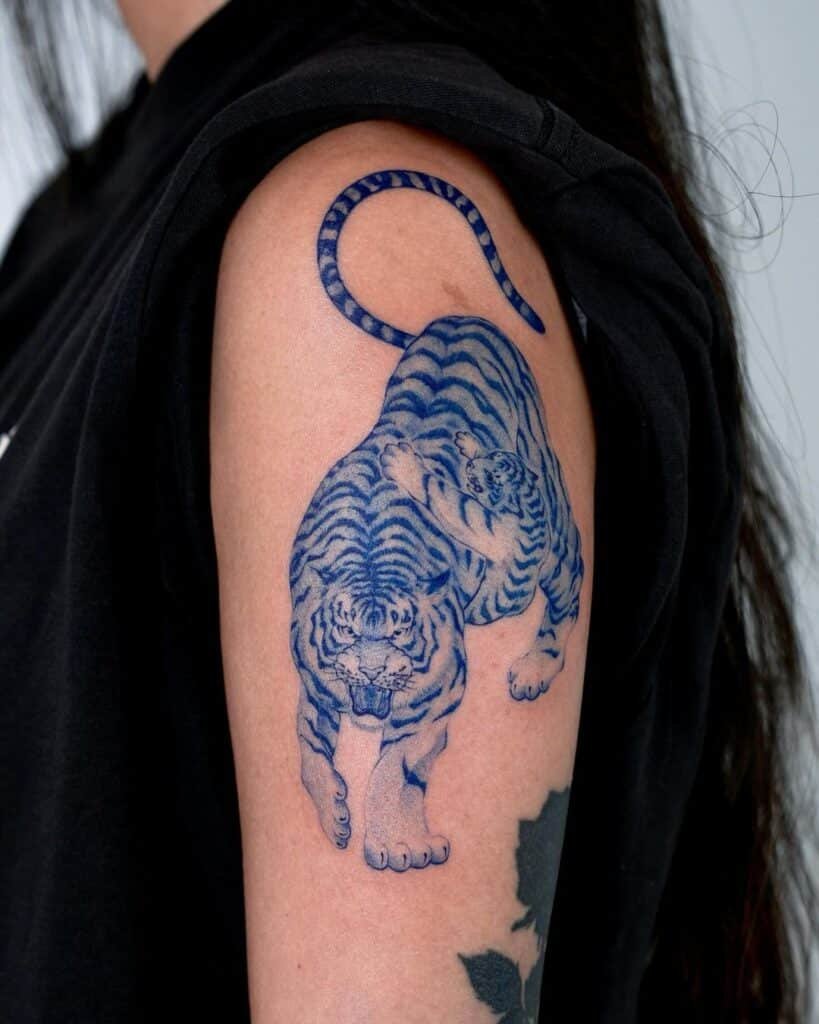
Credit: @saki.lss
Blue shifts the whole emotional palette away from standard black — it feels cooler, sometimes more whimsical or melancholic depending on tone. It’s a creative choice that stands out without shouting. If you’re someone who likes unexpected color choices, blue gives you individuality and a subtle, artful edge.
Tiger among clouds
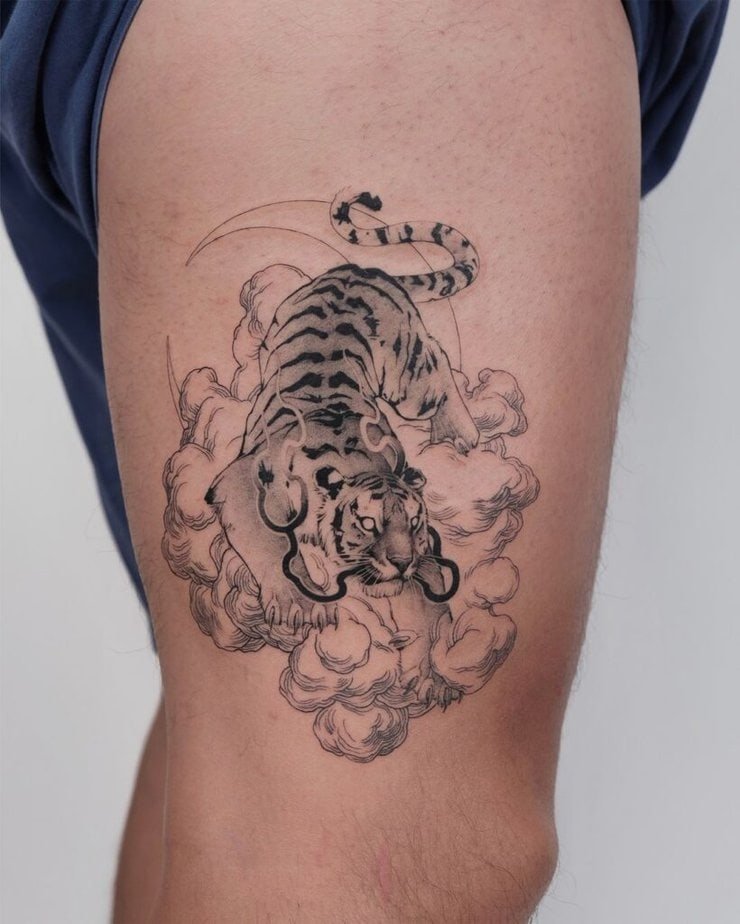
Credit: @wilwang_tatt
Clouds soften the image and add a spiritual or peaceful layer to the tiger’s usual fierceness. Visually they create depth and let the tiger appear like it’s emerging from, or receding into, something larger. Use this if you want a reminder that power and calm can coexist.
Another clouded take
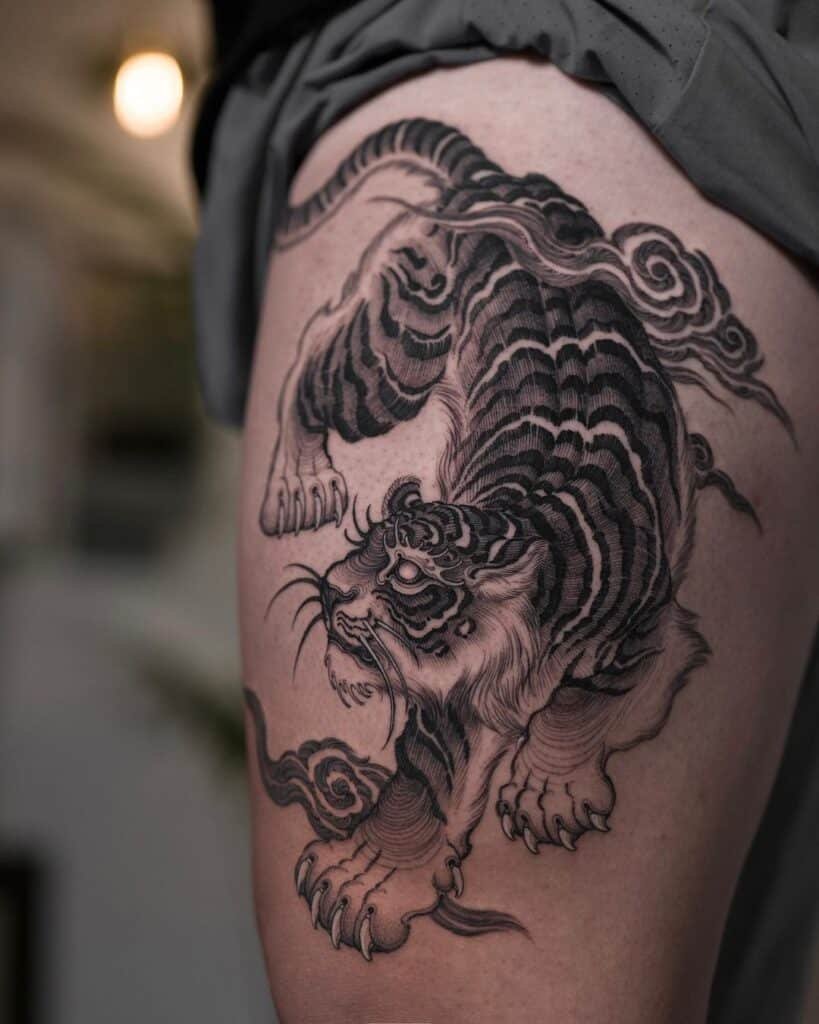
Credit: @arang_eleven
If the first cloud concept felt soft, this version leans into abstraction and motion — the tiger is almost unmoored from literal meaning. Abstract elements let the viewer bring their own story, which is a nice counterpoint to very literal animal portraits. It’s a more interpretive way to wear your symbolism.
Floral hip tiger
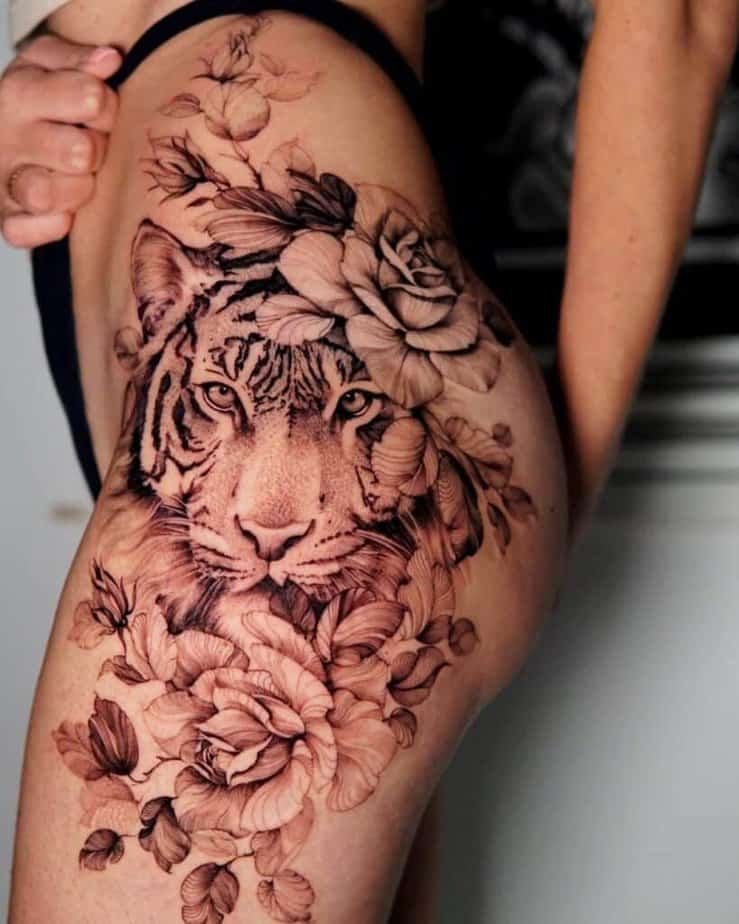
Credit: @dxm_tattooart
Flowing floral lines work with the hip’s curves and make the tiger feel like part of the body’s movement. Flowers soften and feminize in a way that can balance a predator’s intensity, which is perfect if you want contrast rather than mirror-image fierceness. This placement is flirty, private, and gorgeous during summer.
Sleepy forearm tiger
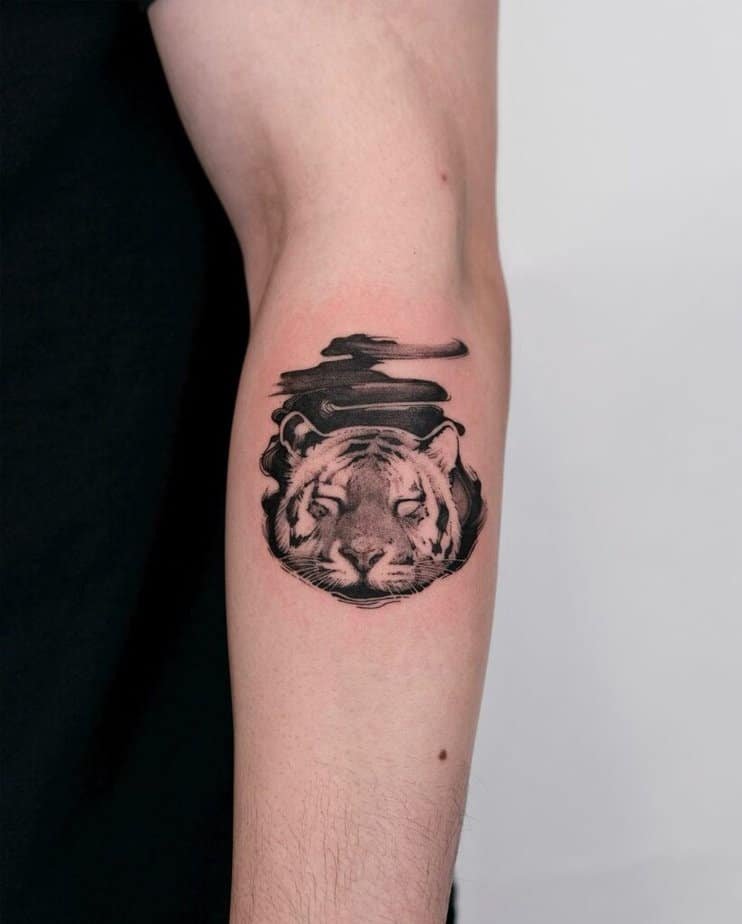
Credit: @wilwang_tatt
A resting tiger reads like contained power — calm, patient, and self-assured. It’s the quiet strength tattoo: no show, just presence. If you want a personal mantra about restraint or patience etched on you, this visual hits that tone perfectly.
Roaring forearm tiger
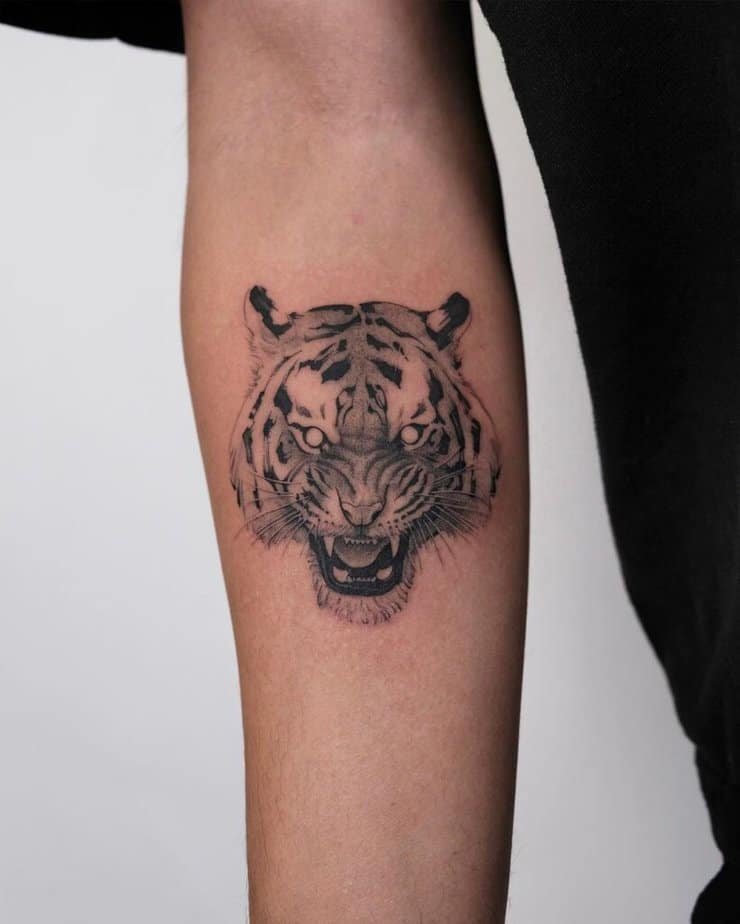
Credit: @wilwang_tatt
If subtle isn’t your thing, a roaring tiger gives immediate theatrical energy — it demands attention and reads as unapologetic. The forearm is an excellent stage for that emotion, especially if you want movement that catches the eye. It’s a great statement for people who like their art loud and clear.
Peeking tiger on the leg
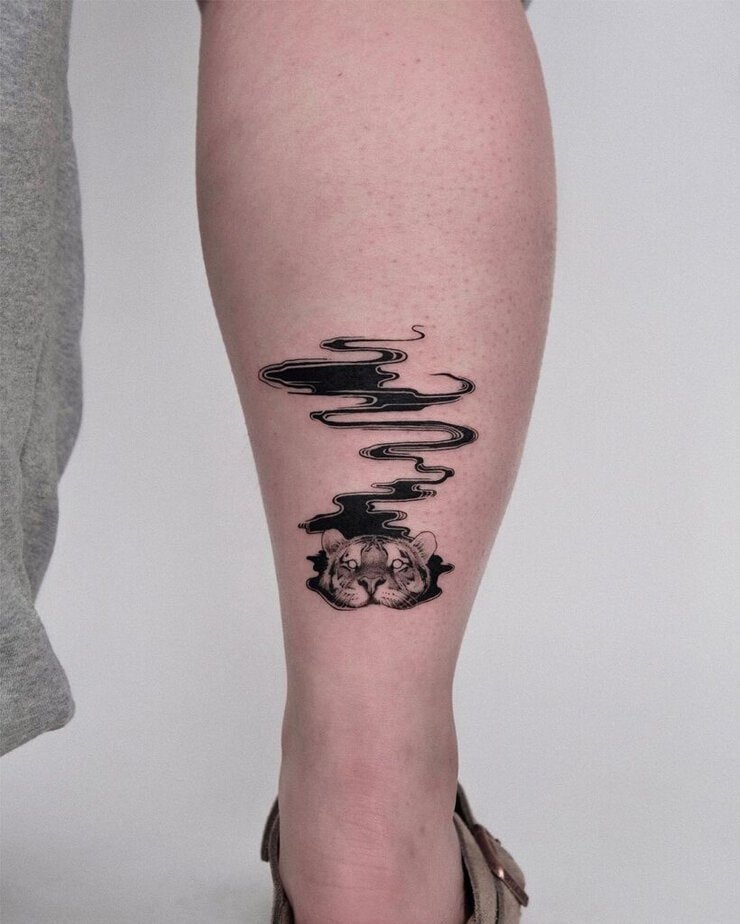
Credit: @wilwang_tatt
A peeking motif is playful and a little mysterious — it feels like the animal is part of your day, peering out at moments it chooses. Leg placements let designers play with scale and angle, so a small peek can look clever and intimate. If you like the idea of a tattoo that surprises people, this does the trick.
Back of the neck tiger
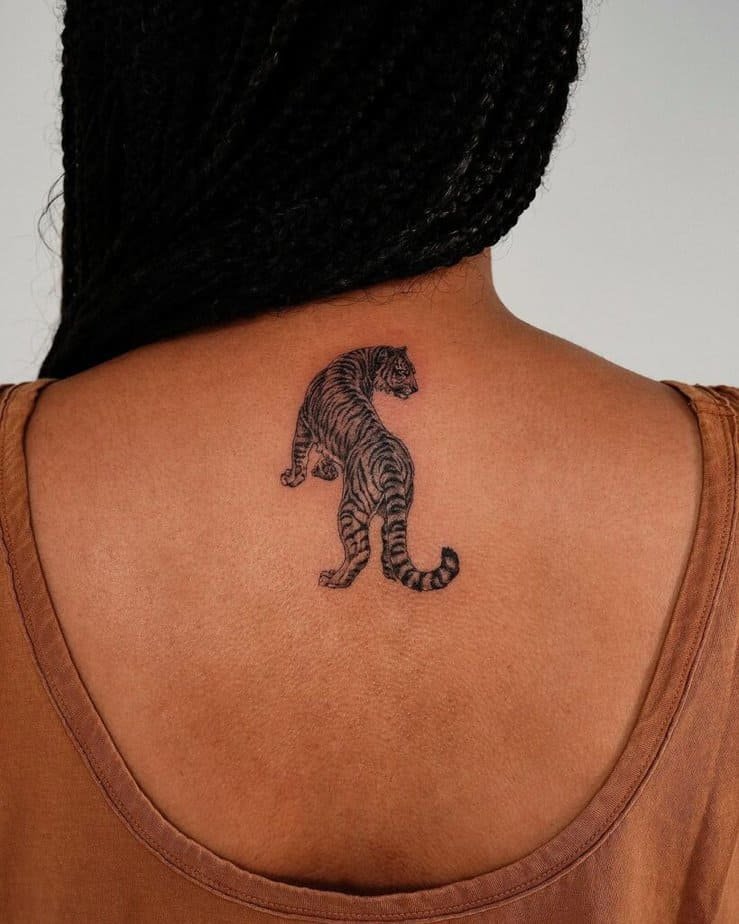
Credit: @tattooer_intat
Neck tattoos are cozy little rebellions: easy to hide with hair or show off when you want. A tiger there reads as discreet strength — it’s close to the spine, close to how you hold yourself. For anyone who wants something wearable and meaningful, this placement is a sweet spot.
Abstract upper arm tiger
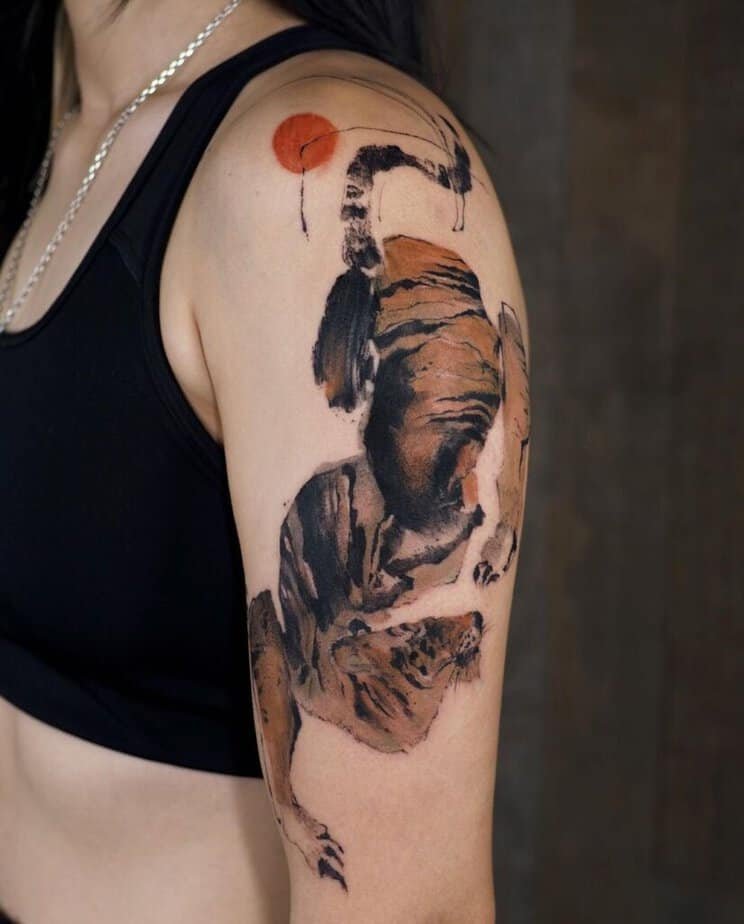
Credit: @tattooer_nadi
Abstract tattoos let the viewer complete the image in their head — shapes and washes suggest fur or motion without spelling everything out. That watercolor-esque looseness feels fresh and artsy, especially on a larger canvas like the upper arm. If you love painterly work more than literal portraits, this is a joyful route.
Tiger sticker sleeve
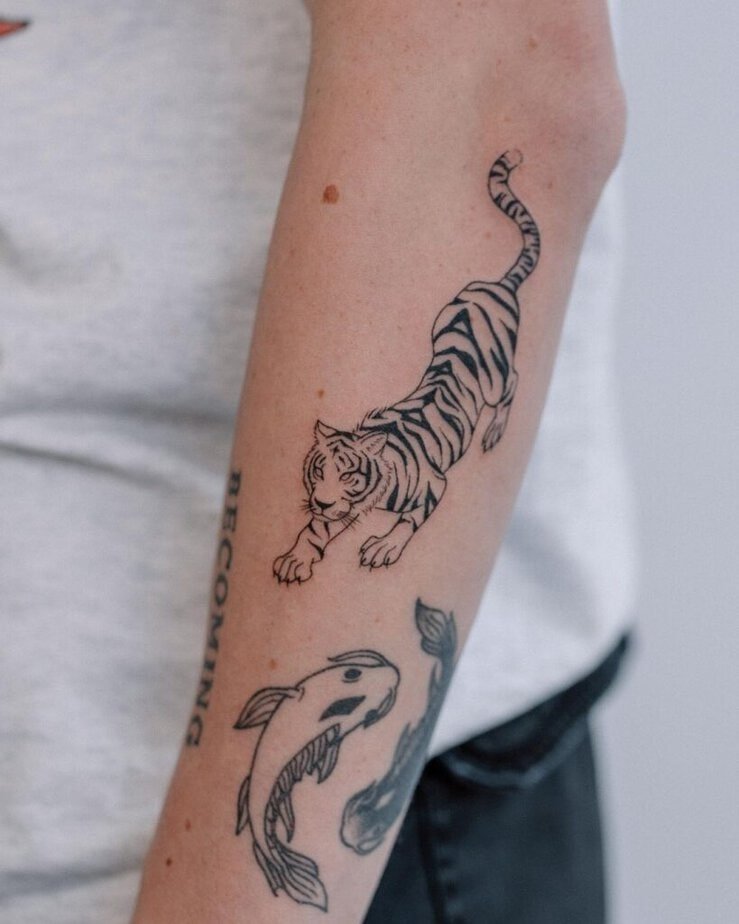
Credit: @tattoobymeg
Sticker sleeves are modular and playful: you collect small pieces over time instead of committing to a full, continuous design. That means you can mix tigers with other motifs and let the sleeve grow with you. It’s a relaxed, low-pressure way to build a narrative on your skin.
Linework tiger on the bicep
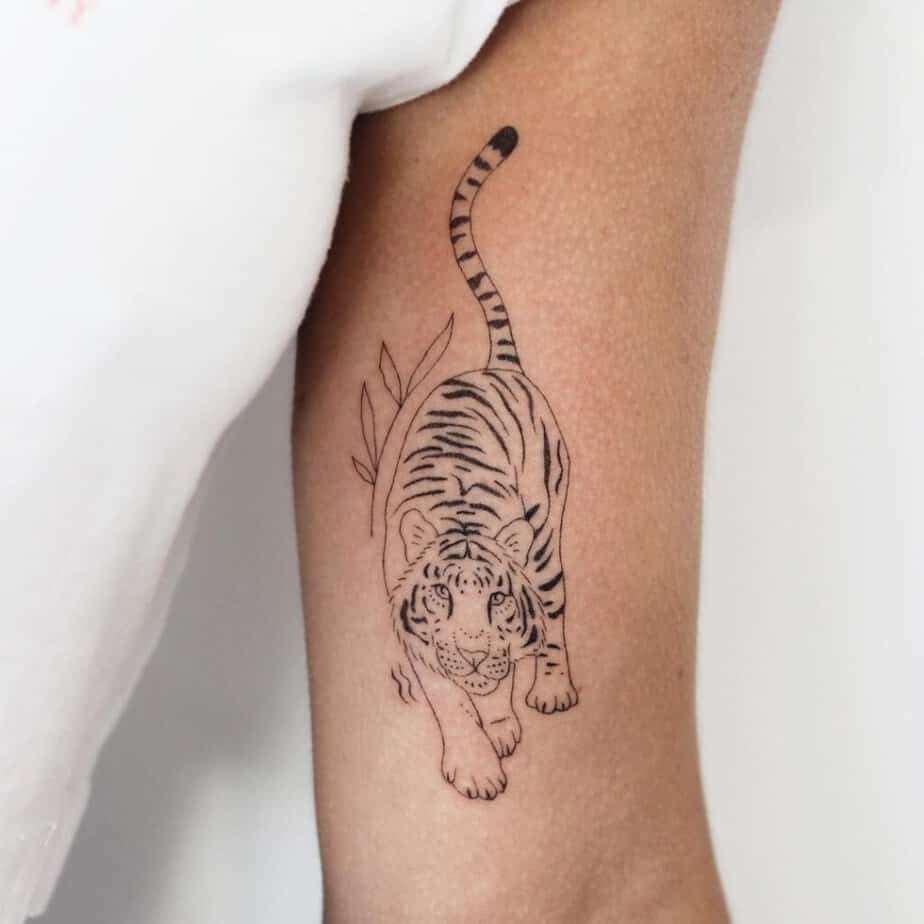
Credit: @kalula_tattoo
The bicep gives a slightly rounder canvas, which makes linework feel sculptural and intentional. This placement reads as strength without being showy — a private emblem of resilience or tribute. It’s a friendly spot for a first meaningful piece that still carries gravitas.
Not hidden — highlighted: bonus tiger art
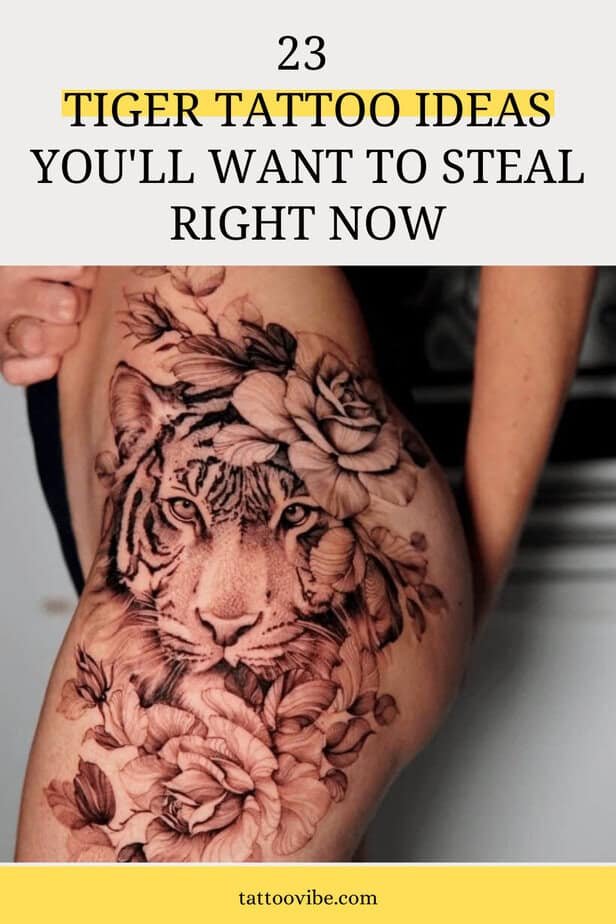
This extra image feels like a little gift — a reminder that tiger imagery turns up in so many styles and stories. Sometimes you’ll see the motif borrowed into other themes, like warrior or samurai work, where the animal becomes part of a larger narrative. Keep an eye on those crossovers; they’re where interesting ideas are born.
Wrap-Up
So, which one tugged at you — the quiet ribcage whisper, the roaring forearm, or something in between? I’d love to know which direction you’d take your tiger and why.