
Okay, have you ever noticed how the sacred heart keeps popping up in tattoo pages and inspo boards? It’s one of those images that feels instantly familiar — a little worn-in, heavy with meaning, and somehow still ready to be remade in a new way on your skin.
People pick this design for so many reasons: it’s a visual shorthand for devotion and sacrifice, yes, but it also wears symbolism like a lived story. Whether you want something delicate and whisper-quiet or a bold piece that reads from across the room, the sacred heart can hold all of that without losing what it’s about.
Black-and-gray sacred hearts

Credit: @pointsworker
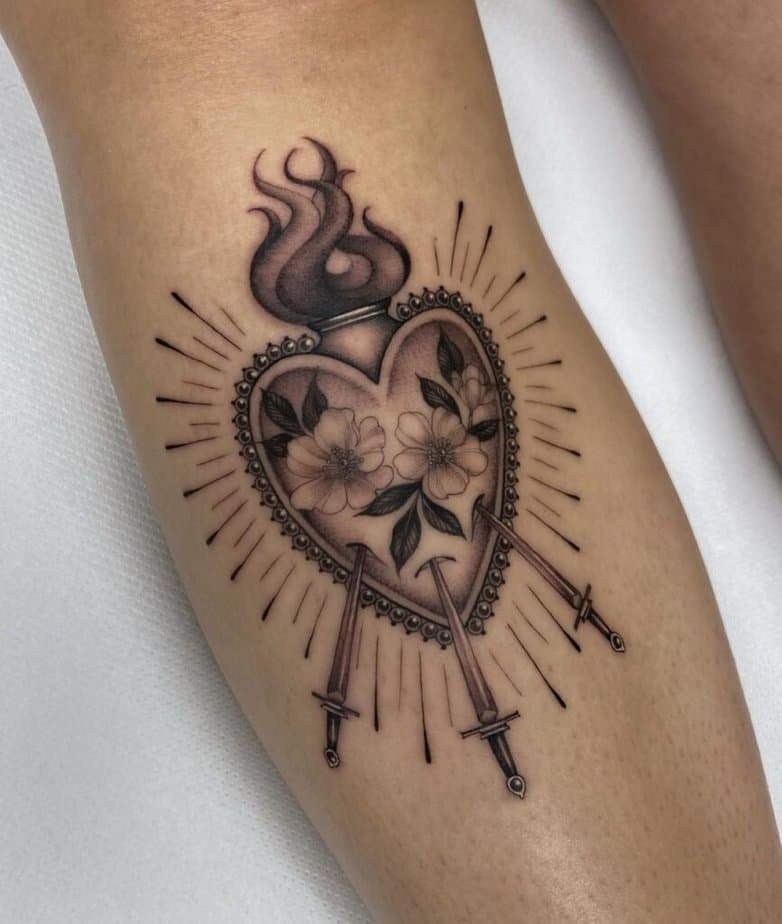
Credit: @lucyscovelltattoo

Credit: @timararose

Credit: @is_toms
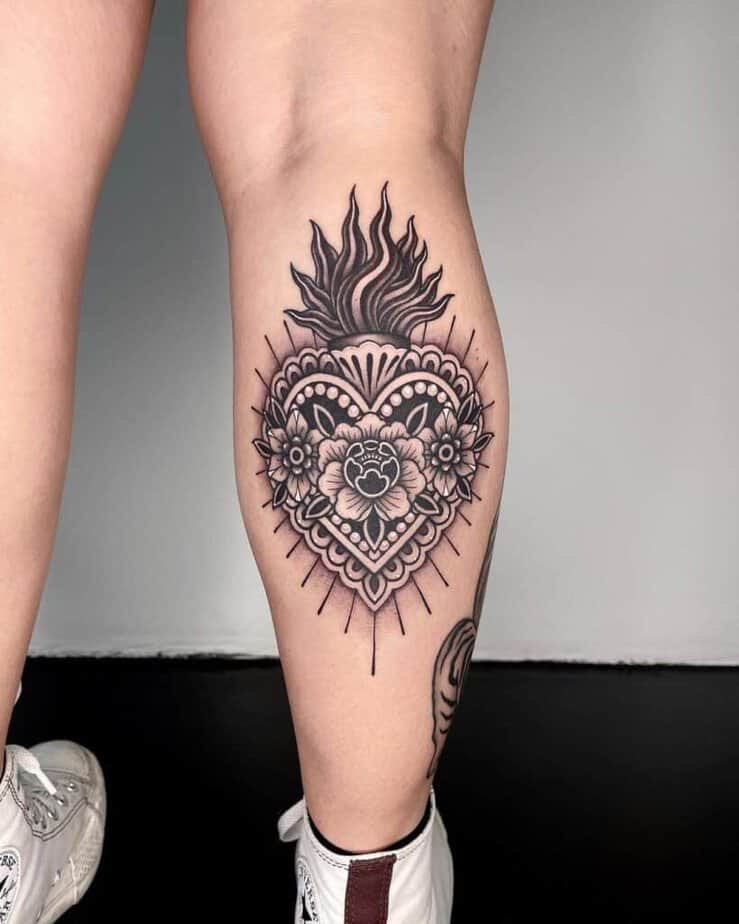
Credit: @nizi_tattoo
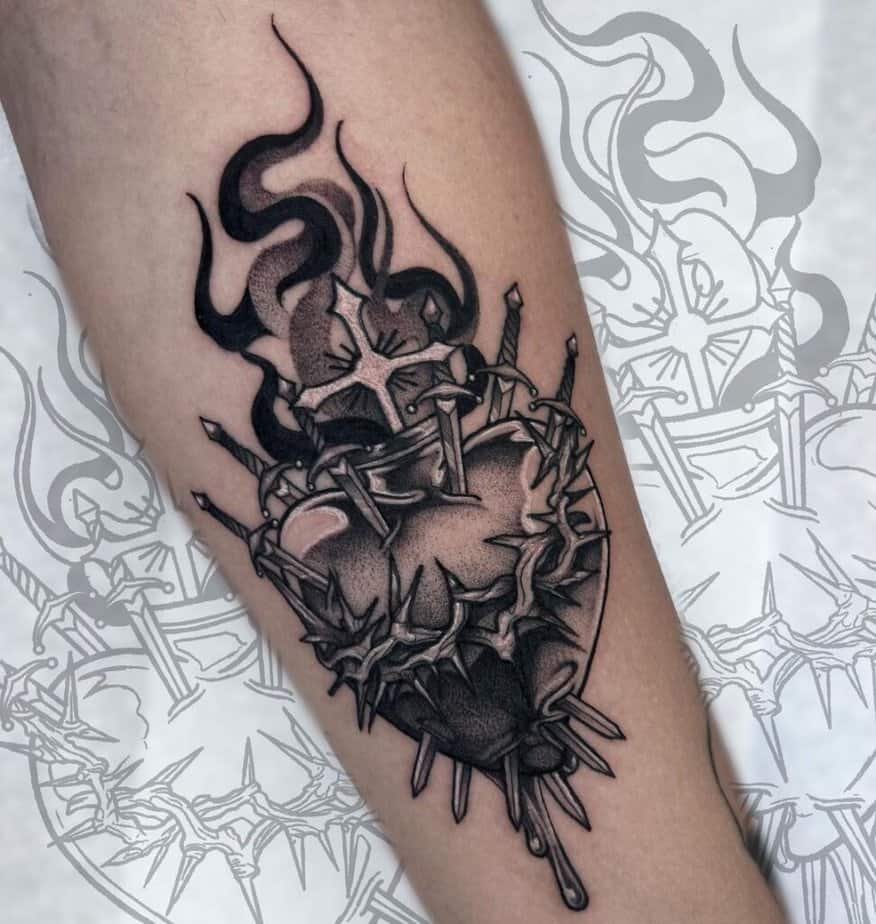
Credit: @jammydrawings
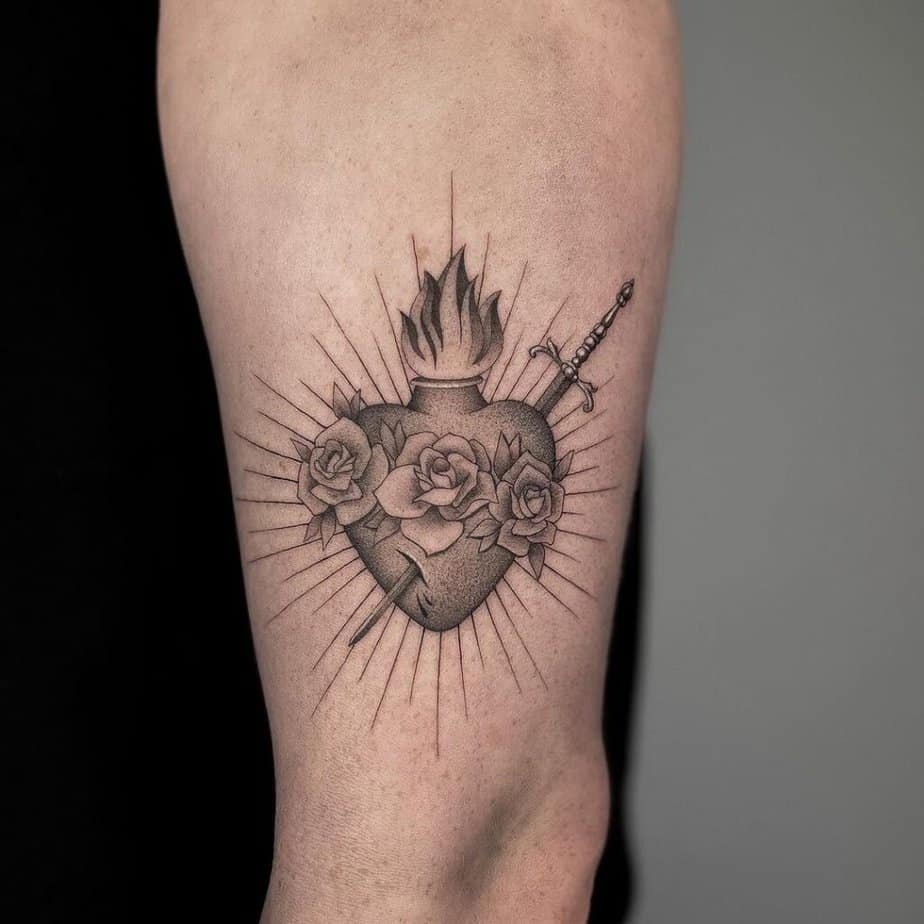
Credit: @g.bul_tattoo

Credit: @spence.tattoos
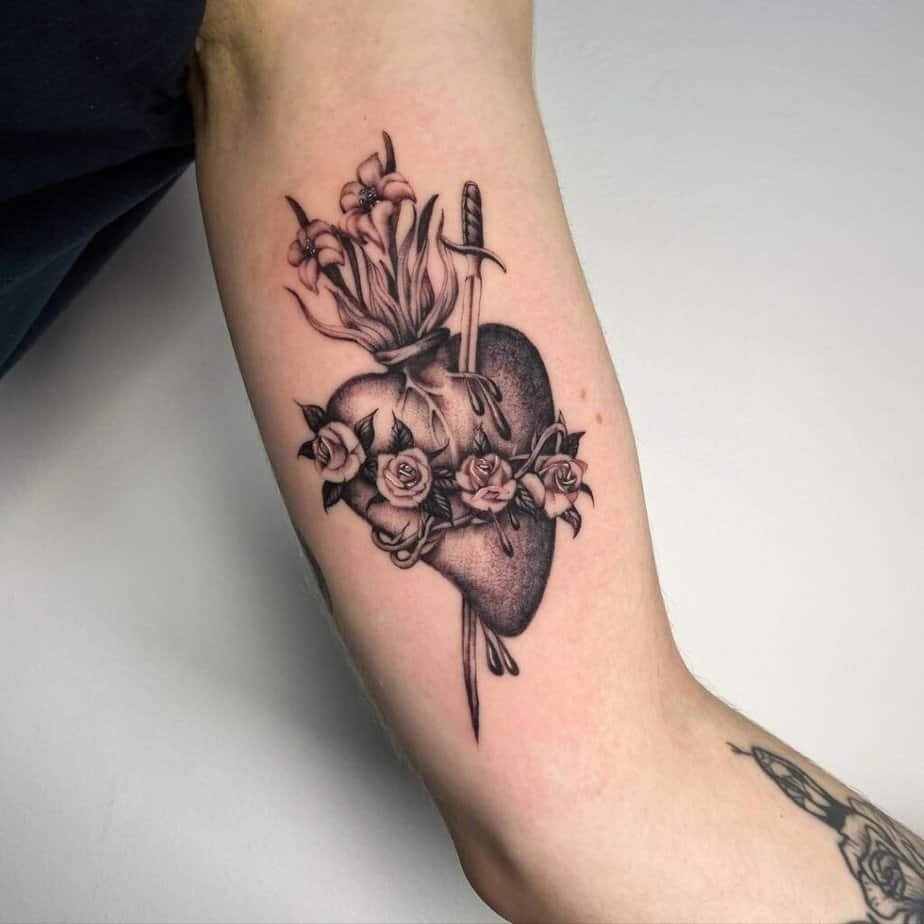
Credit: @ahterki_tattoo

Credit: @sarahwtattoo
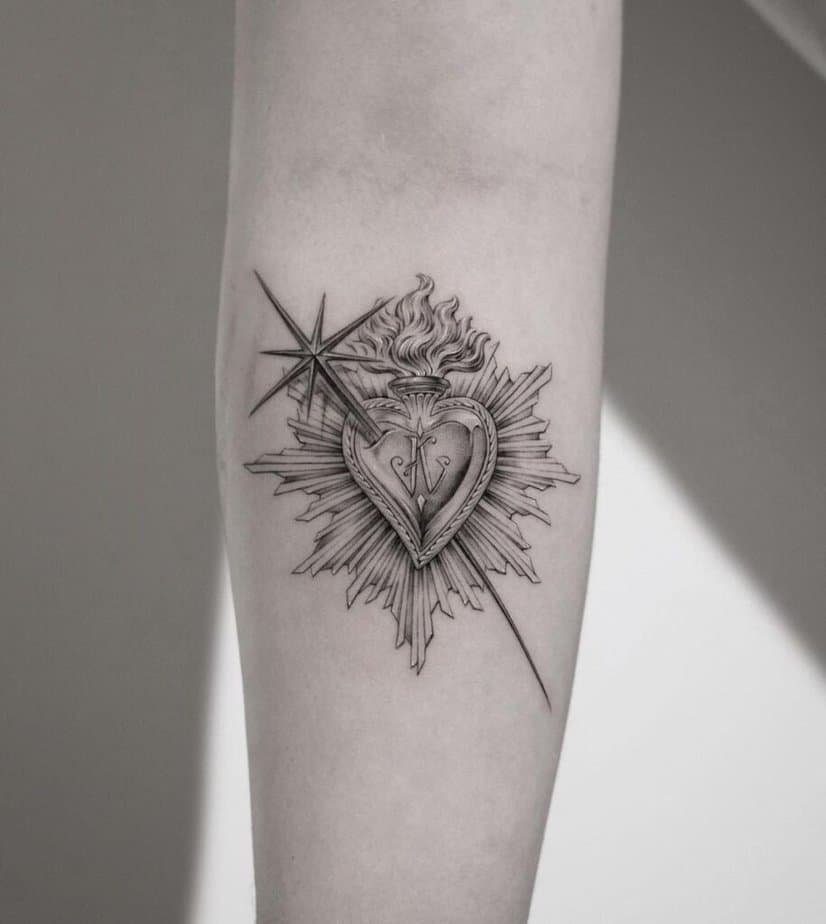
Credit: @jeon______
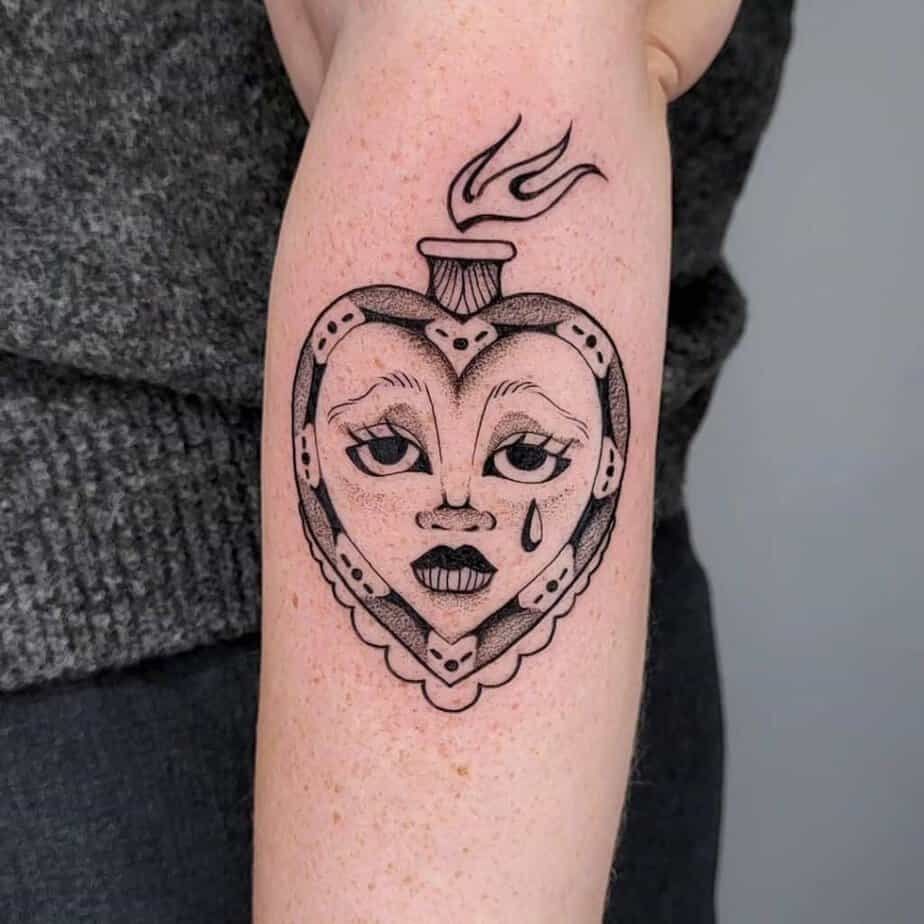
Credit: @hey.julieanne
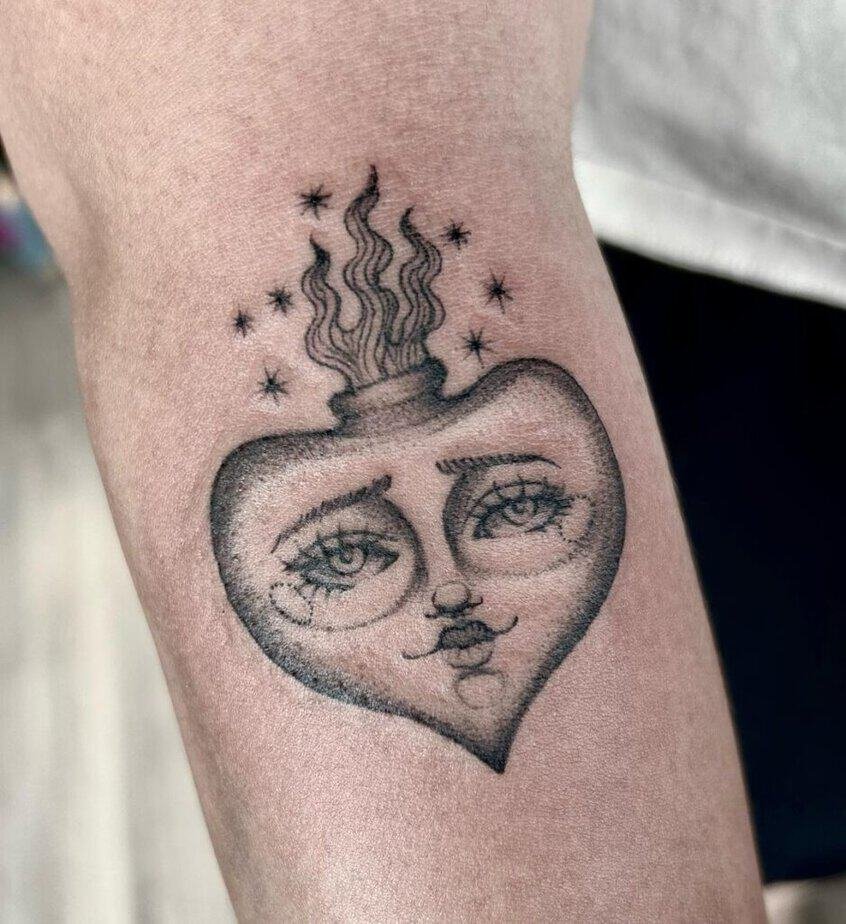
Credit: @beccajonesart
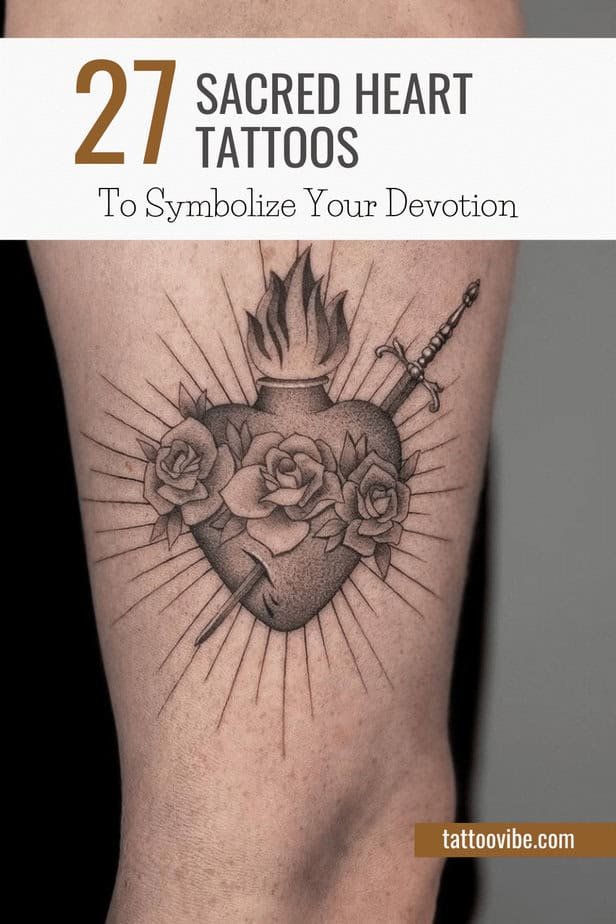
Picture this: a little studio lit by a single lamp and a line of tiny dots that make the heart read like glass. That’s the beauty of black-and-gray work — the shading can do the heavy lifting, turning a flat shape into something that seems to sit on the skin like a pendant. When the artist leans into contrast, a bead of white or a thin highlight can make the whole piece glimmer.
And then there are the ways people soften the iconography. Flowers tucked into the flames or peeking from behind the crown of thorns give the design a gentler voice — roses read like mourning and hope at once, as if beauty grew from what hurt. On the other hand, adding daggers, a thorned crown, or a tiny cross tilts the imagery back toward its original devotional language; those elements anchor the piece spiritually without being showy.
You can also bend this look toward the gothic: smoke turning into a skull, an upside-down cross tucked into a dagger, or heavy blocks of saturated black. Those choices make the heart feel like a darker hymn. Then there are the quieter surprises — tiny faces or a single eye inside the heart, tears suggested with faint shading. Up close, these delicate details reward you, and the softer shadows make the composition feel more intimate than aggressive.
Full-color sacred hearts?
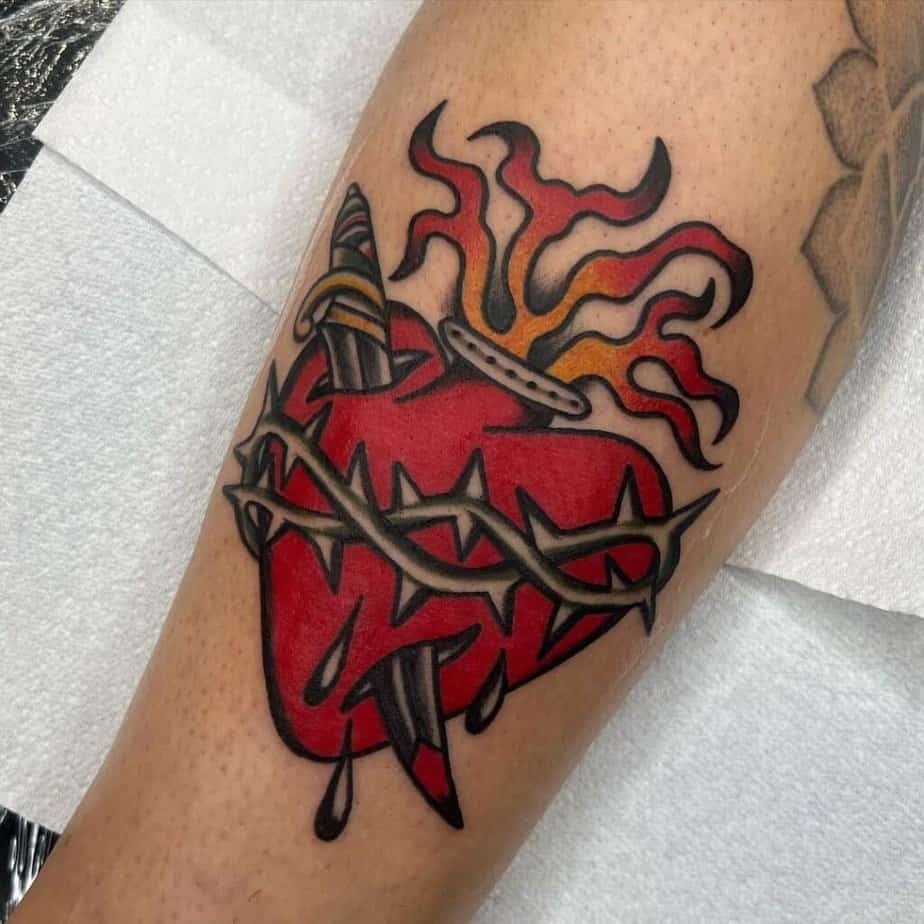
Credit: @geeetattoos
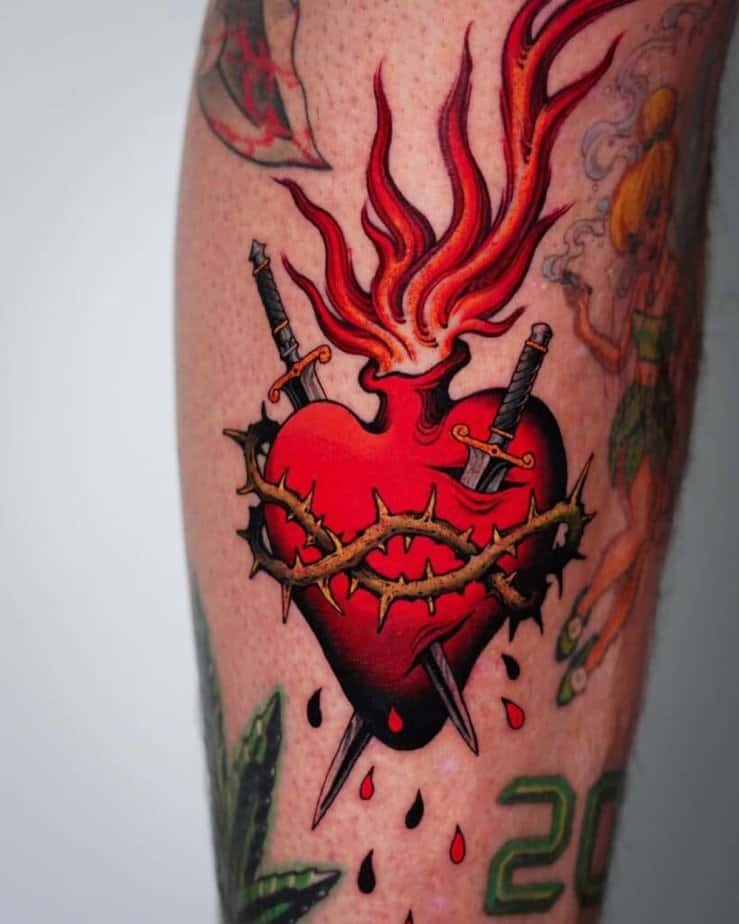
Credit: @jin_qchoi
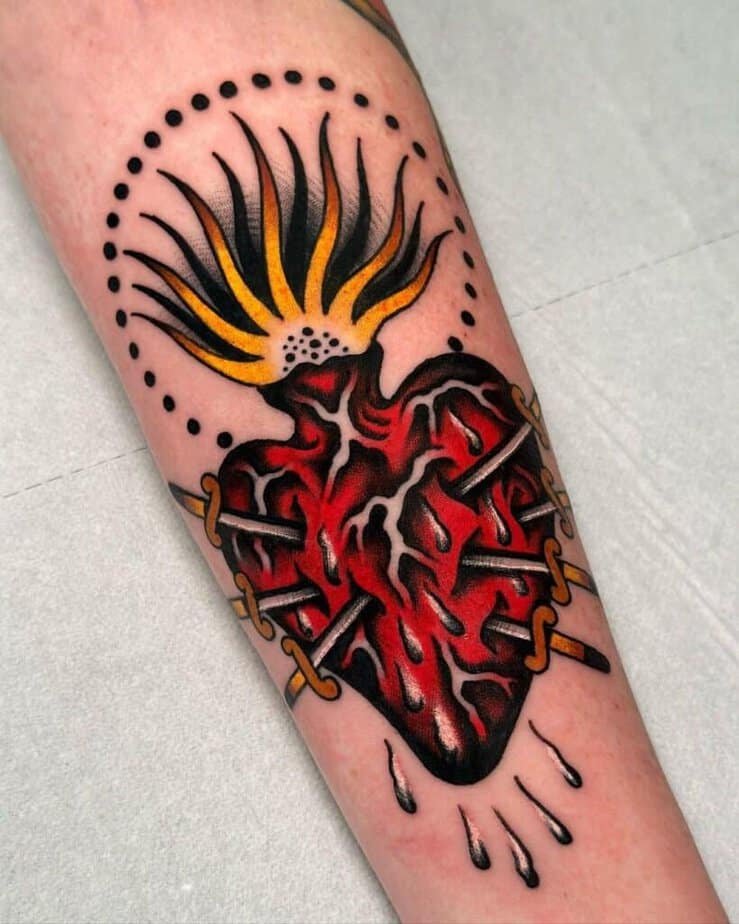
Credit: @giuseppe.messina
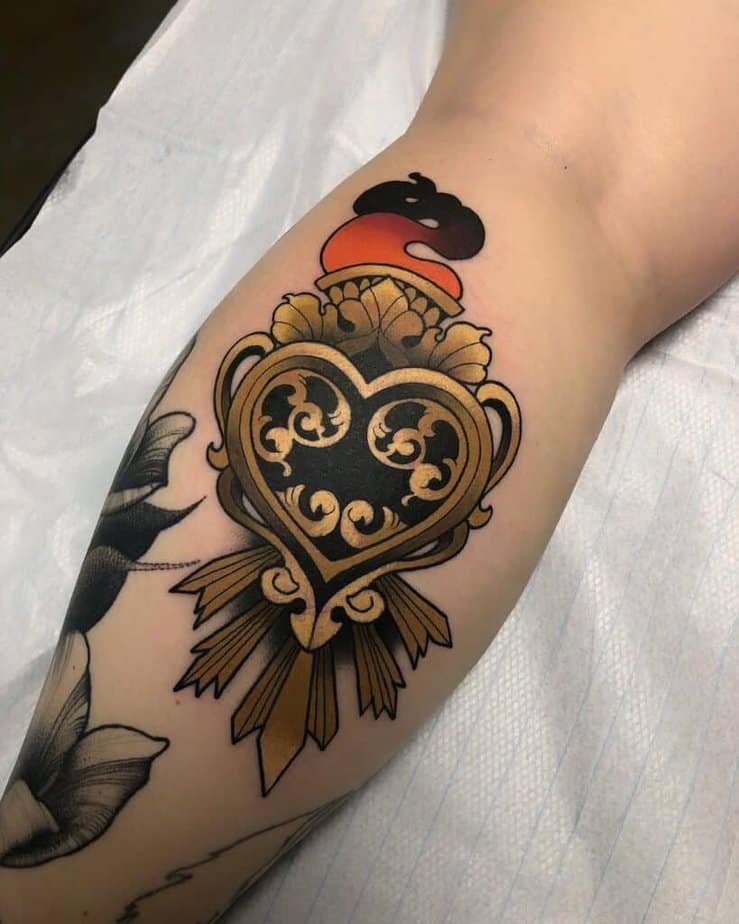
Credit: @eltrudix

Credit: @georgegilles_tattoo

Credit: @andreytattooing

Credit: @johnnycarrara_tattoo
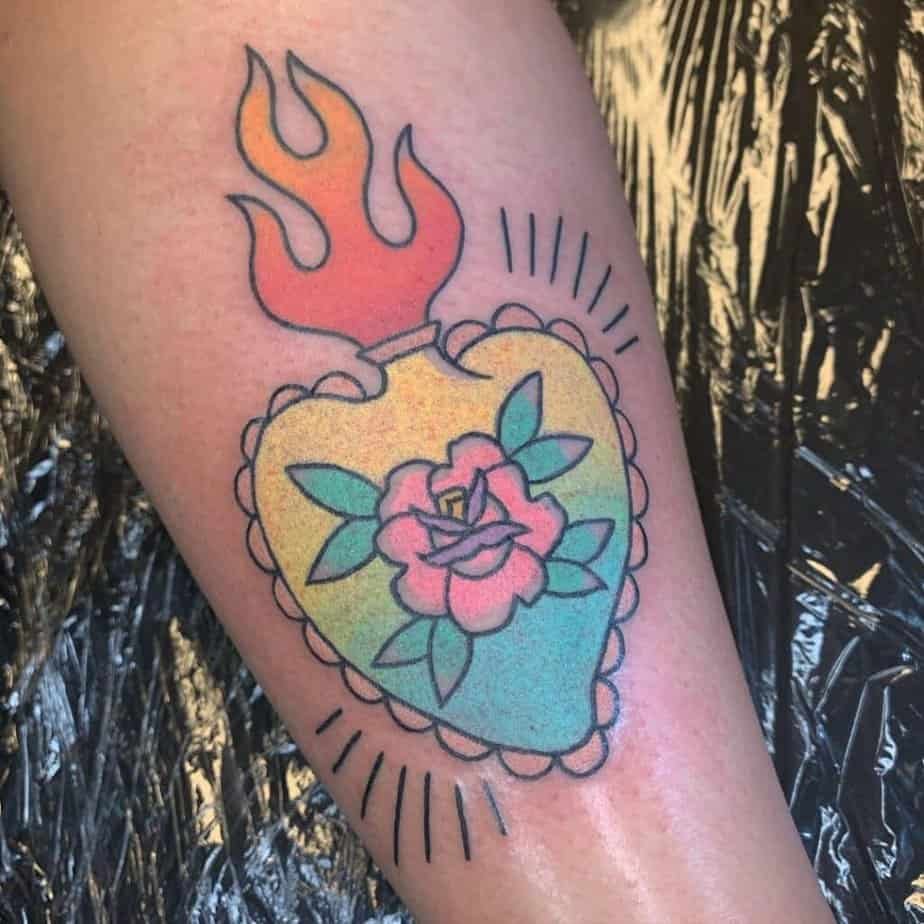
Credit: @bunnie.tatz
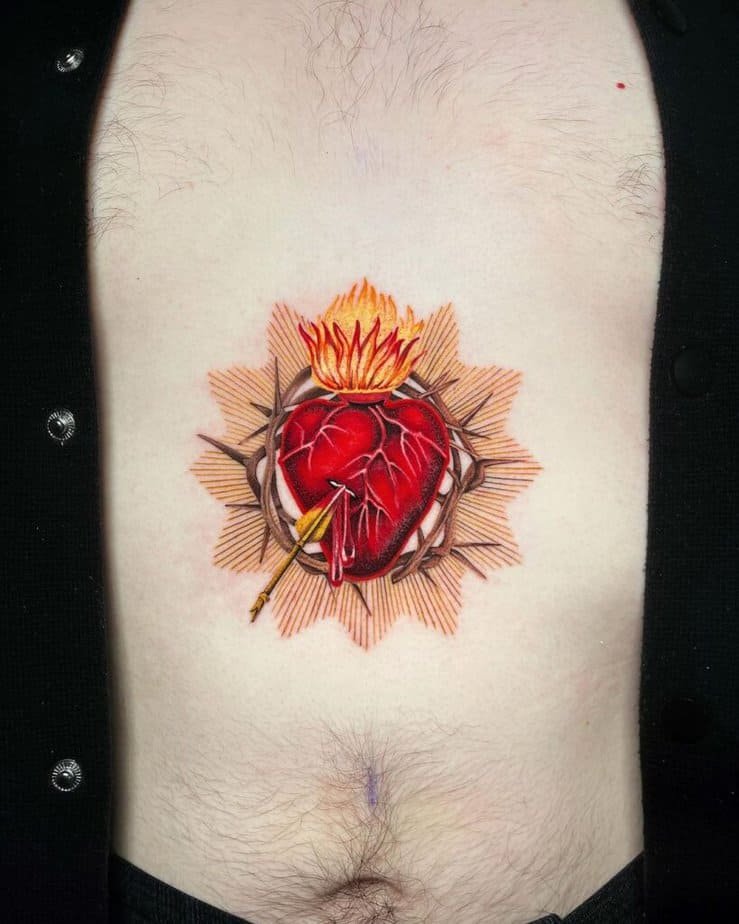
Credit: @ciotka_zu_tattoo
I started paying more attention to colored versions and what really surprised me was how many moods the palette can create. A bright red heart with a painterly gradient in the flames reads classic and loud; switch the palette to pastels and the whole design becomes tender and modern.
Artists do clever things with negative space, too — leaving veins as skin-colored lines so highlights pop, or using a black-and-gold pairing to make the sacred imagery feel precious instead of literal. Sometimes the heart is the only saturated bit in a larger black-and-gray composition, and that single red area becomes this magnetic center you can’t stop looking at.
There are also playful compositions: a heart that looks like glass with someone peeking through, or a skull sitting inside the heart so the piece flirts with mortality while keeping the core symbol intact. Size matters here as well — big, saturated pieces can tell a devotional story across a chest or back, while a pastel or small colorful heart can be a soft, personal reminder you carry every day.
Traditional — bold and bright

Credit: @micahnorman

Credit: @megrobertstattoo
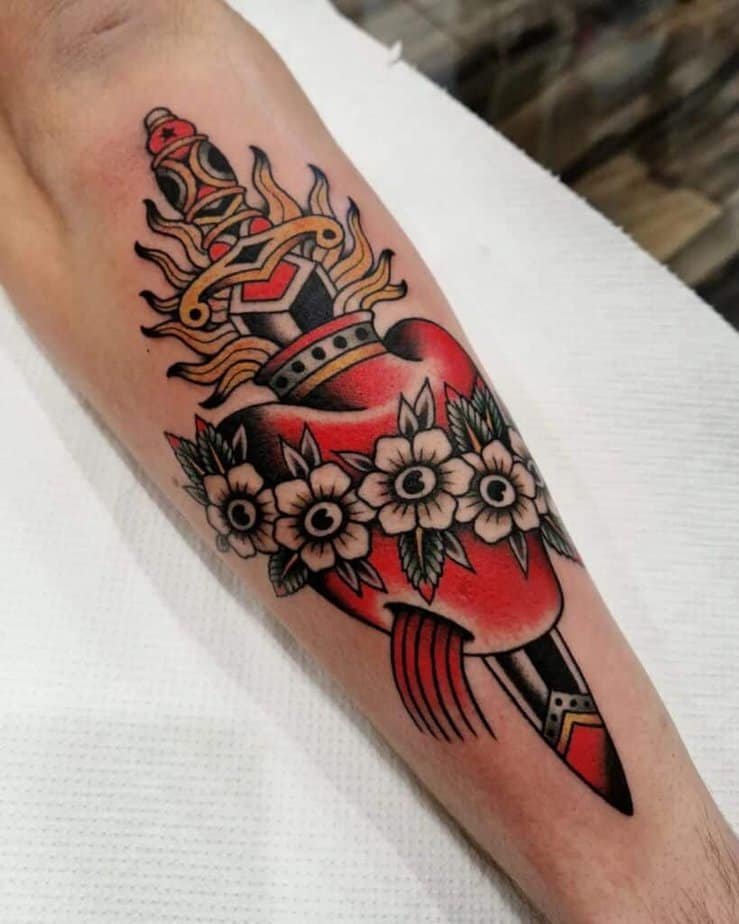
Credit: @matteo_manzini_tattooer
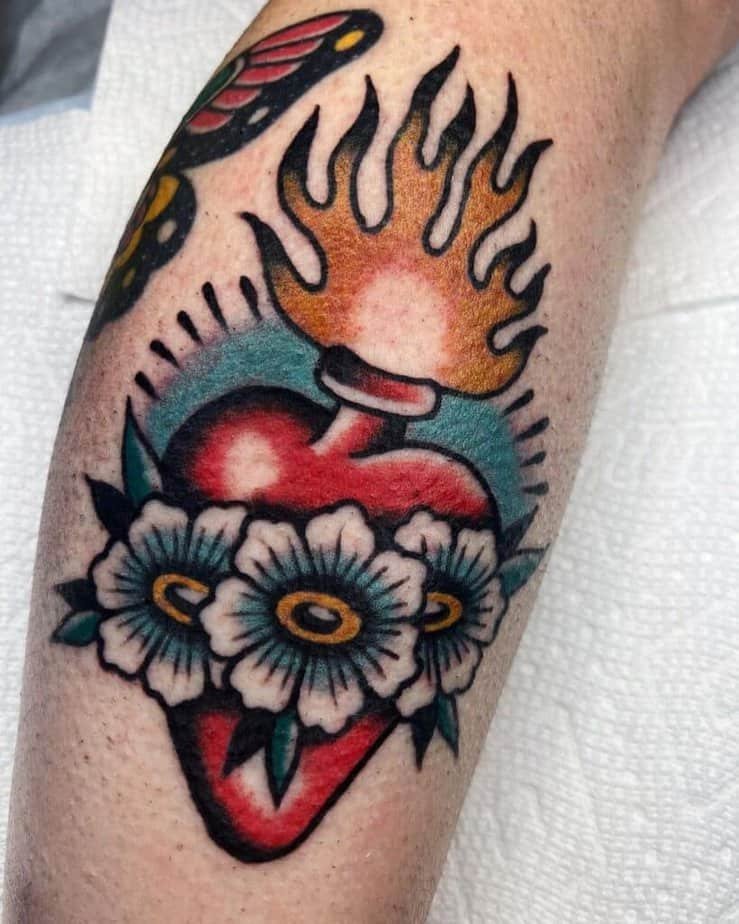
Credit: @babyghoul.tattoo
Credit: @arietti.tattoo
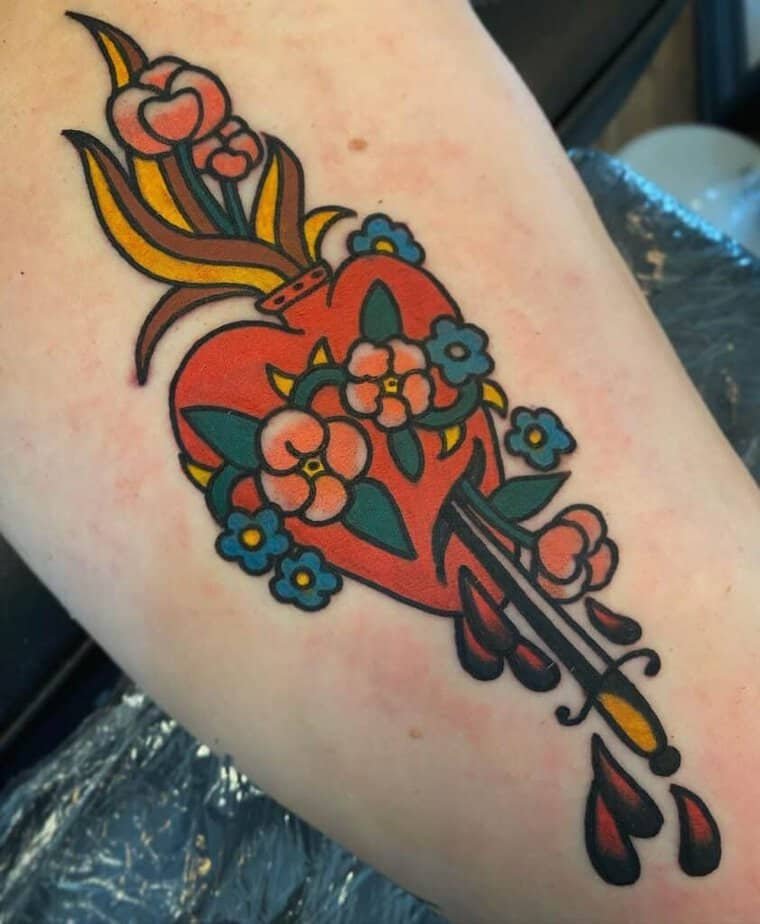
Traditional sacred heart work is where you get those clean, chunky colors and bold outlines that read from a distance. If you want a tattoo that tells a clear story without needing a magnifying glass, this is the language most people turn to: simple shapes, saturated reds, and flowers or banners that anchor the narrative.
That said, the traditional approach is flexible. Some artists bring in blue or unexpected tones so the piece feels unique rather than purely retro. Others strip color back to black and gray but keep that traditional line energy, which somehow makes the tattoo feel both old-school and fresh. When the lines are crisp and the palette deliberate, the symbol keeps its weight while looking timeless.
Wrap-Up
Honestly, the sacred heart is one of those designs that can hold any story you want to tell — grief, gratitude, memory, or a quiet daily devotion. If you’re mulling over placement, color, or how literal to get with the iconography, think about which mood you want the piece to carry every time you glance at it.
Also, if you end up getting one, I’d love to see it. Small, dramatic, colorful, or shadowed — they all tell good stories.