
I'll be honest, I used to think bird tattoos were just pretty decoration — until I saw a Quetzal done so well it felt like the skin itself remembered flight. These tattoos are more than color and feathers; they carry culture, a stubborn kind of freedom, and a way to say something about who you are without words.
What I love about Quetzal ink is how flexible it is: some designs are micro-realistic, dripping with tiny linework, while others blur into watercolor clouds or fold cultural symbols into the bird's body. If you care about meaning, style, or just want something wildly beautiful, there's a version here that will stick with you.
Micro-realistic Quetzal
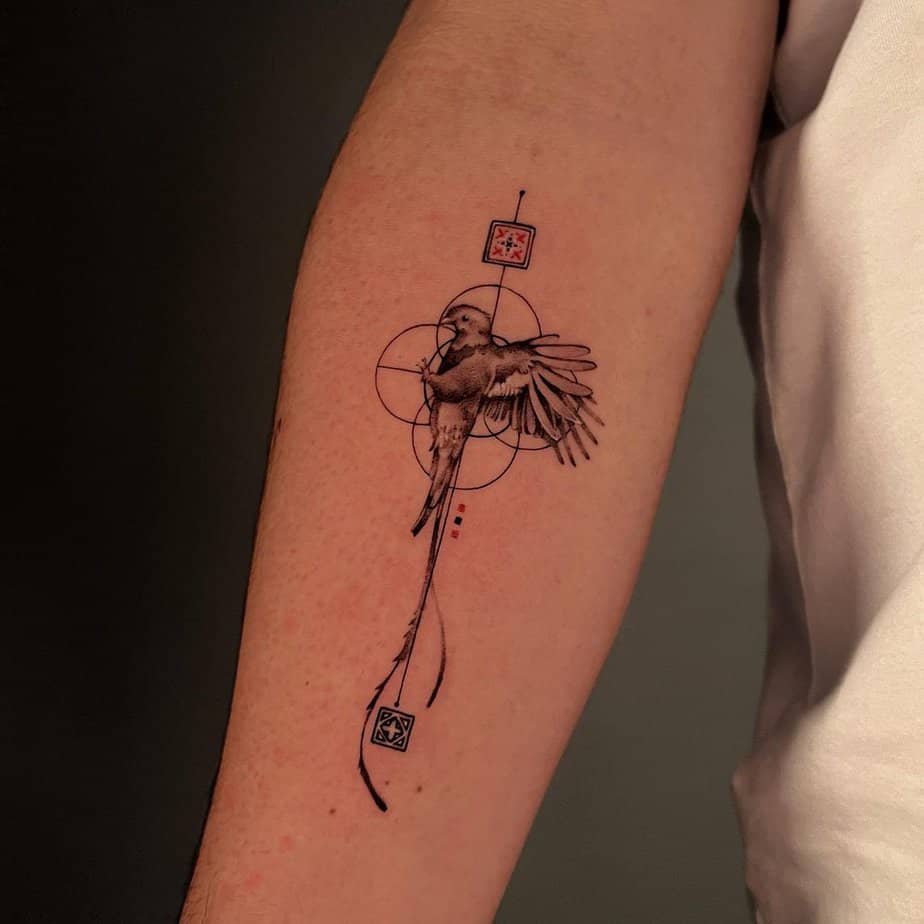
Credit: trazo
Picture a tiny masterpiece sitting on skin: the wings rendered with obsessive little strokes, feathers layered like shingles, and shading so precise you can almost see the light through them. That’s the micro-realistic approach — it aims to freeze the bird mid-breath, every filament of plumage accounted for. Beyond the technique, the Quetzal itself brings a weighty meaning: in Guatemala it’s a symbol of independence, the kind of spirit that refuses captivity no matter the cost. Wearing one of these is like carrying a quiet declaration of freedom.
Could a Quetzal get any cuter?
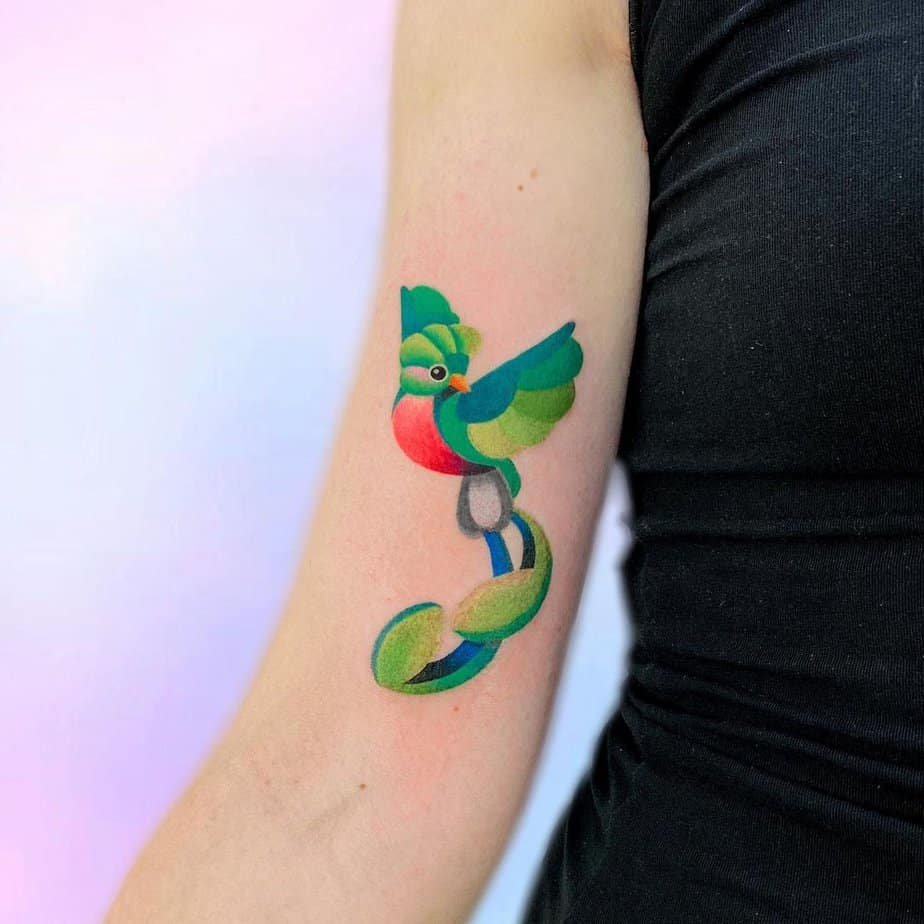
Credit: laferfy
Turns out 'cute' and 'meaningful' can live in the same design. These playful upper-arm pieces lean into bright, saturated color and a softer expression on the bird's face, so the Quetzal reads like a friendlier guardian more than a trophy. People pick this style when they want the symbolism of the bird — freedom, nature, a cultural nod — but want it delivered with sweetness and a touch of whimsy.
Traditional Quetzal
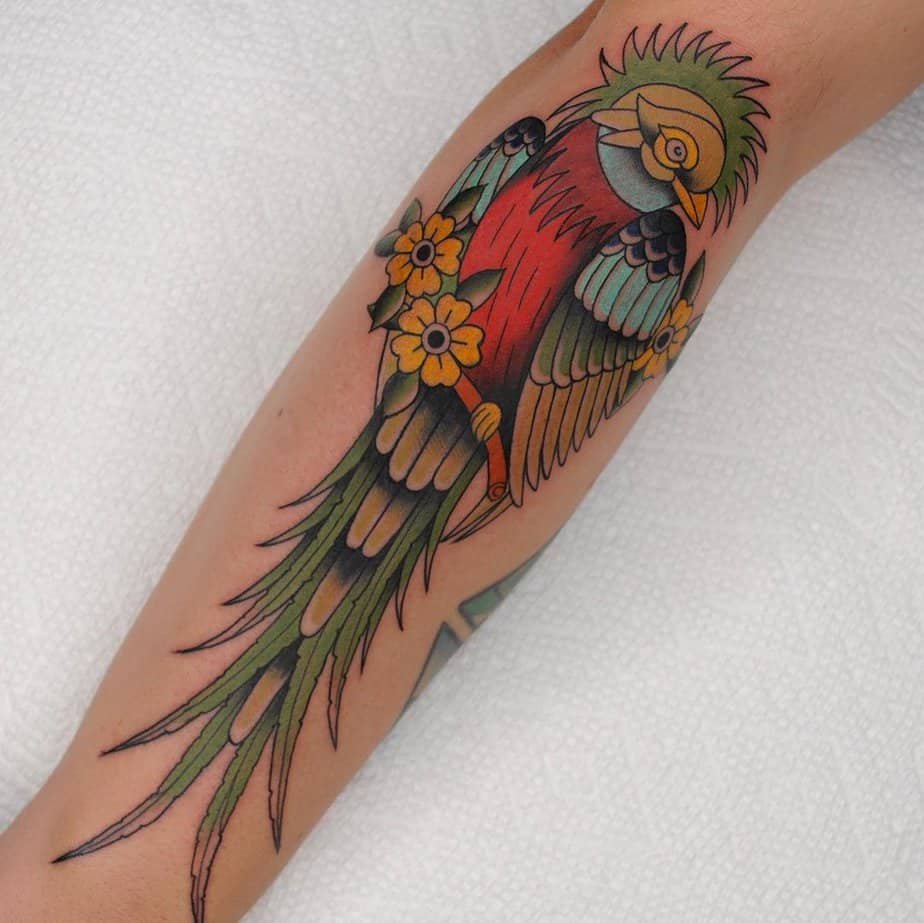
Credit: omar.tattoos
These designs use bold outlines and saturated fills that read loud and clear from a distance. The bird commonly perches among oversized flowers or geometric motifs, which gives the piece a timeless, almost emblematic quality. Compared to delicate watercolors, traditional quetzals feel more heraldic — they’re statements that emphasize the bird’s sacredness, its precious place in cultural stories.
Render the Quetzal in black and gray
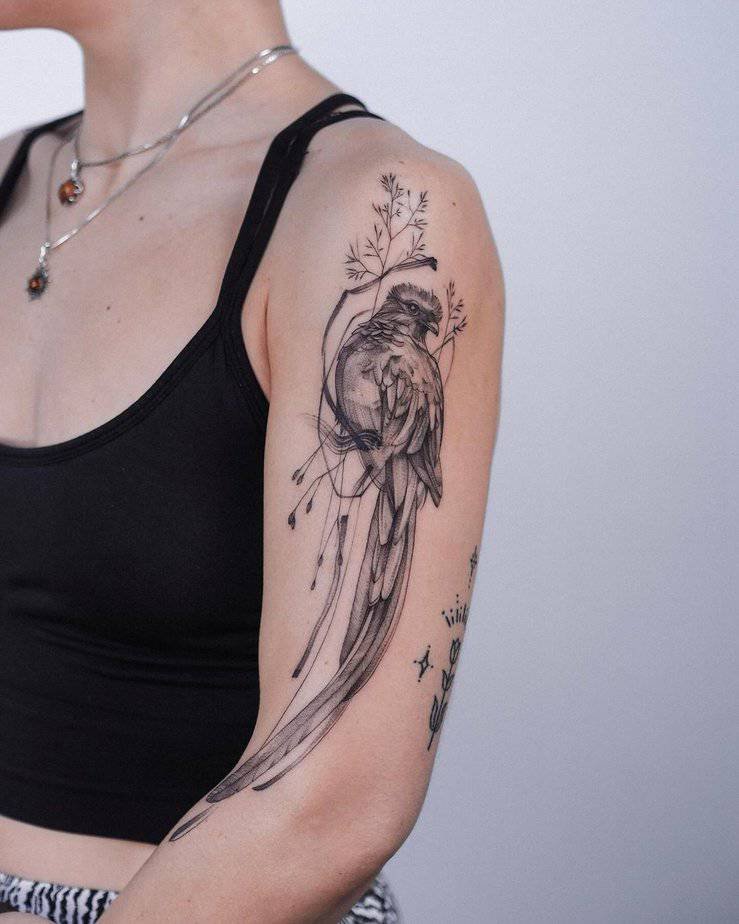
Credit: osmanergin_
Here’s a small story: I saw a black-and-gray Quetzal the other day that looked like a graphite sketch — delicate branches framing the bird, feathers hinted at with fine lines instead of color. The effect is intimate and thoughtful, almost like a study in motion. For folks who love myth and history, this approach resonates because it strips away flashy color and leaves you with line, light, and the bird’s old-world symbolism — the Aztec and Maya reverence for the Quetzal as a sign of goodness and light.
Forearm perch: green and red
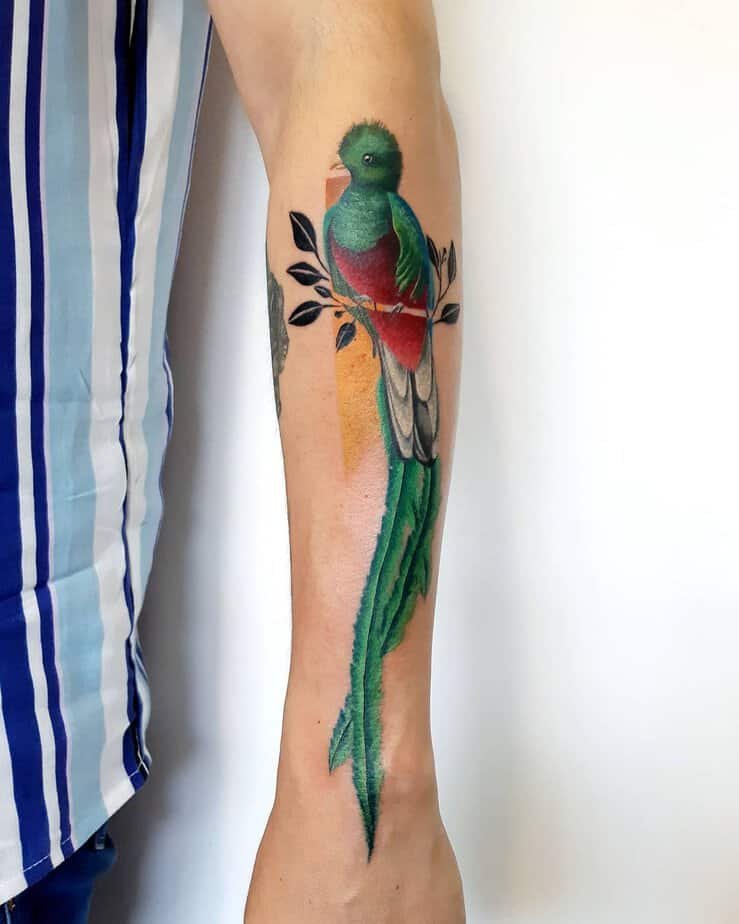
Credit: yubarta_tattoo
Slip your arm out of a sleeve and there it is: a Quetzal poised on a thin branch, dazzling in green and red, its long tail unfurling along the forearm. Using the forearm like a little stage gives the bird a profile that’s easy to read and impossible to ignore. The colors call back to Mesoamerican traditions and the popular story that the Quetzal would rather starve than live caged — that idea lends these pieces an edge of resilience beneath the beauty.
Not just feathers — a watercolor flight
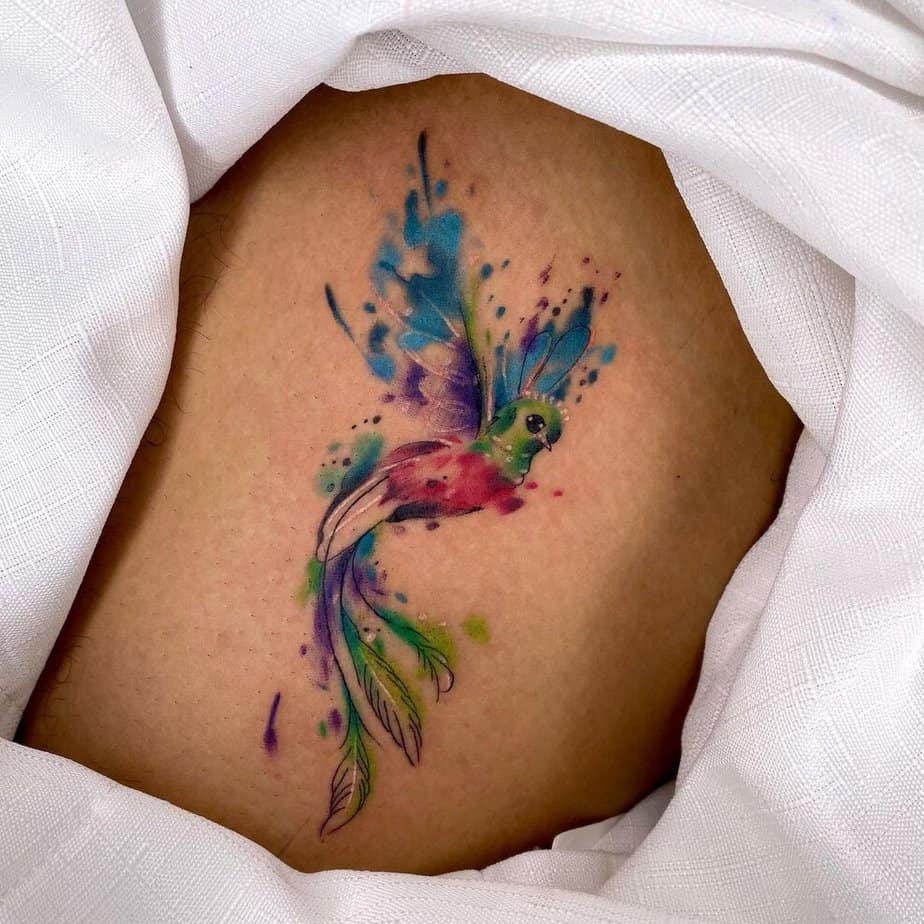
Credit: lara.tattooer
What’s wild is how watercolor styles let the Quetzal feel like it's mid-flight even when it's still. Big, spread wings dissolve into splashes of green and teal; edges blur in a way that suggests motion. Artists use deep, inky eyes or contrasting strokes to anchor the face, so the whole thing reads both energetic and intentional. If you want something painterly that reads like movement, watercolor is the mood.
Calla lily and Quetzal
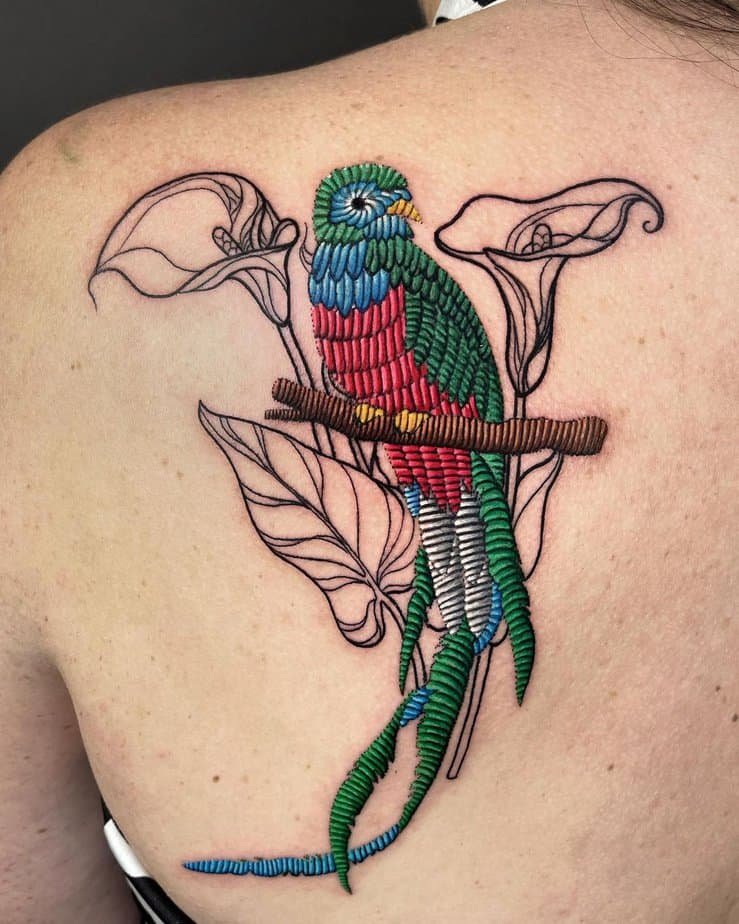
Credit: muslubash.tattoo
Compare a plain bird to one tucked among calla lilies and you’ll see two stories at once: the Quetzal’s nobility and the lilies’ quiet symbolism of purity and elegance. Those floral elements soften the design and add spiritual layers, because calla lilies carry associations with faith and beauty. People pick this pairing when they want the bird’s divinity and a floral counterpoint that lifts the whole composition into something ceremonial.
Why the Quetzal is Guatemala's bird?
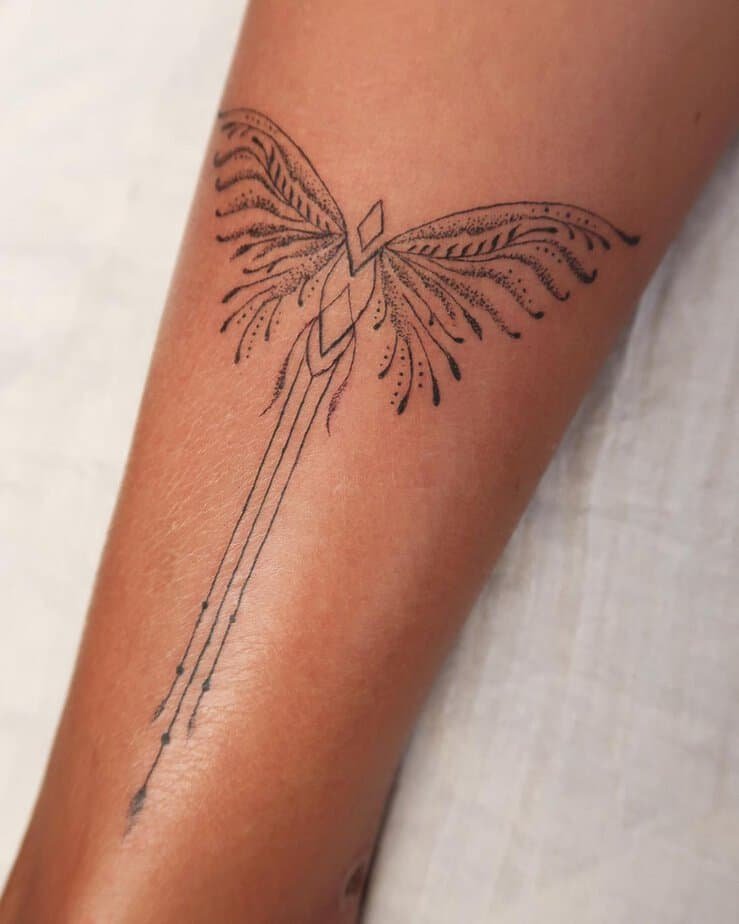
Credit: goldfawntattoo
There’s a gentle story woven into these national-bird pieces: fine-line work and dotwork highlight the Quetzal’s resplendence while honoring its role in Maya and Guatemalan heritage. Many of these tattoos are subtle tributes rather than loud statements, and they often act as wearable history — a little conversation starter about naming, land, and respect for natural symbols. Folks who choose this route want cultural connection stitched into their ink.
Chest sketch, wings wide
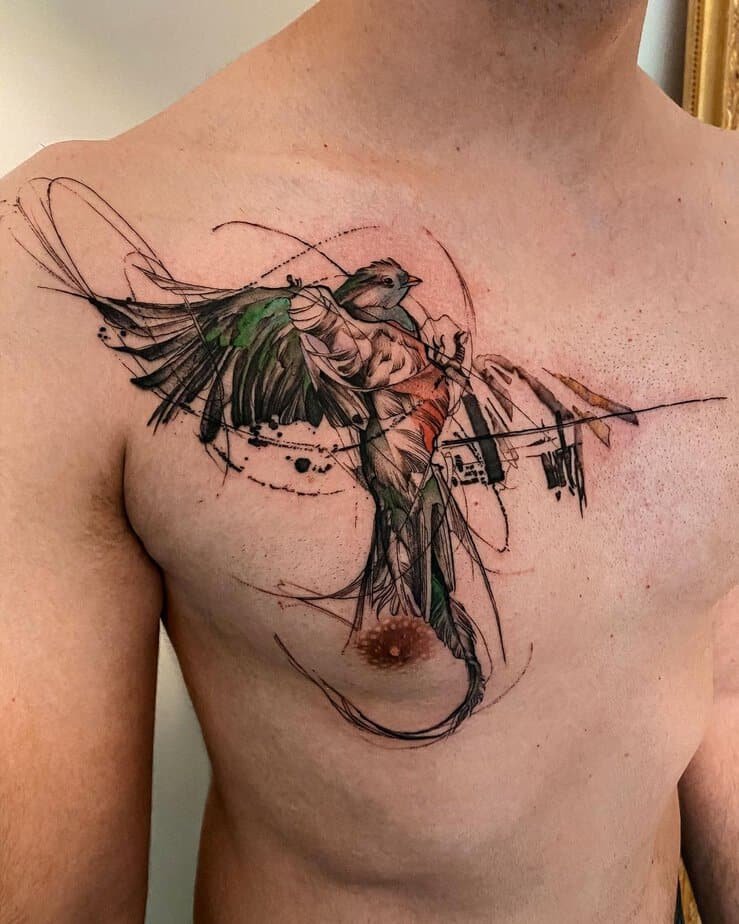
Credit: rabelo.de
Sensory moment: imagine the bird centered over the chest, wings splayed like an emblem of the heart. The sketch style keeps things airy and elegant, with just pops of green and red to remind you what species this is. People love chest placements because the bird’s wings can follow the body’s natural curves, so the piece breathes with you.
Watch the Quetzal dance
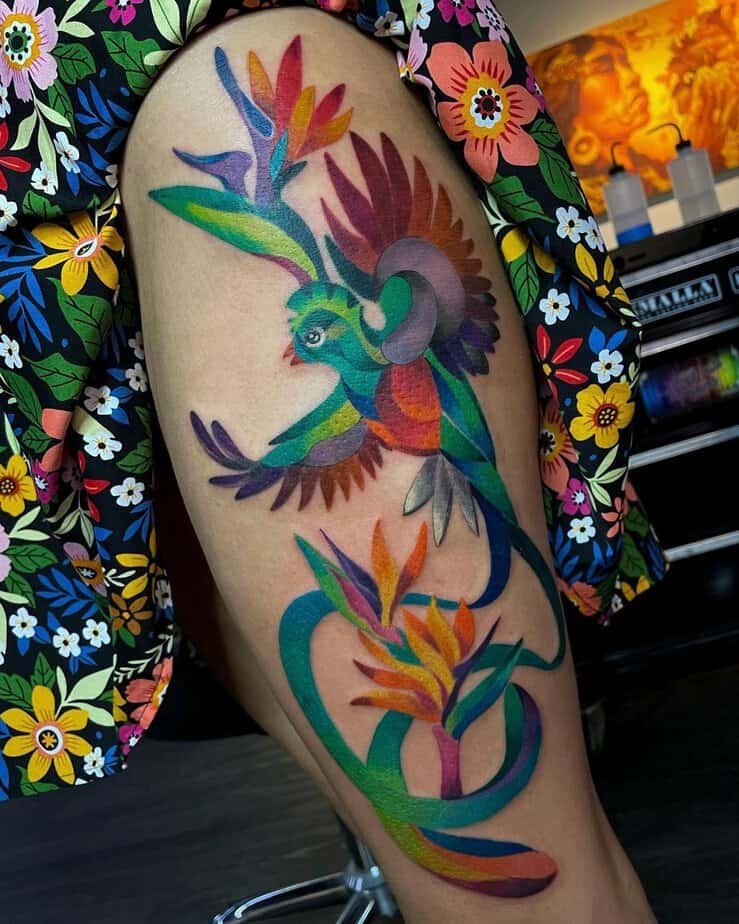
Credit: azu.tattoo
I once saw a leg piece where the Quetzal looked like it was mid-twirl — tail curled, wings flaring, colors thrown like confetti. These larger canvases let artists give the bird dramatic motion, and the result reads theatrical in the best way. The mix of greens, reds, and blues keeps it lively; on a leg it can feel like a private parade each time you walk.
Upper arm: whimsical colors and gaze
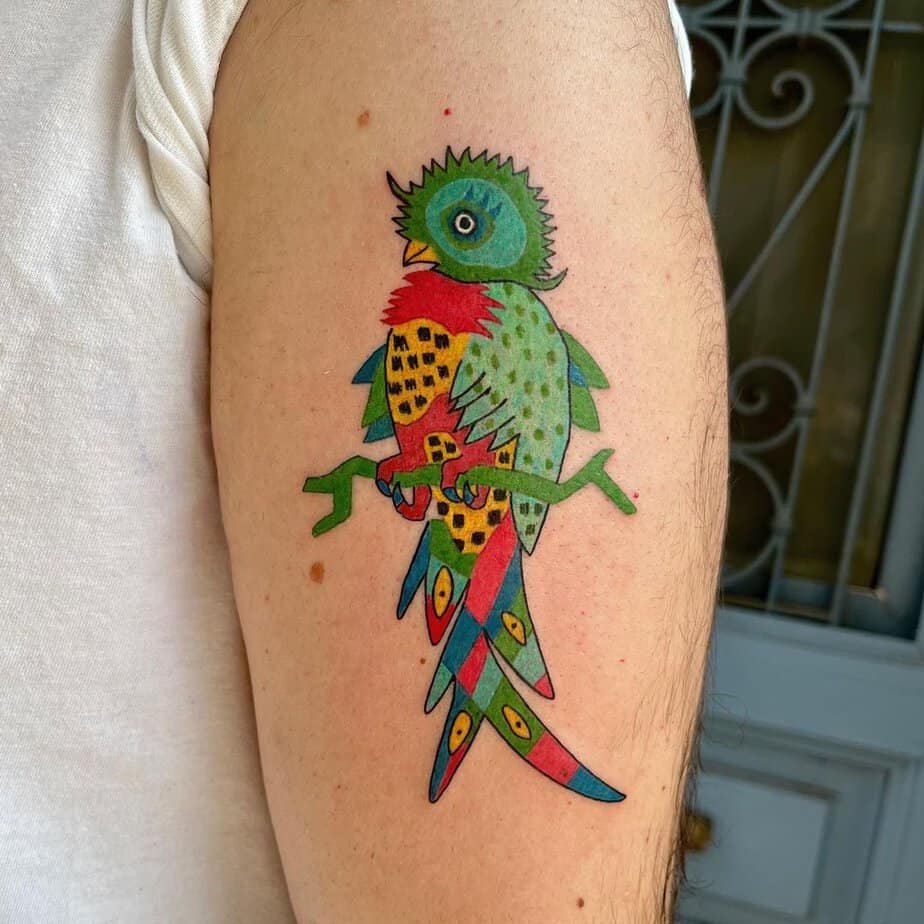
Credit: antistress_tattoo
Compare a stern, regal Quetzal to a whimsically rendered one and you’ll notice how expression changes everything. A softer eye and playful accent colors turn the bird into a companion figure — something that whispers hope rather than proclaiming power. For people who want symbolism without the gravitas, this is often the sweet spot.
Bold graphic — gentle meaning
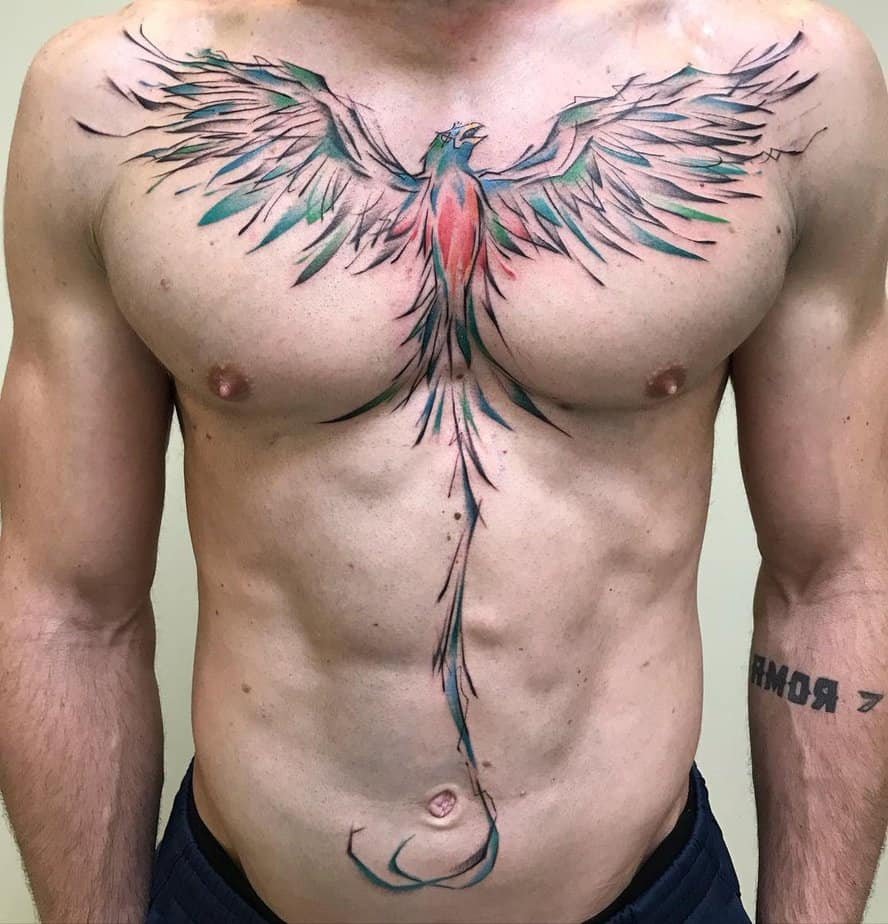
Credit: sietetattoo
Here’s the thing about graphic chest pieces: they read like a statement. Clean shapes, intense color blocks, and a tail that flows with the torso give these tattoos an architectural energy. But tucked under that boldness is a softer purpose — strength, connection to nature, and a visual reminder that you carry something wild and beautiful inside you.
Fun Quetzal bird
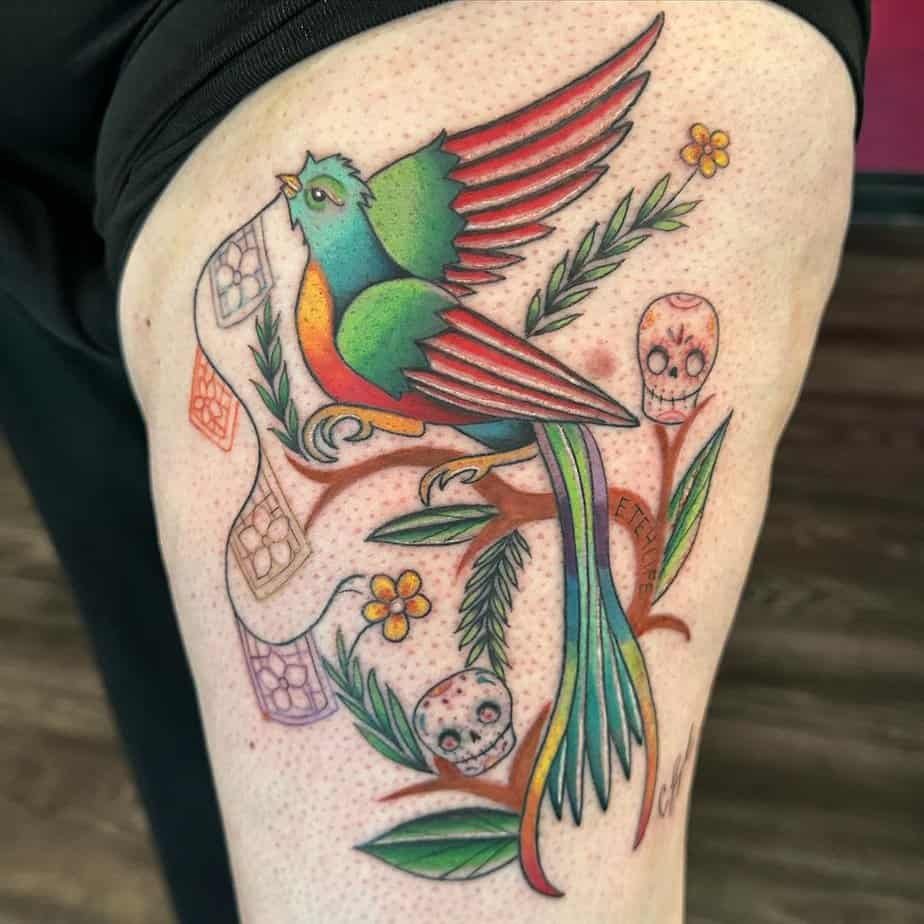
Credit: carinaxlizarde
Sensory drop-in: ribbons fluttering, flowers bright, a tiny skull nodding at cultural celebrations — this leg tattoo feels like a festival on skin. Mixing Day of the Dead motifs with the Quetzal creates something raw and celebratory at once, a reminder that life and memory live together. It’s joyful and a little cheeky, which makes it irresistible for those who want their ink to sing.
What if a temple lived inside a bird?
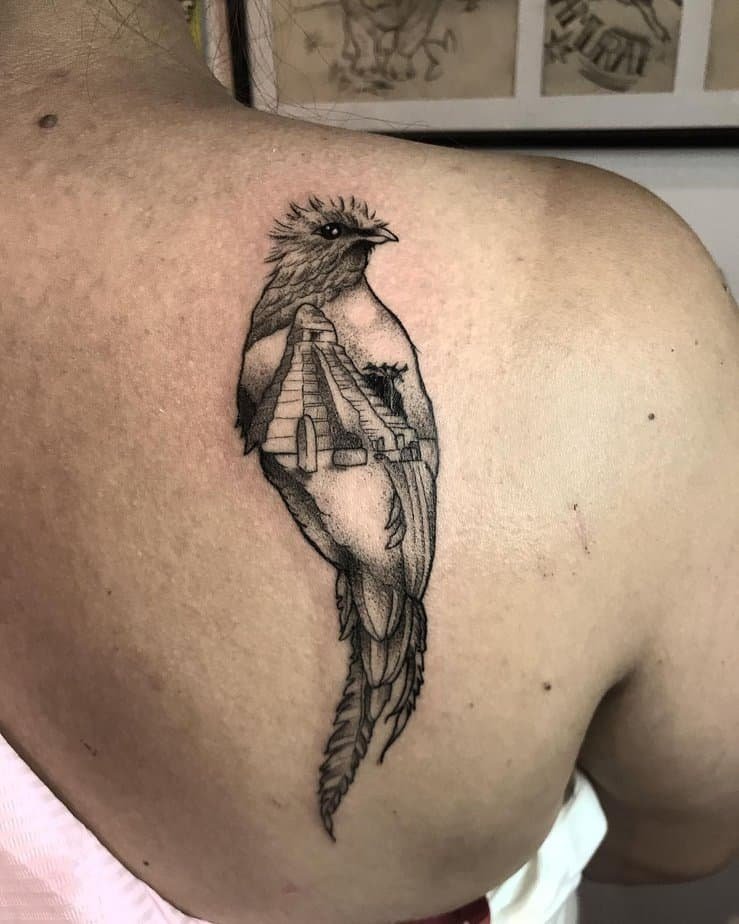
Credit: javiermorales_tattoo
There’s a tiny narrative here: the Quetzal’s silhouette contains a Maya temple, bold blackwork lines hug the form, and suddenly the bird becomes landscape, history, and identity all at once. In small towns or big cities, those pieces read as cultural anchors; they’re proud, rooted, and visually commanding. If you want a design that says origin and belonging, this approach nails it.
Rainbow feathers in watercolor
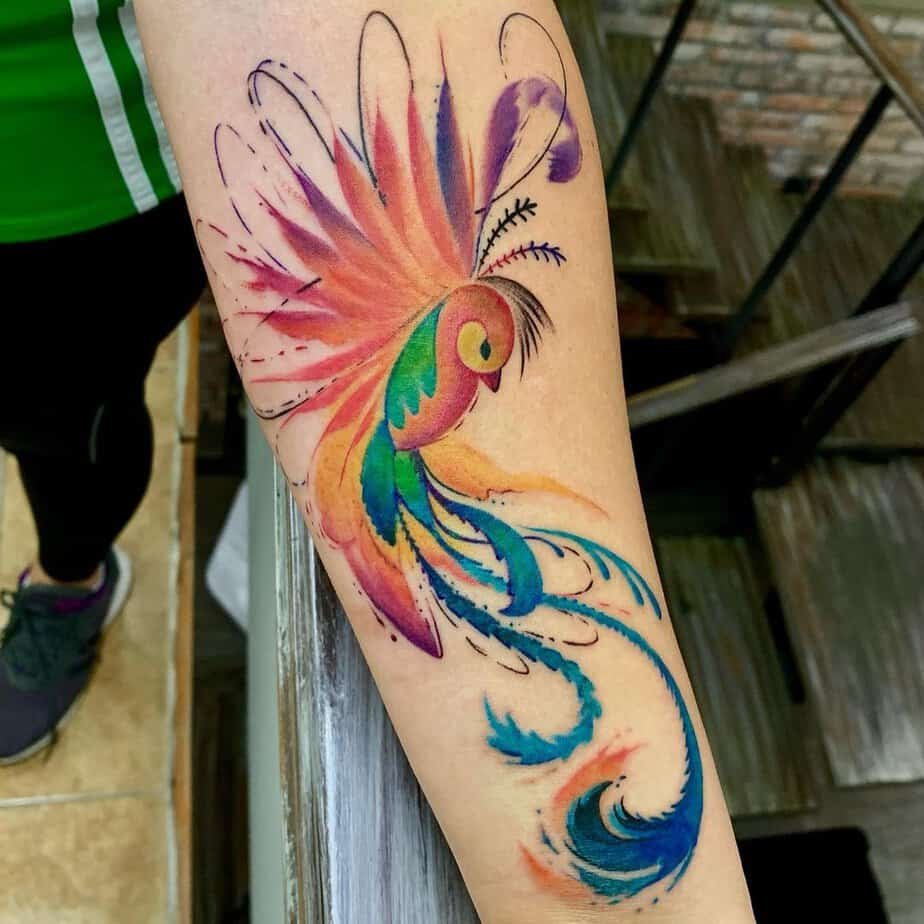
Credit: ferytattooartist
Comparing muted palettes to full-spectrum feathers, you quickly see why so many people choose rainbow watercolor: it reads as exuberance. Fluffy, colorful plumage combined with a determined stance gives the bird personality and grit. The watercolor wash softens edges so the Quetzal feels less like an illustration and more like a living impression.
Tell the story of the fallen Quetzal
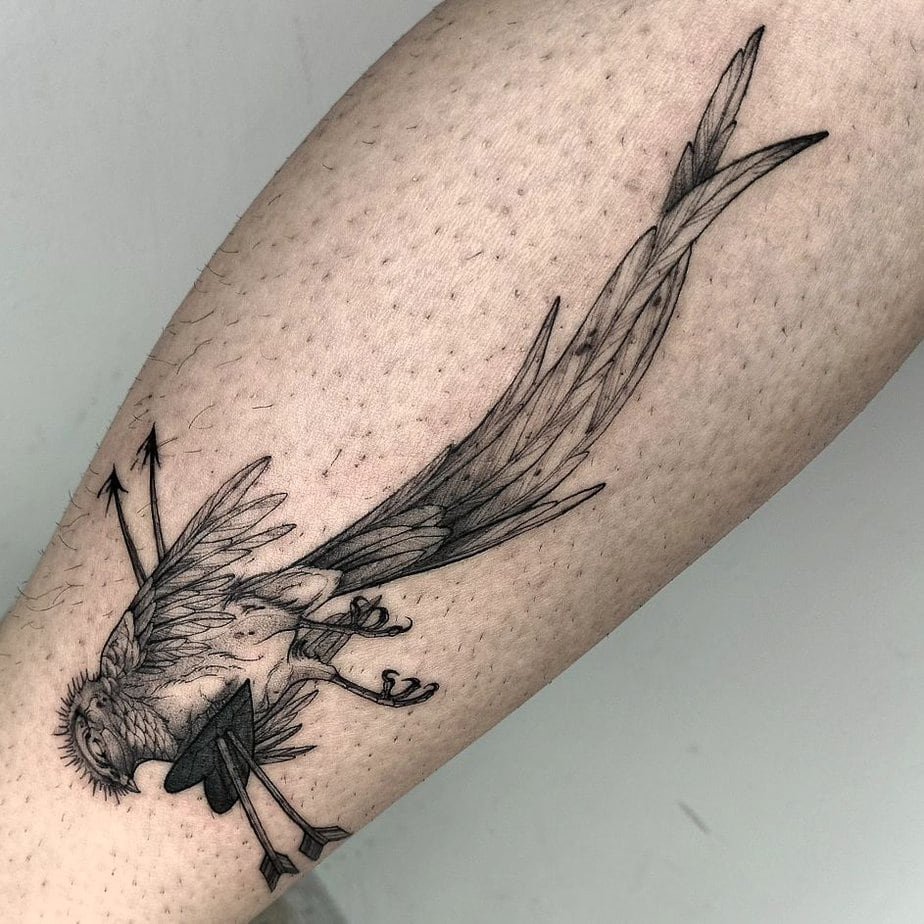
Credit: tobibarrett
A black-and-gray piece with arrows through a heart is a heavy little epic. The shading gives weight to the bird’s form and the symbolism — vulnerability, sacrifice — lands without melodrama. Tattoos like this hold complex feelings: loss and beauty braided together. People often choose them as private memorials or reminders of hard-earned compassion.
Forearm halo of dots
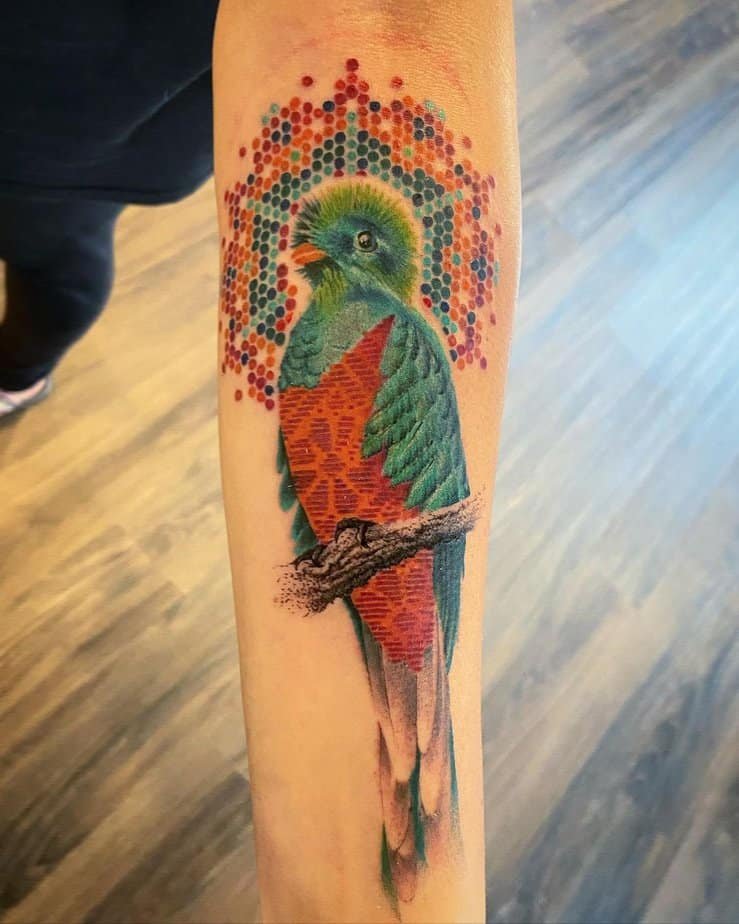
Credit: tabatatattoo
Sensory scene: a Quetzal perched gracefully, haloed by tiny colored dots that catch the light like a crown. Those small accents turn the piece ethereal, giving it a whisper of otherworldliness. The attention to wing detail and the soft halo designer choice make it feel like a personal talisman rather than just decoration.
Music tucked into feathers
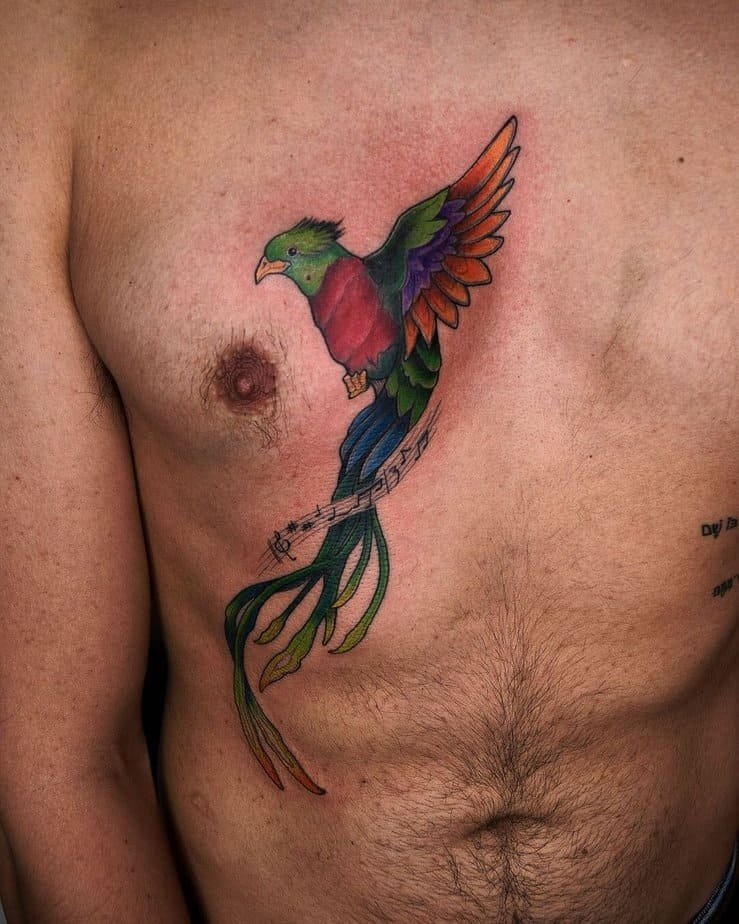
Credit: darthjavim
And get this: someone wrapped musical notes into a Quetzal’s tail, and suddenly the bird is both song and flight. The happy expression, bright palette, and flowing notes make this design feel celebratory — a literal soundtrack for freedom. It’s perfect for musicians, dreamers, or anyone who wants their ink to hum.
Wrap-Up
So, which one speaks to you — the quiet sketch, the loud watercolor, the cultural emblem, or the bird with a song in its tail? I’d love to hear which direction you’d take if you were getting a Quetzal: color, story, placement, or meaning?