
Been noticing cobras popping up in tattoo feeds everywhere lately — and not just because they look fierce. There’s a reason people keep choosing them: cobras carry a weighty mix of danger, protection, and old-school symbolism, but they also give artists a gorgeous shape to work with. Whether you want something tiny that whispers meaning or a full‑on back piece that commands a room, cobras adapt to style, placement, and story in a way a lot of motifs don’t.
Shoulder wrap

Credit: @sandracunhaa
Imagine sitting in the chair while the artist follows the curve of your deltoid — the cobra’s body can coil around the shoulder blade and fall naturally with the muscle. Shoulders give so much room that artists can play with scale and detail: fangs, hood patterning, or ornamental bands that tuck into a sleeve later. Plus, because the area is relatively flat and broad, the ink tends to read well from a distance without losing the tiny textures up close.
Why the back of the leg works?

Credit: @jaeill_son
I stumbled on a calf cobra recently and the way it slinked down the back of the leg made me rethink placement. The calf and the Achilles area move with you, so a long, winding cobra feels almost animated when you walk. It’s a sweet spot for people who like to show ink selectively — shorts highlight it, pants hide it — and it handles both bold and delicate line work depending on how dramatic you want it to be.
Stomach twist

Credit: @sosnovska.tattoo
Picture the cobra curving with your torso — that’s the whole appeal here. The softer skin of the stomach changes how ink settles, so you want an artist who knows how to design for movement and stretch. When done right, the snake can accentuate natural curves and look intimate, almost like a hidden talisman you only reveal when you choose to.
Show it off on your arm
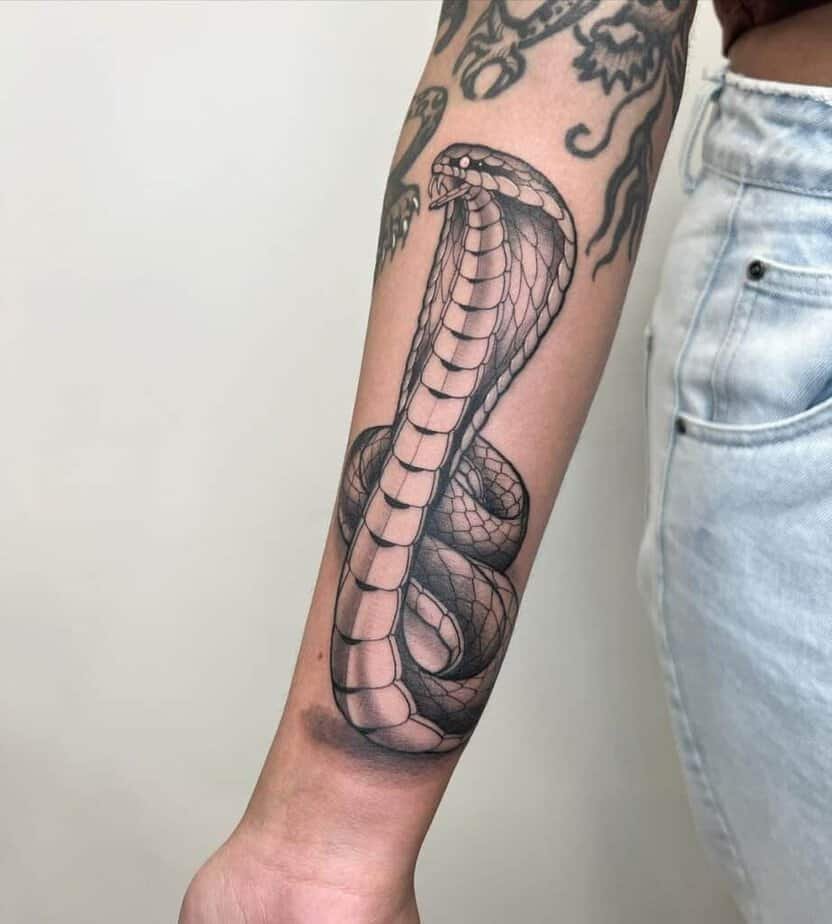
Credit: @harryhoy_tattoos
Arms are the classic playground for snake designs — they wrap easily around biceps, slide down forearms, or fit snug against the wrist. What’s wild is how flexible the look can be: a single elegant line for minimalists, or a full, textured piece for someone building a sleeve. It’s also one of the most forgiving spots for touchups should you change the design later.
Two cobras, lower back symmetry
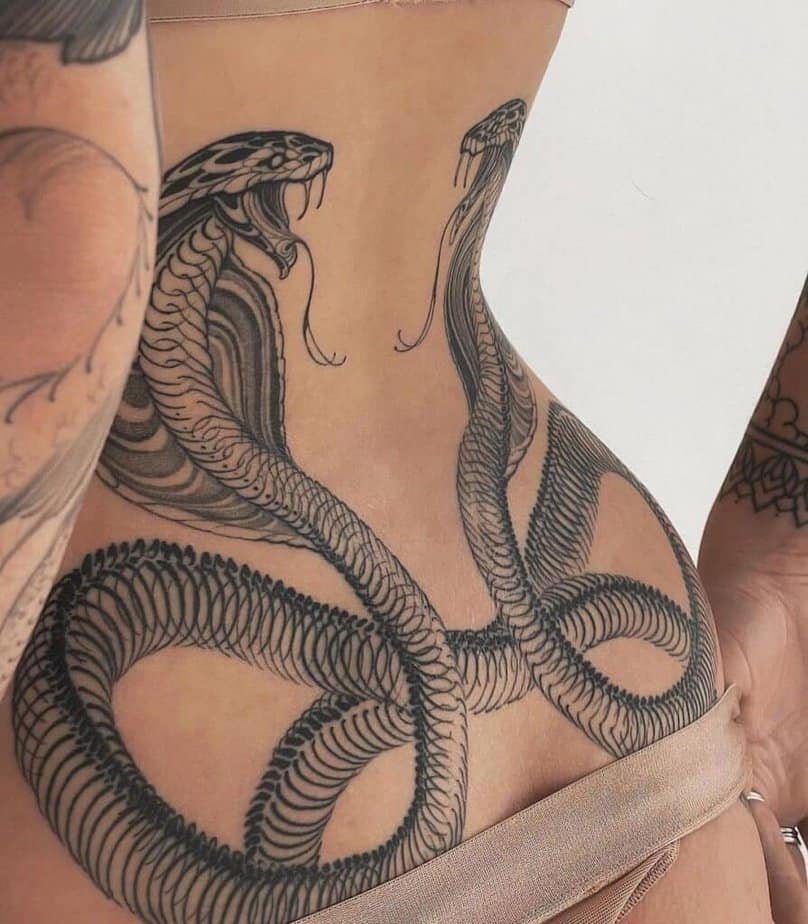
Credit: @timvic_tattooer
There’s something satisfying about mirror images — two cobras facing each other on the lower back create a natural focal point. On top of that, a lower back canvas lets the artist play with negative space and symmetry so the piece looks balanced whether you’re standing straight or bending. It’s bold, intimate, and definitely a conversation starter when you want it to be.
Ornaments that steal the show (but don't)

Credit: @beatattooartist
And get this — adding ornamental details around a cobra can completely change the vibe without overshadowing the snake itself. Tiny beads, filigree, or geometric borders frame the cobra and give the whole design a cultural or decorative slant. It’s a sweet trick if you want your tattoo to feel personalized but still let the snake be the central character.
Cobra wrapped around a vase
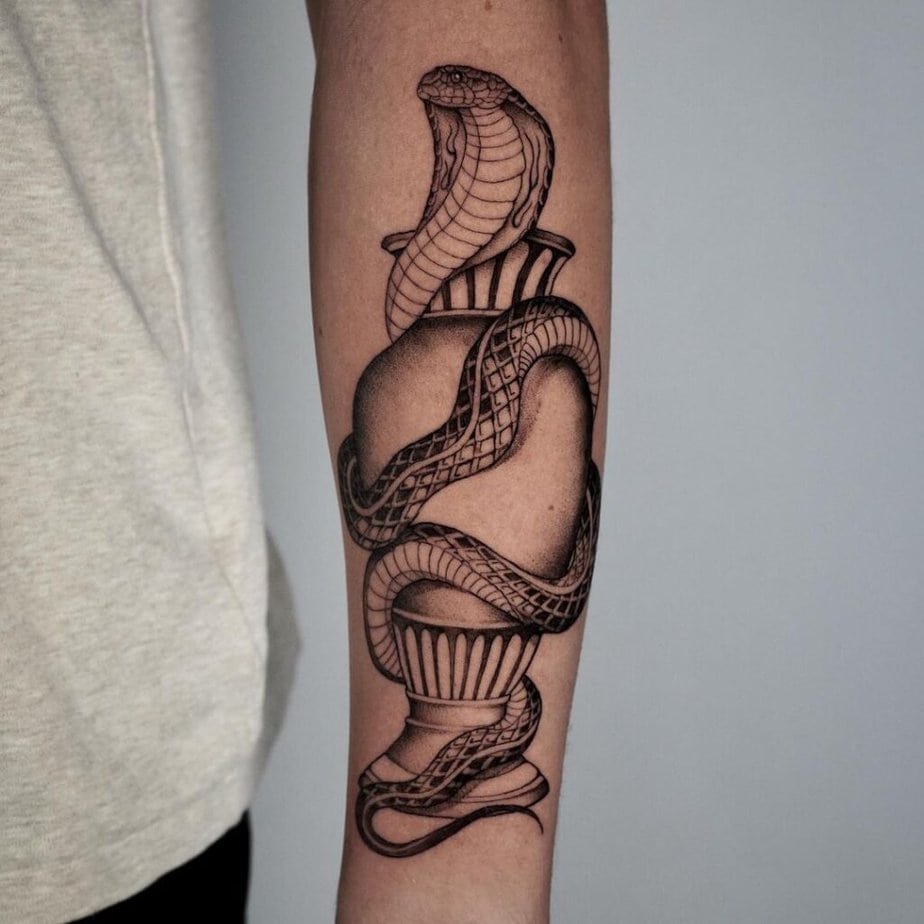
Credit: @caventattoo
Imagine a detailed line drawing where the cobra’s body nestles into the contours of an object — the contrast between organic curves and a solid vase creates visual drama. That interplay makes shading and linework pop, and it gives the tattoo a storybook feel, like an emblem or an ancient illustration rather than just a standalone snake.
Thinking about a neck tattoo?
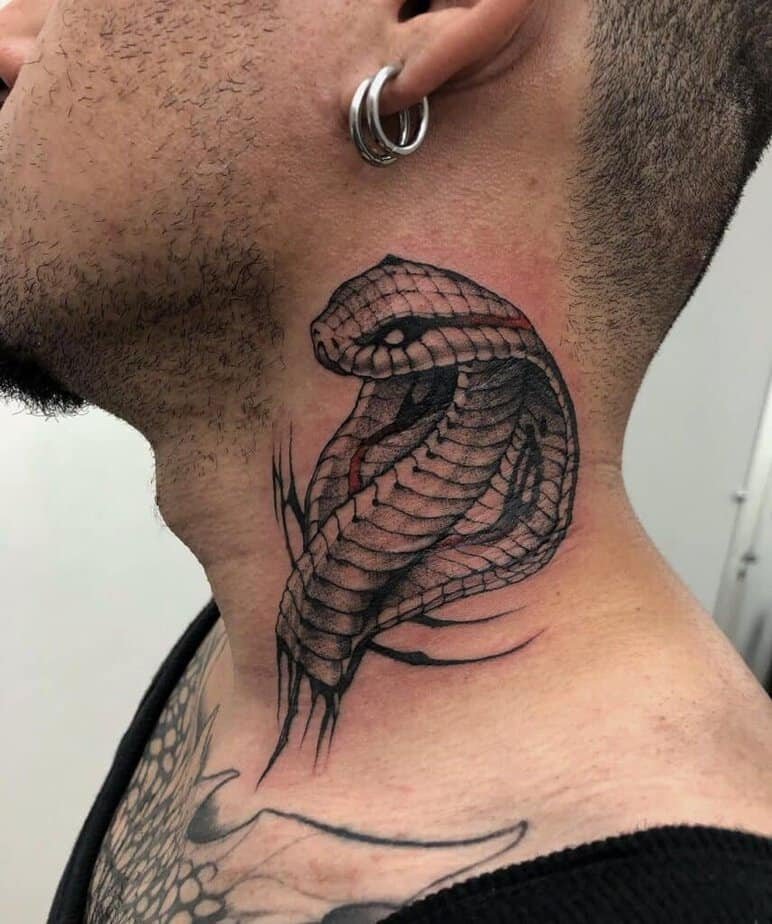
Credit: @maximo.ttt
Neck tattoos are loud by nature, so whether you go delicate or full‑on bold, know you’ll get noticed. Cobras fit the neck because their hoods and head shapes can nestle into the curve between jaw and shoulder, making the piece feel intentional rather than slapped on. If you want something that reads both fierce and graceful, the neck is a stand‑out choice.
Two-headed forearm

Credit: @dreyk.ttt
Dual heads turn a familiar motif into something mythic. People choose two-headed snakes for themes like rebirth, duality, or simply because it looks unexpected and cool. On the forearm, the composition can emphasize the split or the unity of the two heads, depending on whether you want the drama front-and-center or more symbolic.
Go bold with black and red

Credit: @caiosheep
Black and red is a classic contrast that reads graphic and intense. Black gives structure and depth while red draws the eye to fangs, eyes, or the tongue — small pops do a lot of heavy lifting. It’s a great palette if you want something that feels aggressive without being gaudy.
Bold traditional forearm

Credit: @justinstubbs_
Traditional styles use thick outlines and solid fills that age predictably — that’s why they’re so dependable for forearms. The bold shapes make for a tattoo that reads well even after years of sun and life. If you want a cobra that keeps its personality without needing constant touchups, this route is smart and stylish.
Matched wrists, doubled meaning
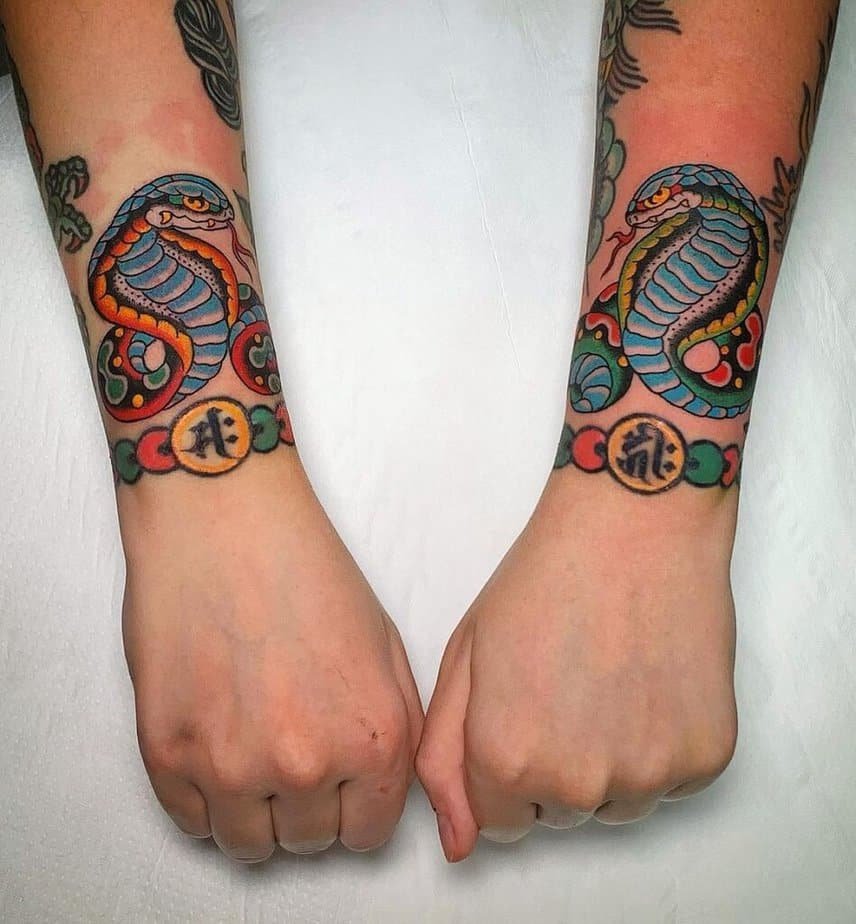
Credit: @coquesinamo
There’s a playful energy to having the same small piece on both wrists — it can read as ritual, partnership, or just symmetry you enjoy. Wrists are great for compact, graphic cobras that don’t need much shading but still signal personality. And because wrists are visible all the time, you get to live with the design as part of your daily aesthetic.
Traditional on the hip
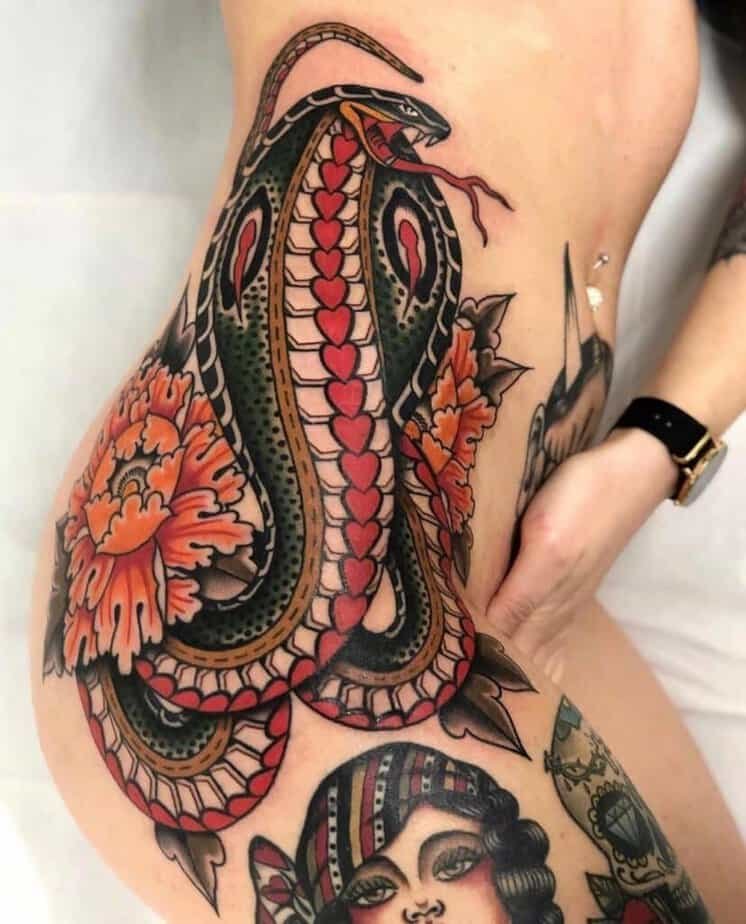
Credit: @giuseppe.messina
The hip is a canvas that moves and reveals in ways the arm or back doesn’t, so a traditional cobra there can feel bold and personal. Because traditional work tends toward larger, simpler colors and lines, it sits well on the hip’s curves and can be shown off or kept private depending on outfit choice. It’s an empowered placement — intimate but unapologetic.
Ready for an elbow piece?
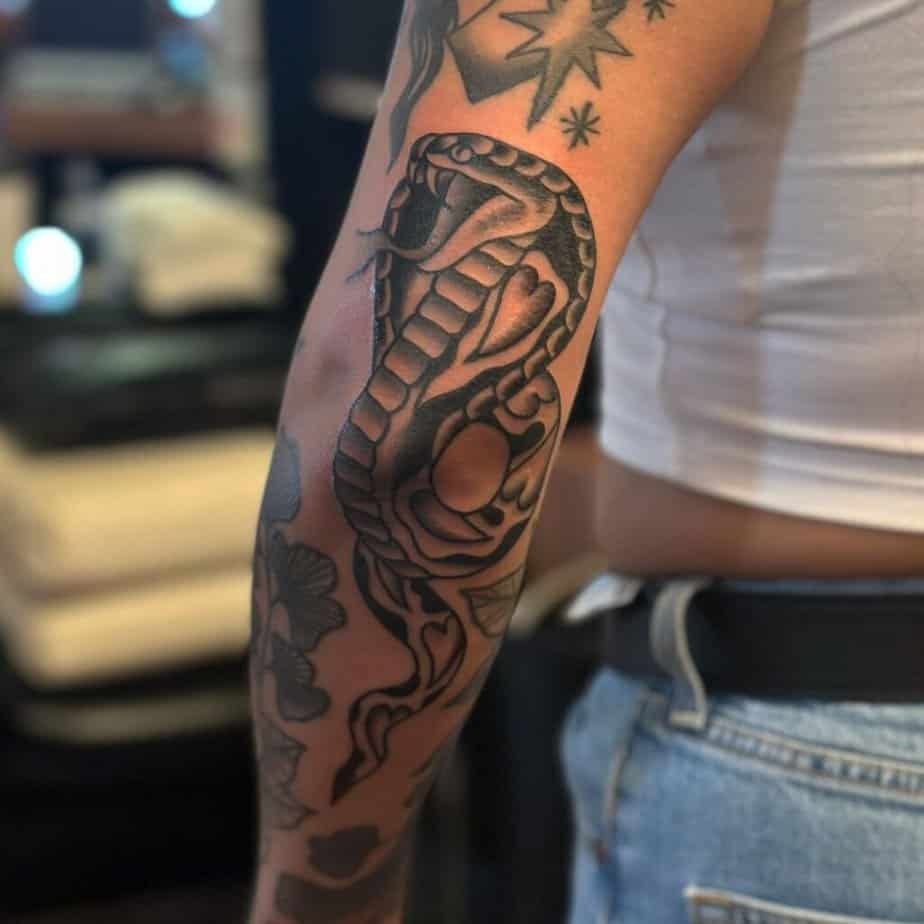
Credit: @tbonetat2
Elbows are tricky because of how the skin folds, but that’s exactly what makes them fun — a snake can coil around the joint and look like it’s actively moving. If you’re filling gaps in a sleeve or want a striking standalone piece, the elbow’s texture adds grit and character to the design.
Cobra + dagger
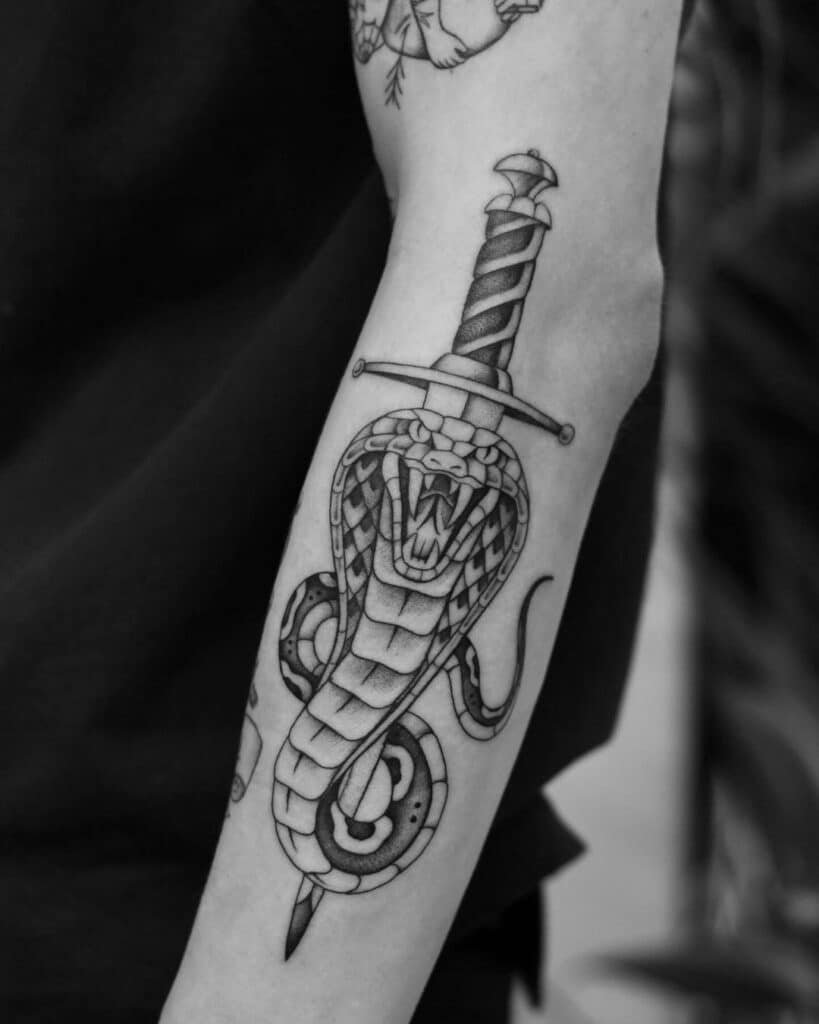
Credit: @honey_im_home_tattoo
Mixing a dagger with a cobra layers meaning — betrayal, sacrifice, resilience — and gives the piece a narrative edge. The dagger introduces a linear, pointed silhouette that contrasts nicely with the snake’s curves, and artists can play with placement so the two elements interact dynamically rather than just sitting side by side.
Keep it tiny on the back
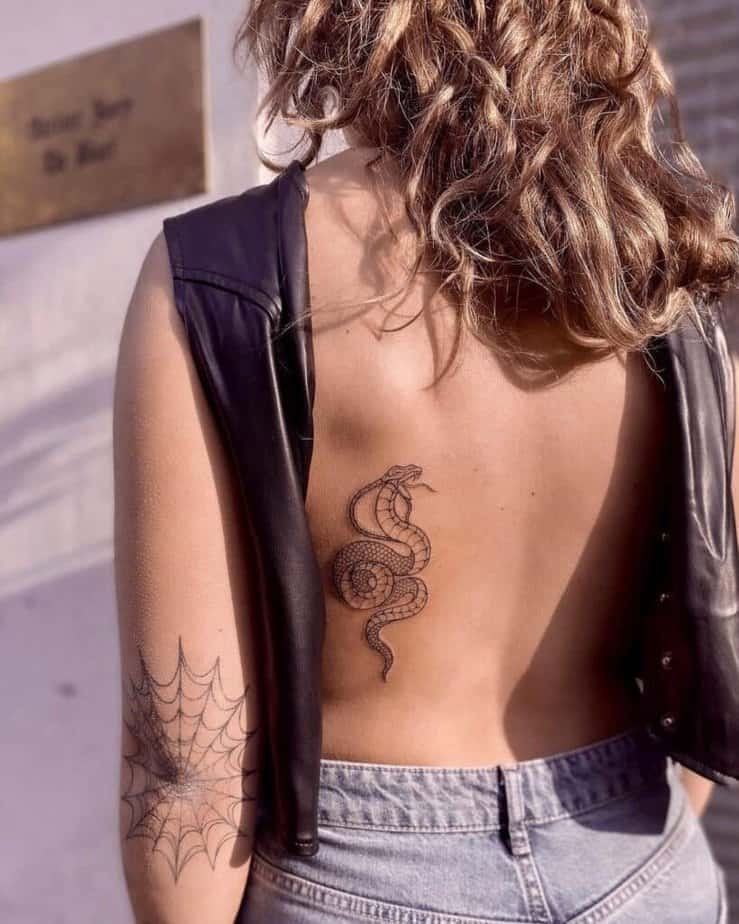
Credit: @saskiapatrice
Not every back tattoo needs to be a full sleeve of ink — a small snake tucked near the shoulder blade or spine can have the same mystique on a much smaller scale. Tiny back pieces are economical, faster to heal, and still carry that secretive vibe that bigger back pieces do, just more casually.
Leg-length snake: from foot to thigh
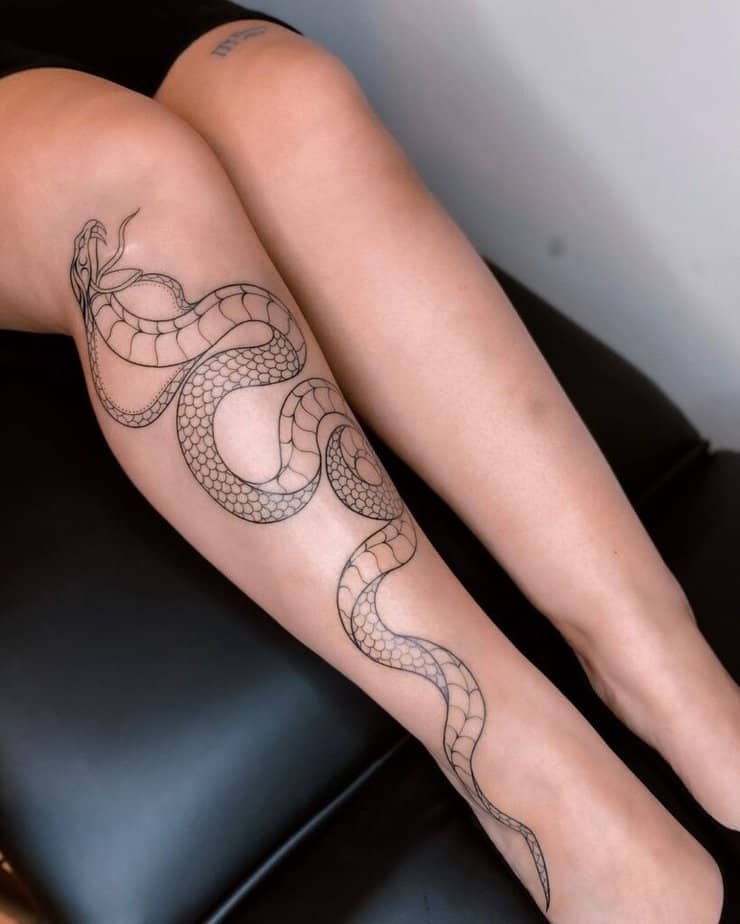
Credit: @saskiapatrice
Long snakes along the leg are flattering because they follow your natural lines and can elongate the silhouette. Whether you want something that slides up to the thigh or coils around the shin, the leg gives you serious room to tell a visual story — patterns, scales, and motion all look incredible stretched out here.
Upper arm, surprisingly striking
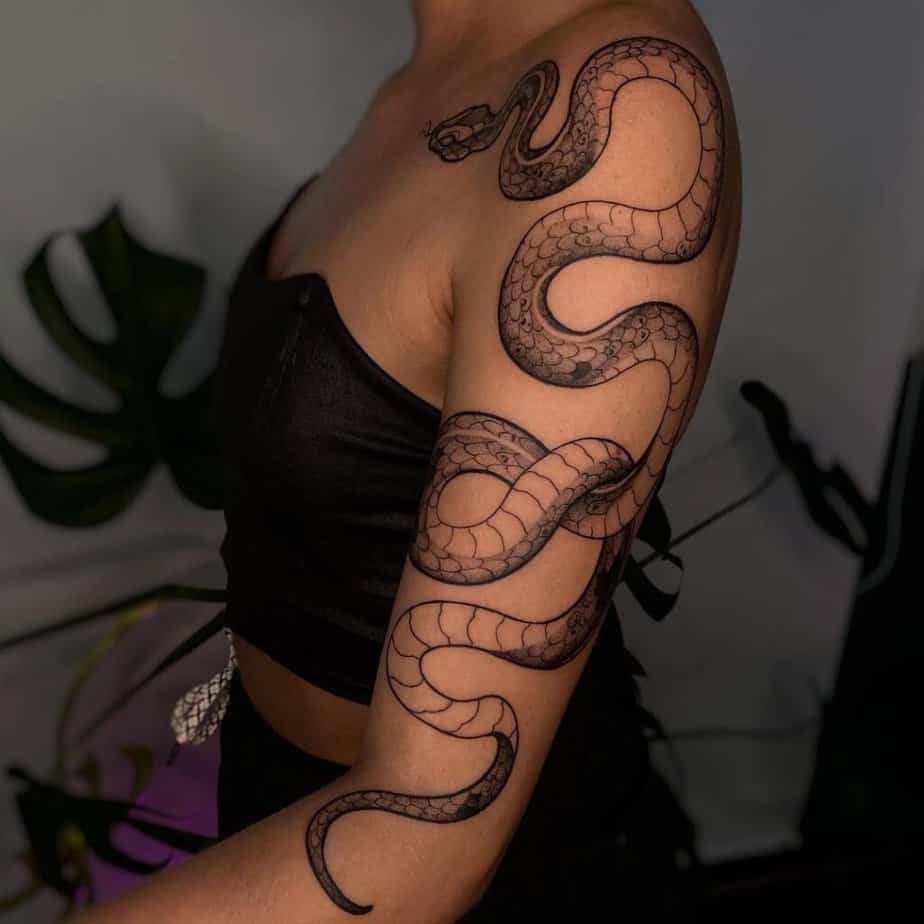
Credit: @soltatua
People sometimes write the upper arm off as generic, but a well-composed cobra there can be elegant and powerful. It’s a forgiving spot for working in shading and mid-size detail, and it transitions nicely into shoulder or chest pieces if you decide to expand later.
Colorful cobra
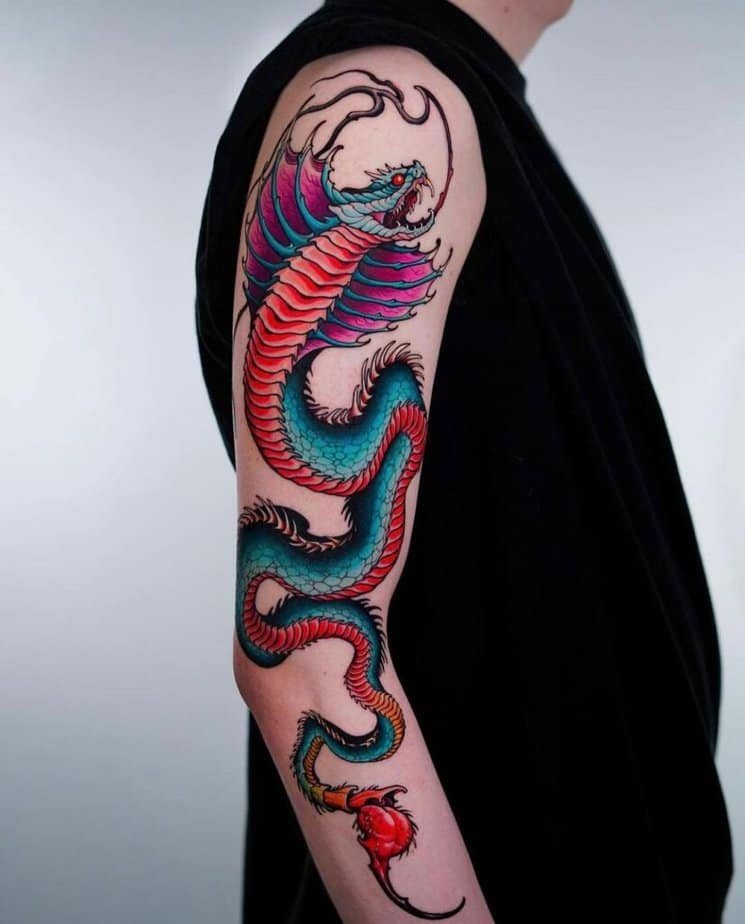
Credit: @jin_qchoi
Colors can take a familiar motif into fresh territory — jewel tones, gradients, or unexpected hues make the snake feel alive. Keep in mind that color needs more upkeep: touchups and sun care help it stay vibrant, but the payoff is a piece that feels joyful and loud in the best way.
Ready for a full-back masterpiece?
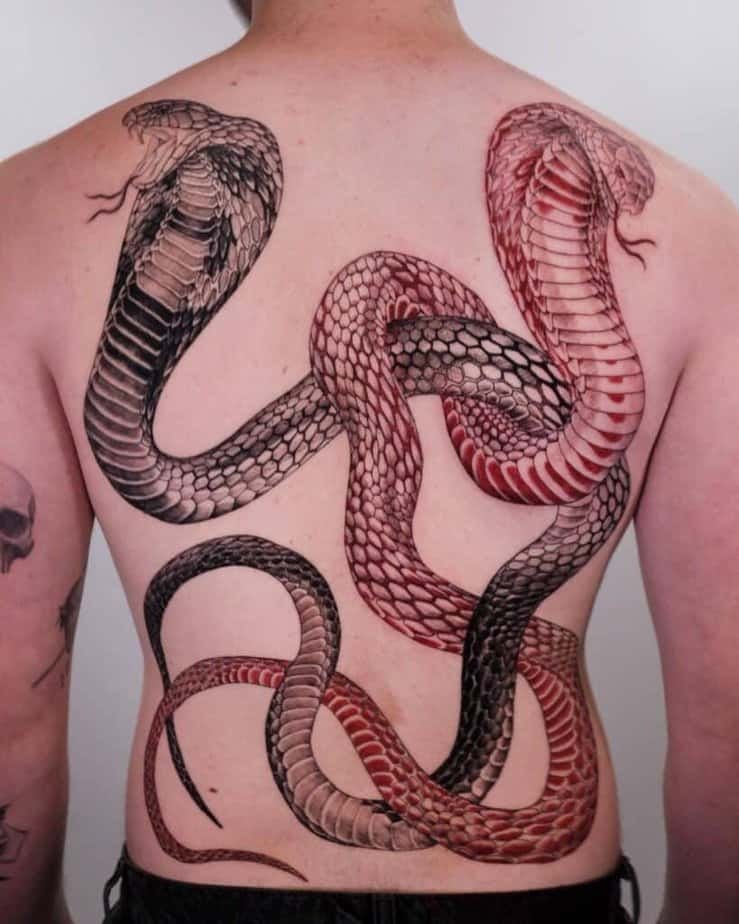
Credit: @s.mancinotattoo
Full-back cobras are for the people who want an all‑in statement. The scale lets artists build layers of texture, shadow, and narrative — multiple snakes, contrasting colors, and ornamental backgrounds all work together to create something monumental. It’s a commitment, but when it’s done right it’s the sort of piece that earns admiration for years.
Wrap-Up
If any of these have you thinking about your next session, go for it — and then send me a photo. I want to see which direction you choose.