
Okay, have you ever noticed how certain images just latch onto your heart and refuse to let go? A phoenix is exactly like that — it’s loud in meaning but quiet in how it settles into your skin. People choose it when they want a living reminder that they survived something that tried to break them, and honestly, there’s something so steady about wearing that story.
This post is here to give you design ideas and placement inspiration — from dramatic back pieces to tiny wrist marks — so you can picture what a phoenix might look like on you. I’ll walk through styles, color choices, and why certain spots on the body make the image read the way it does, so you can pick a look that feels like yours.
Rising phoenix for your back
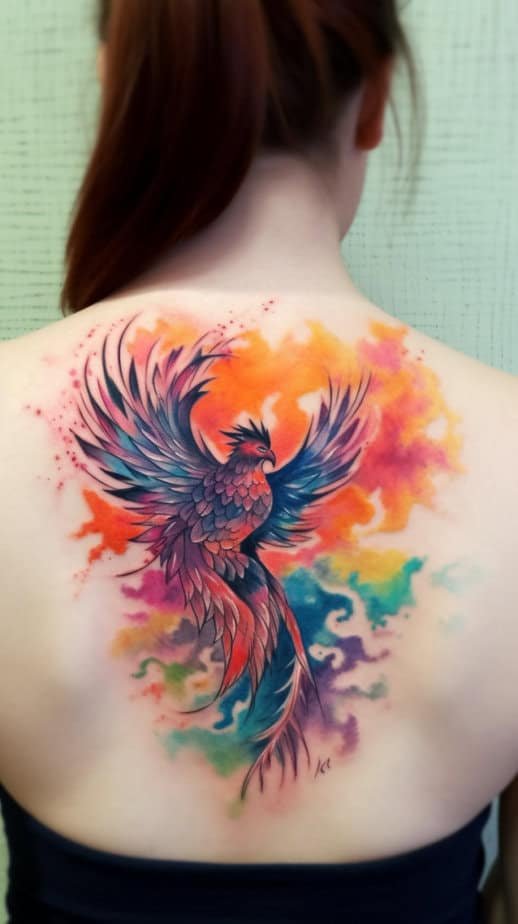
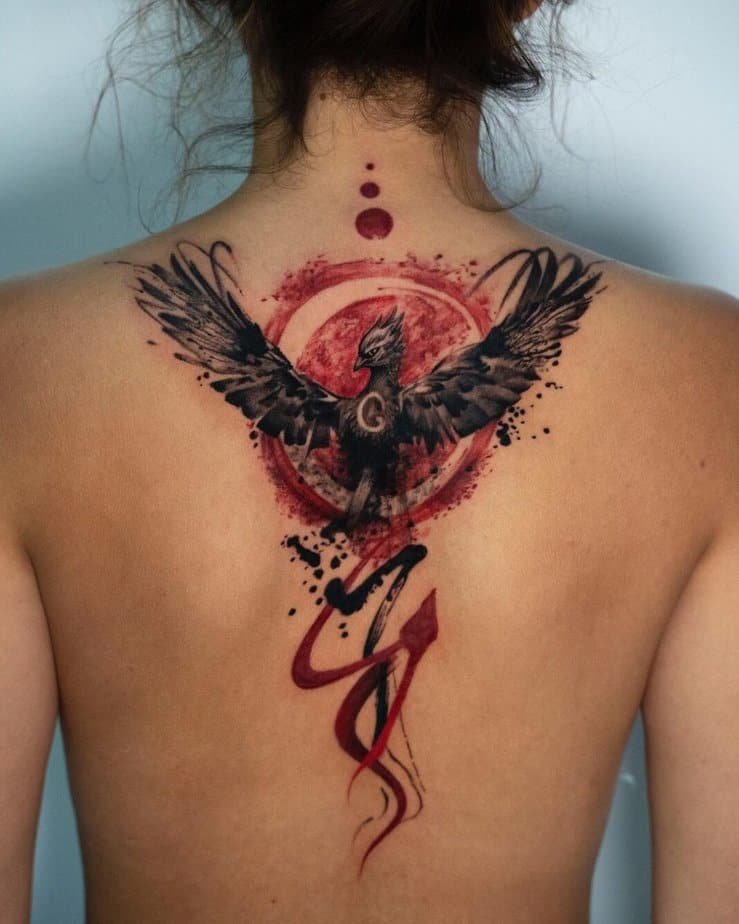
Credit: dominic.costoiu
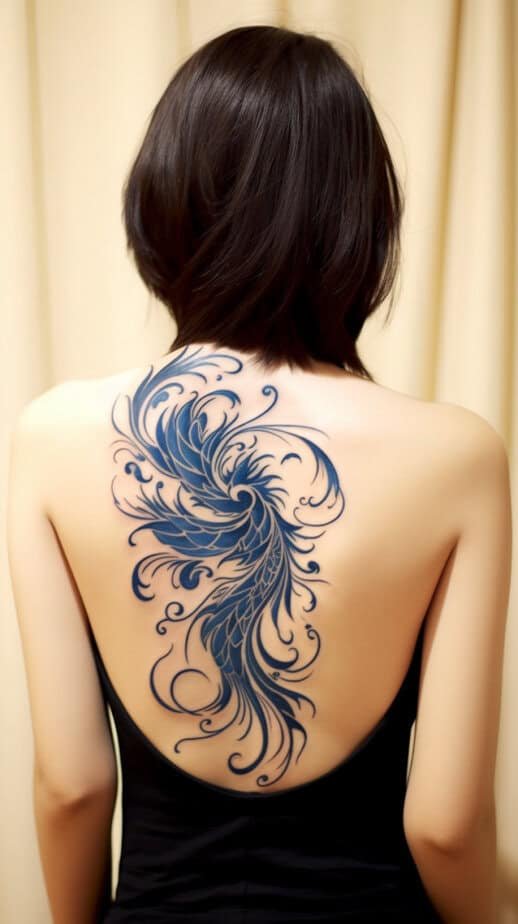
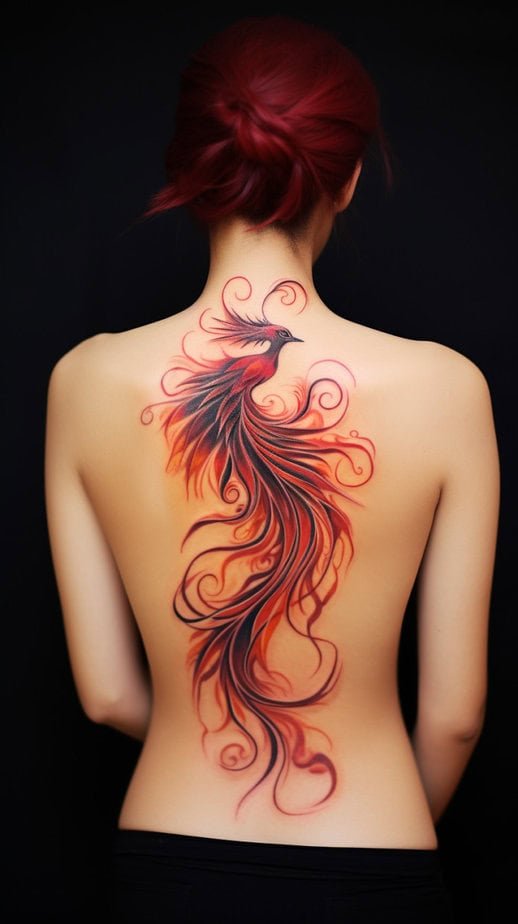
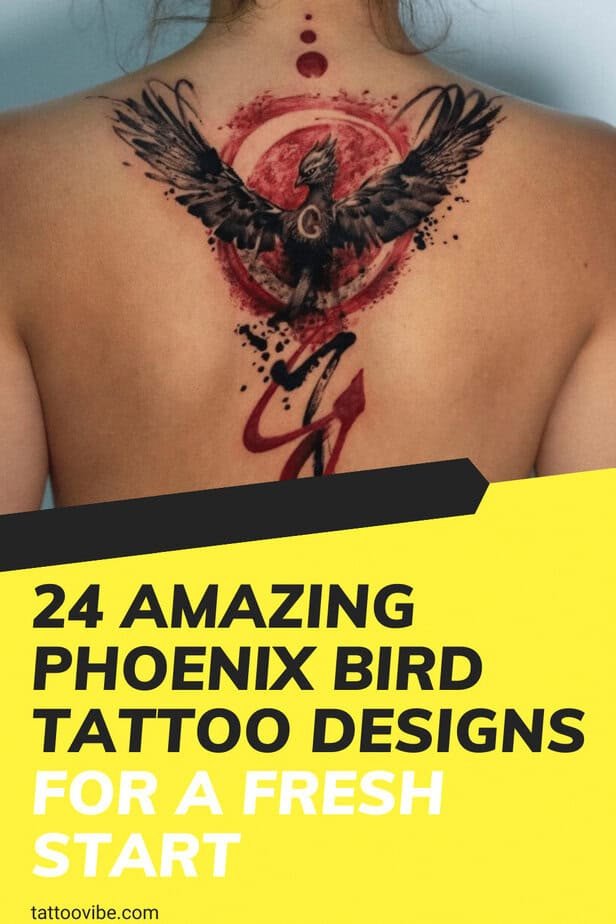
Picture your back as a canvas at sunset — wide, calm, and ready for color. A watercolor newborn phoenix flows across that space beautifully because the technique gives feathers and flames a soft, moving feel instead of a rigid outline; when it’s done right it can look almost alive. If you’re drawn to something dramatic, black and red together give the piece mystery and heat — it reads as both elegant and fierce.
On the flip side, if you want to subvert expectations a bit, a Japanese-inspired blue, linear phoenix brings a modern twist; it keeps the rebirth message but looks less traditional. And here’s the honest part: a back piece announces itself. You’ll have room for detail, for wings that sweep, and for a composition that reminds you — every time you stand tall — of how you rebuilt yourself.
Leg tattoo with flaming phoenix?
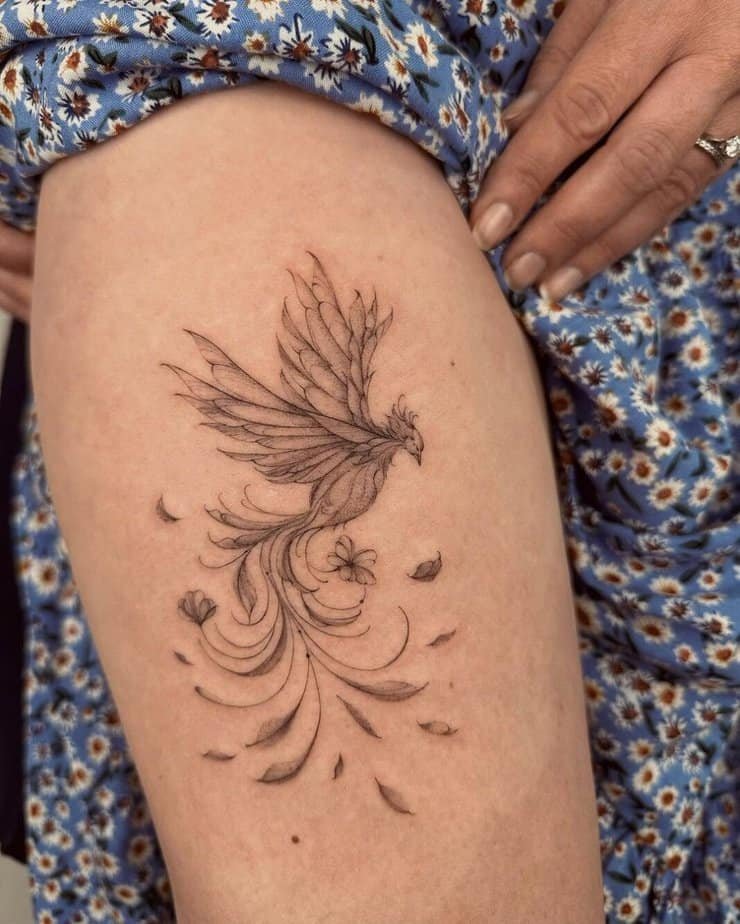
Credit: kathrin.ink
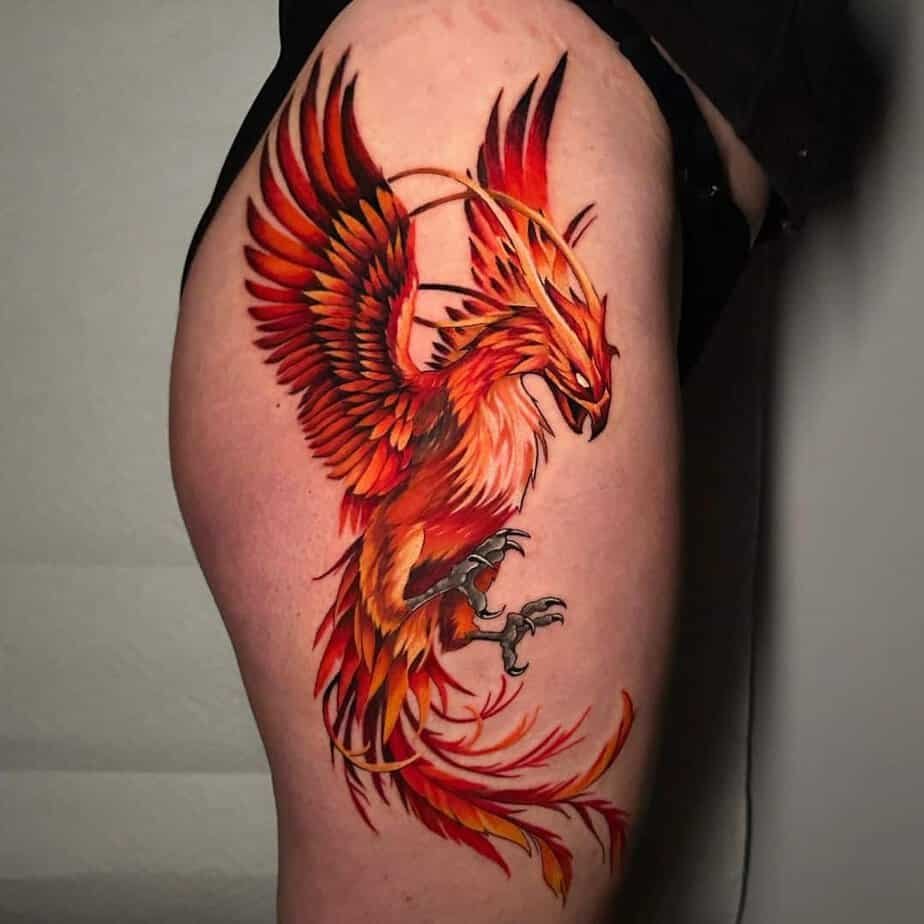
Credit: bronbronink
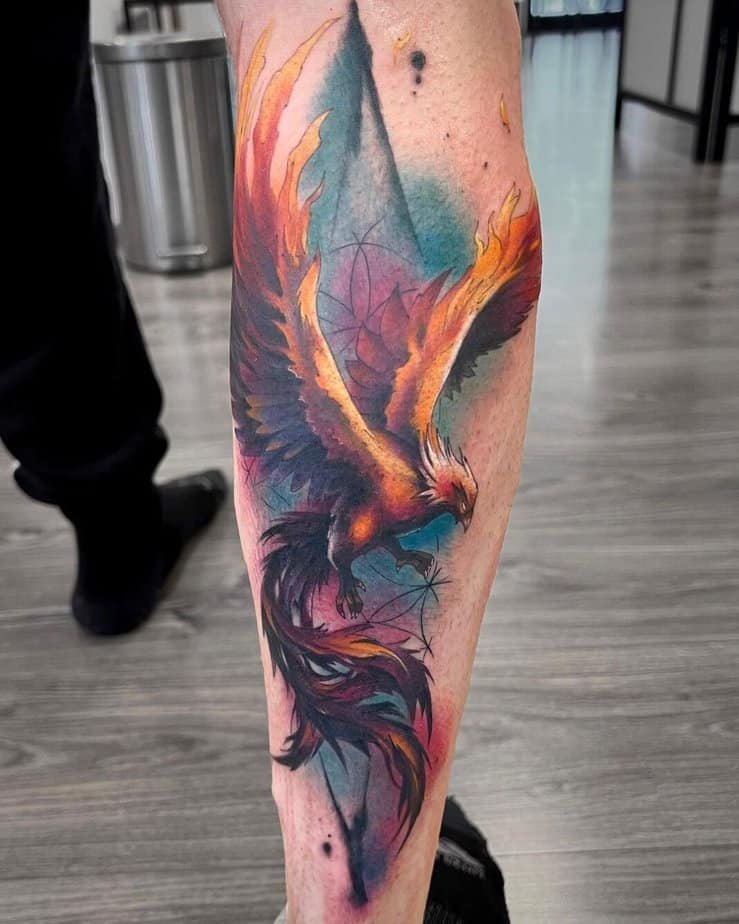
Credit: _brinktattoo
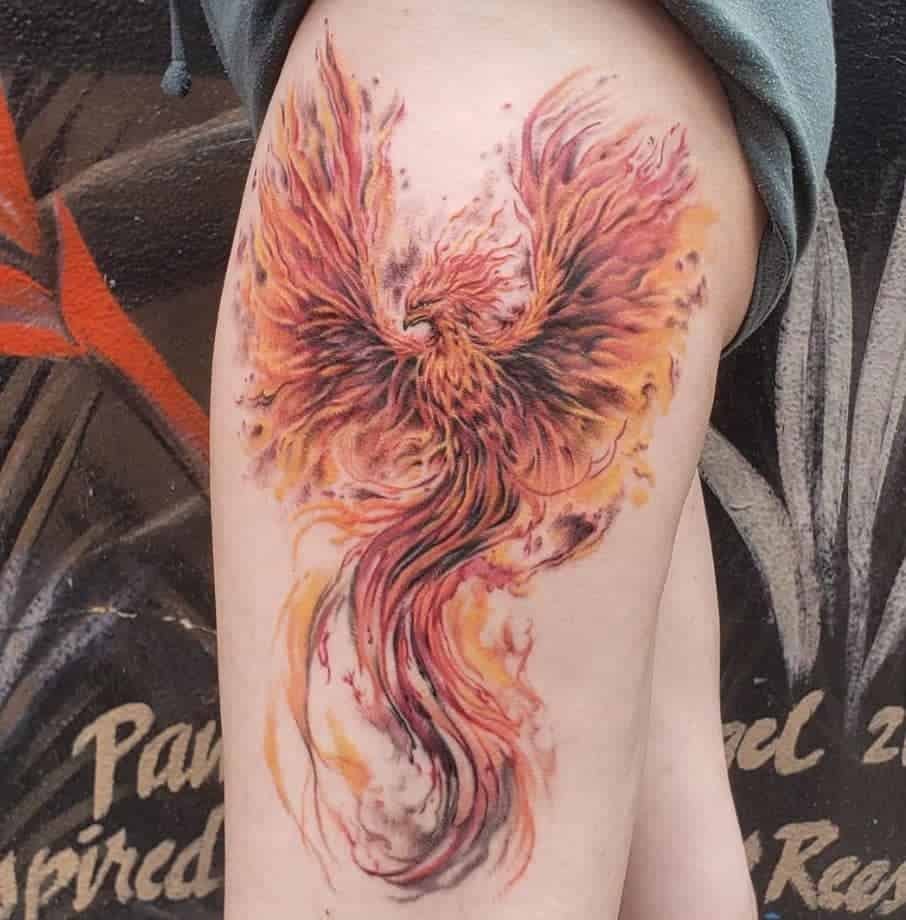
Credit: nokaoitikitattoo
What really got me about leg pieces is how they move with you. A flaming phoenix on the thigh or calf can look graceful when you walk and wildly alive when you run, which makes it feel like the story is in motion. There’s a feminine softness to some of these designs — delicate lines and floral touches — but don’t mistake that for weakness; the bird still screams resilience.
Color combos like orange, blue, and purple play nicely together and give depth: orange for the fire, blue for contrast, and purple as an unexpected mood note that keeps things interesting. And because the leg gives you space, artists can tuck in feathers, embers, or subtle shading so every glance reveals a new detail.
Upper arm — shoulder as a phoenix’s nest
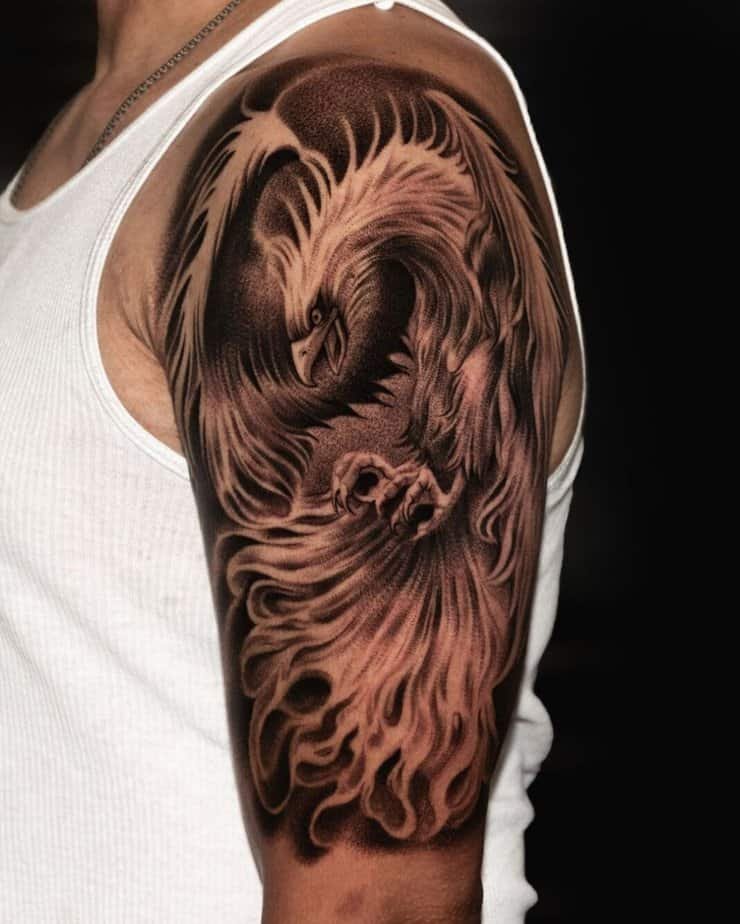
Credit: johnpereztattoos
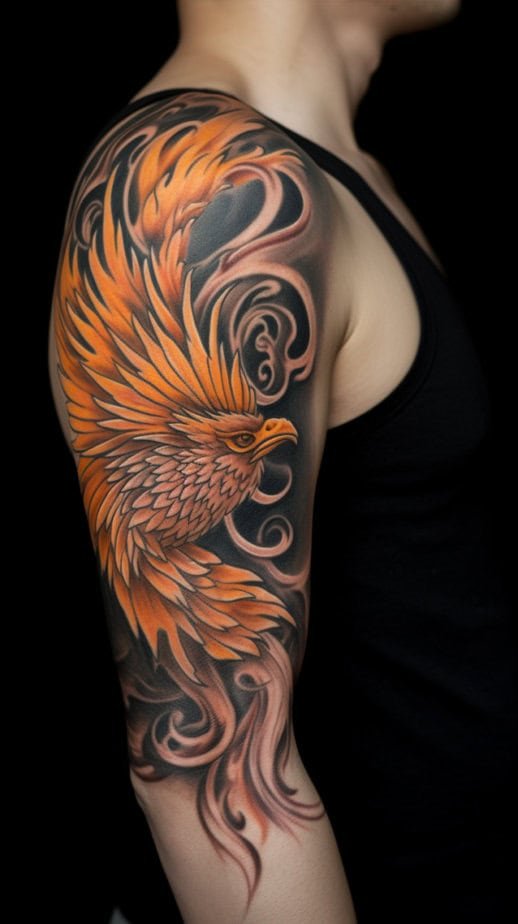
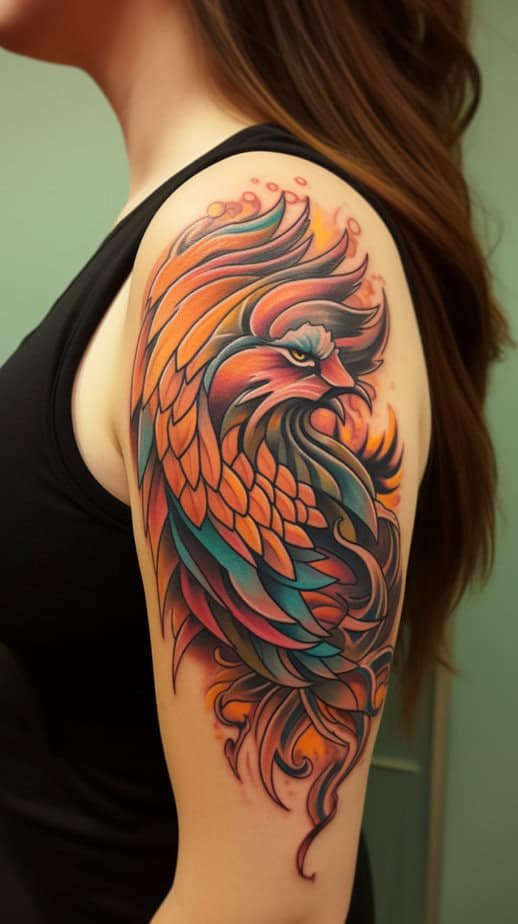
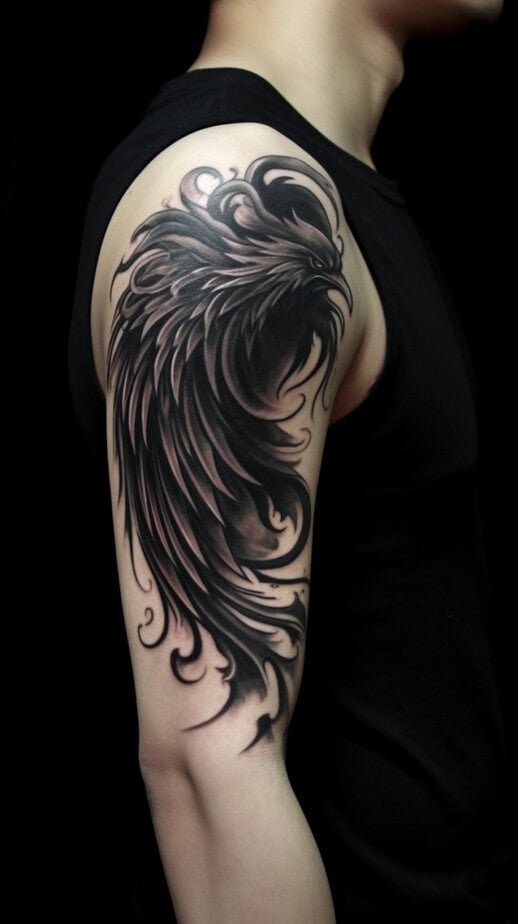
Compare a shoulder/upper-arm placement to a flat area like the back and you’ll see why so many people pick this spot: it’s bold without being constantly on display. A colorful, Japanese-style phoenix wraps naturally around the shoulder, giving the illusion of lift and flight. If you want people to notice and ask about it, a darker palette helps the design pop against skin.
This placement suits any size — go large for full coverage that reads like armor, or keep it tight and wearable if you prefer things subtler. It’s one of those spots where the bird can look both classic and contemporary depending on how the lines are treated.
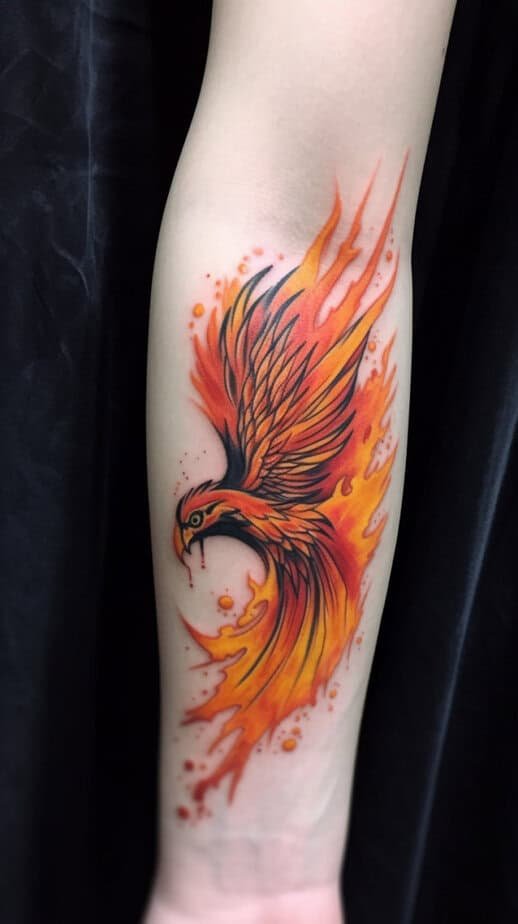
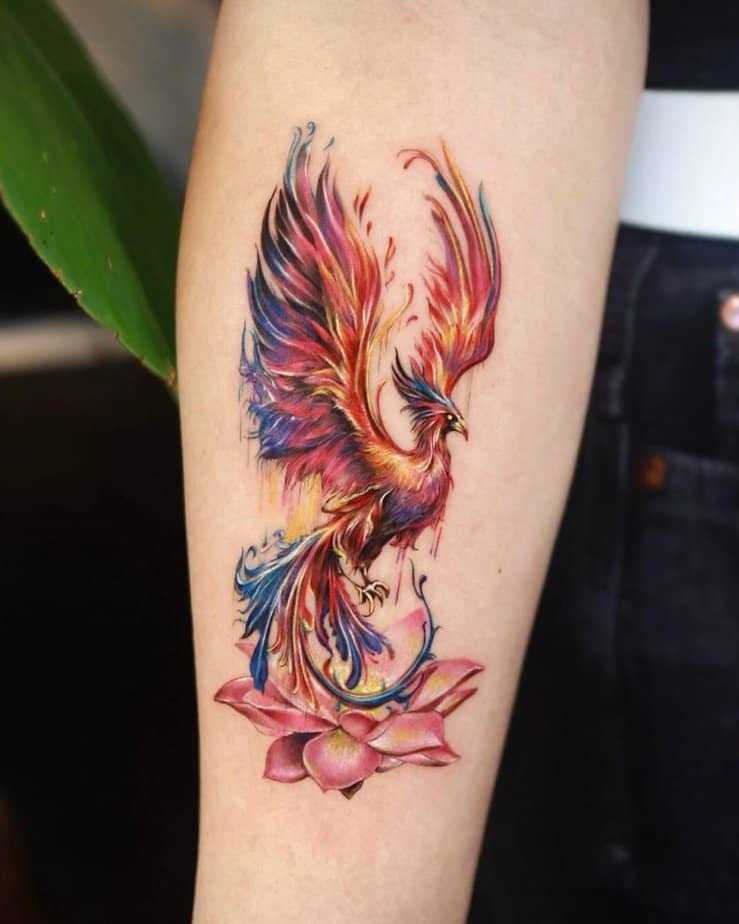
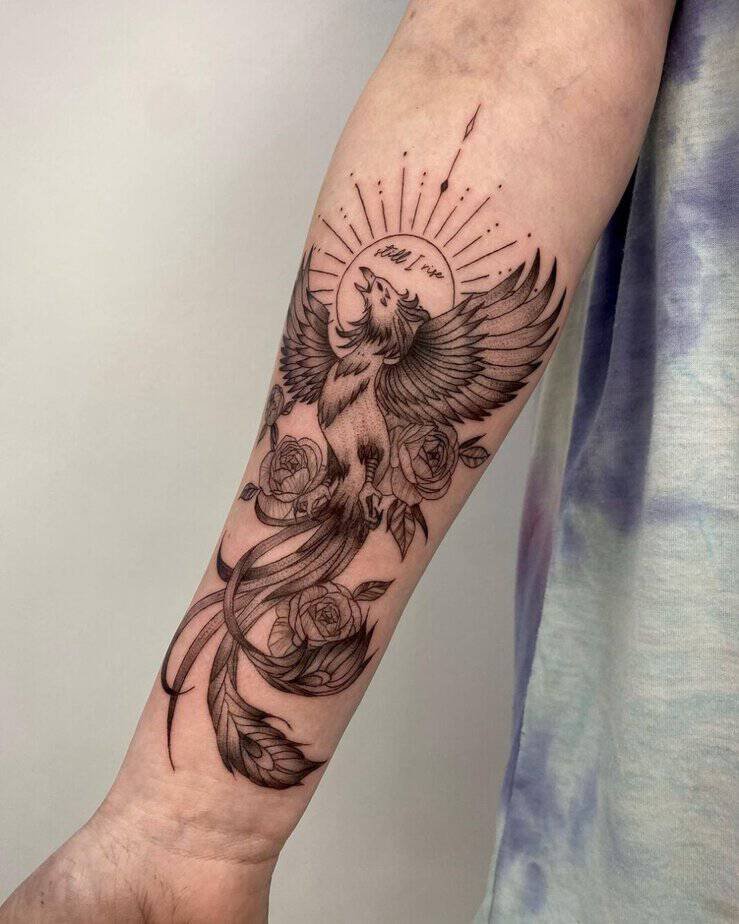
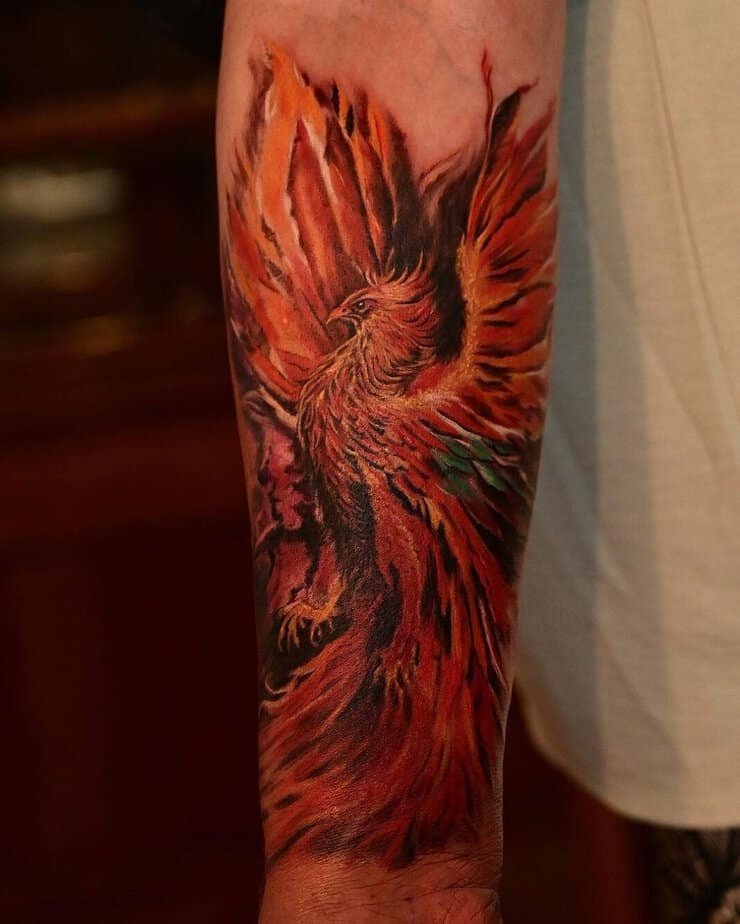
Strong phoenix on the forearm
Credit: vo.a.serin
Credit: ulaniink
Credit: serbestahmad_tattooartist
Here’s a little story: I once watched someone roll up their sleeve to reveal a forearm phoenix and the room somehow got quieter — not because it was intimidating, but because the image read like a quiet vow. Forearm pieces sit in your line of sight, which makes them perfect for a daily reminder of your strength. You can go feminine and colorful, or minimal and strong; both choices still read as defiant and hopeful.
Simple designs age well on the forearm since the area doesn’t stretch as much, and mixing reds and oranges for the fire feels instinctive — they broadcast warmth and intensity every time you move your arm.
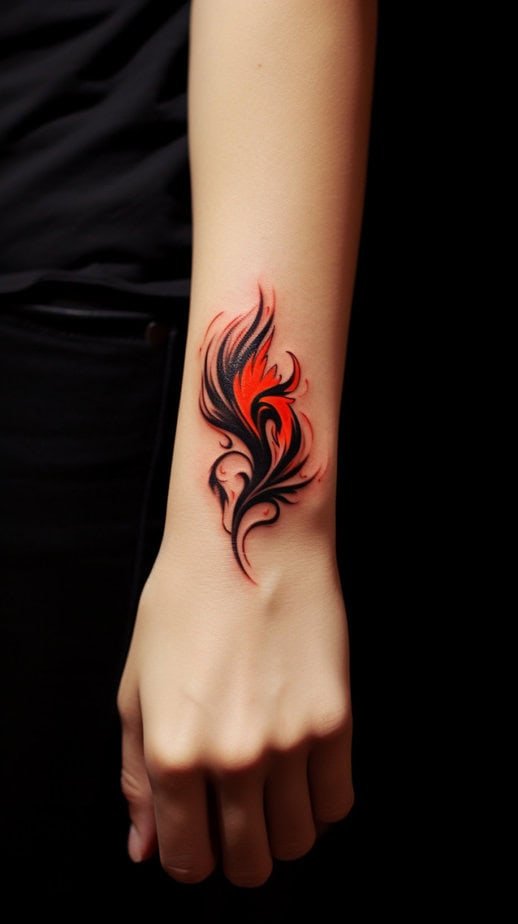
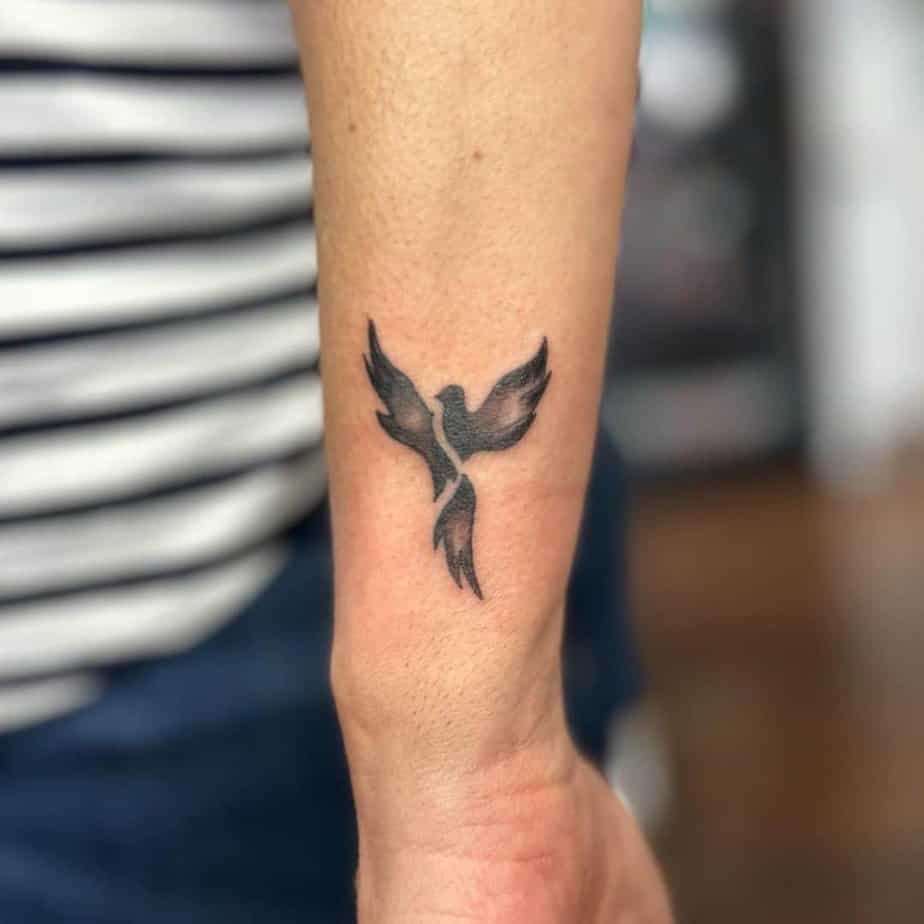
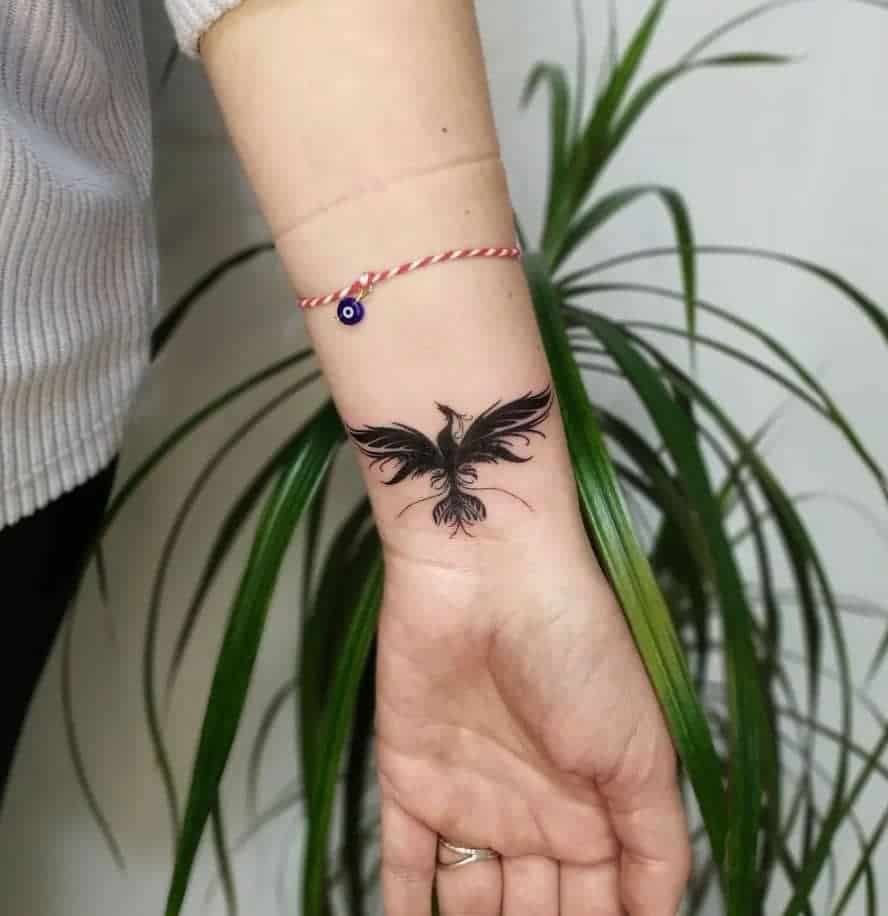
Tiny wrist phoenix — small, steady, symbolic
Credit: mortricia_tattoos
Credit: oztattoom
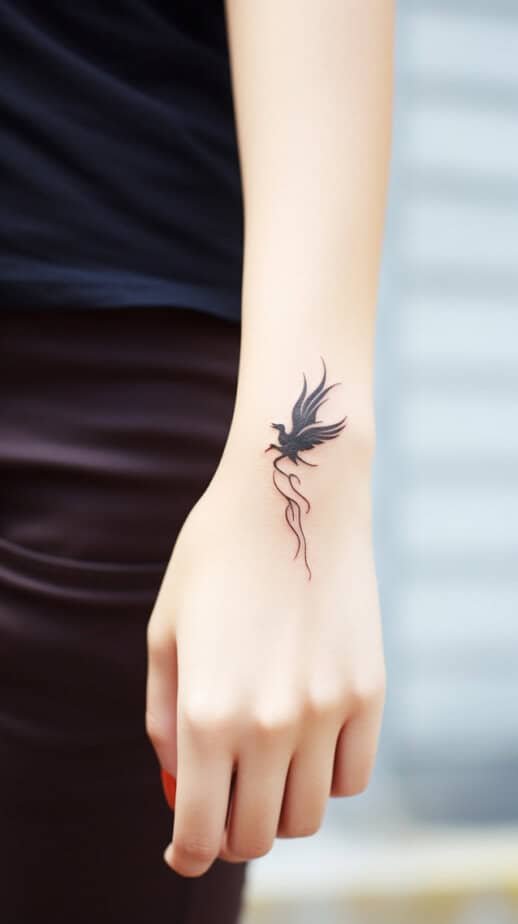
Wrist tattoos are like tiny talismans — you catch sight of them a dozen times a day and each peek can center you. For a phoenix, an abstract three-part or minimal black-ink version keeps things quiet but loaded with meaning. The line work needs to be clean because scale matters here: too much detail and the piece will blur over time.
If you want something discreet but deeply personal, the wrist gives you that balance. Small doesn’t mean less powerful; sometimes the smallest marks carry the heaviest stories.
Full sleeve — the phoenix that never stops moving
Credit: beaumccoyart
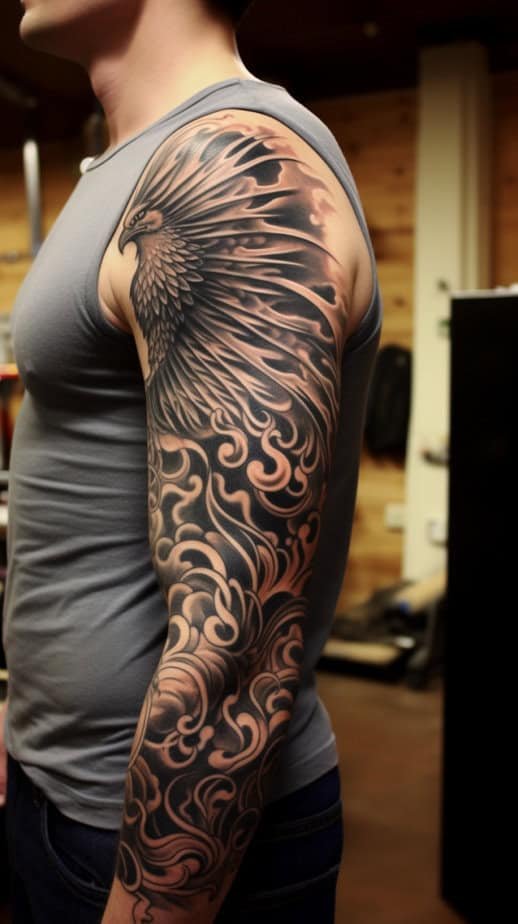
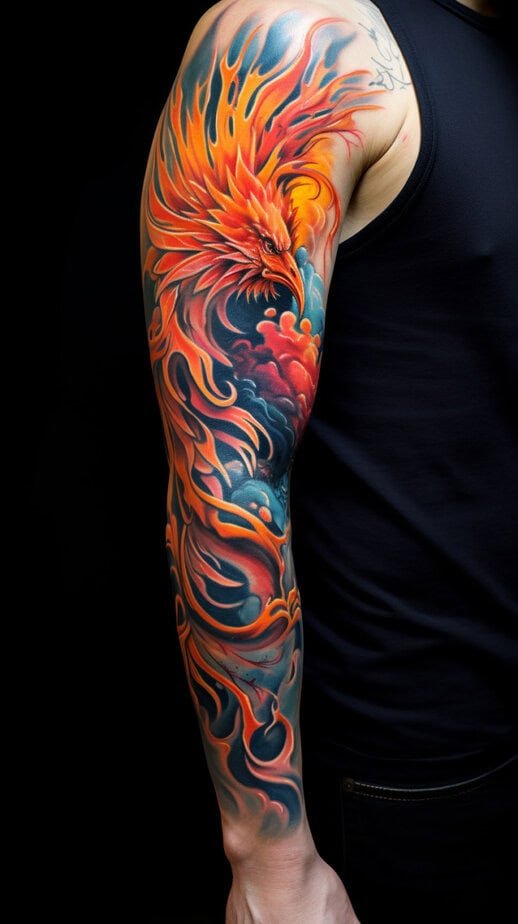
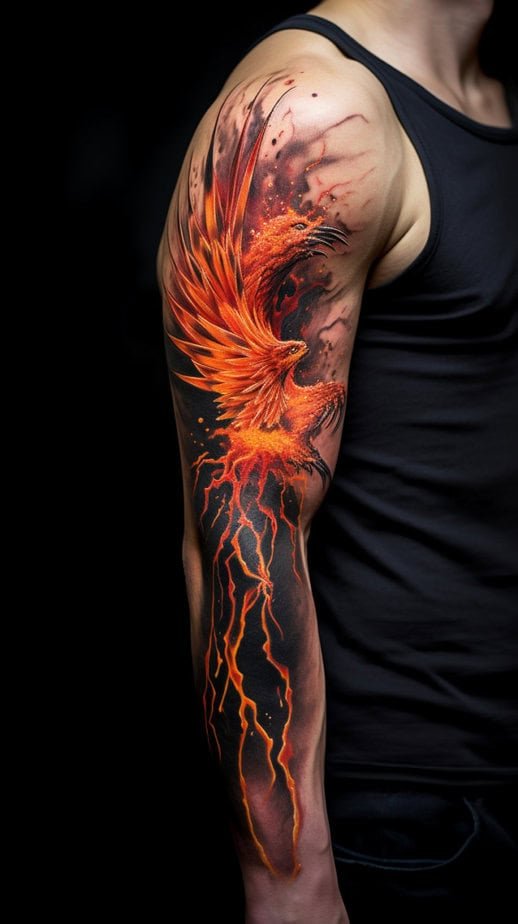
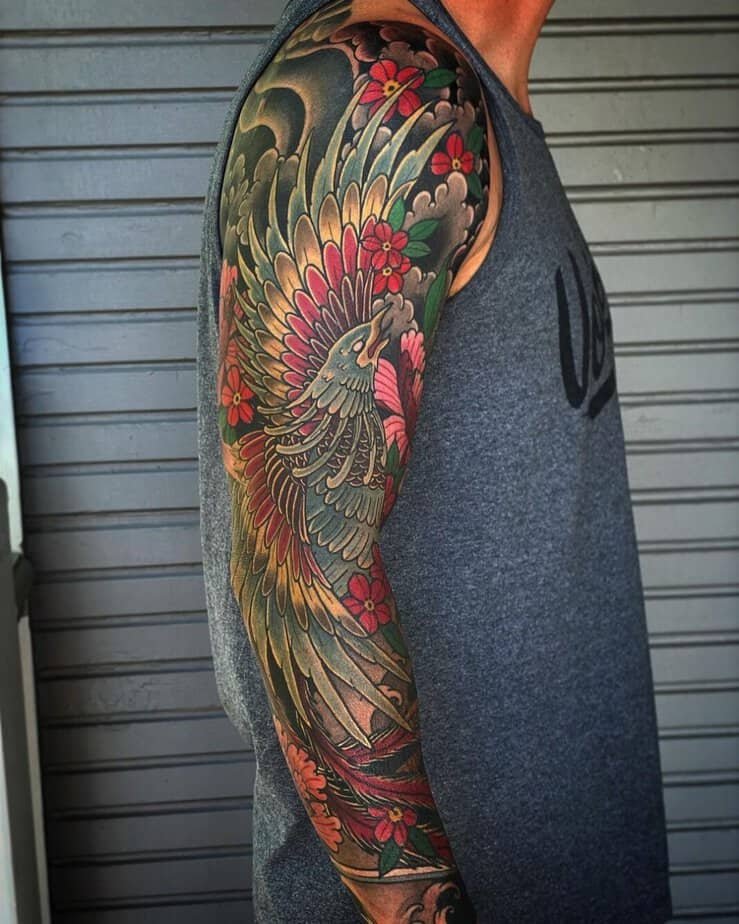
When someone tells me they want a sleeve, they mean commitment — to the story, to the artist, and to a visual that changes with every movement. Styles like trash polka give a sleeve attitude: raw shapes, stark contrast, and motion that can feel aggressive in a beautiful way. Traditional sleeves with bold outlines and saturated colors? Those are timeless and read like heraldry.
Abstract treatments that layer blues with electric oranges and reds create drama through contrast: the cool tones push the warm ones forward, so the flames seem to glow. A sleeve lets you build a whole narrative across the arm, and if you’ve got a long recovery or transformation story, this is the place to tell it in full.
Wrap-Up
If any of these ideas landed with you, go sketch out a mood board or save a few of these images for your artist. And if you end up getting one — whether it’s a tiny wrist symbol or a whole-arm phoenix — promise me you’ll tell me how it felt seeing it for the first time. I want to know.