The main difference between blackwork and blackout tattoos? Blackwork plays with heavy dark lines and fills, while blackout tattoos go all-in — entire patches of skin are saturated with black ink. Sometimes artists leave that black as the whole piece, and sometimes they use it as a dramatic backdrop for white or colorful details. It’s a bold move, I won’t lie. Not everyone is ready for it. But if you’re flirting with the idea of a blackout tattoo, stick around — these examples might help you imagine what yours could look like.
Soft petals and organic lines

Credit: josemetalpoke
Okay, starting gentle here — this one’s perfect if you like the blackout look but don’t want to go full-on dramatic. The black ink sits in smaller patches so the skin peeks through to make delicate flowers and flowing lines. It feels subtle, a little mysterious, and honestly kind of poetic.
A floral design that really pops

Credit: felipexsanto
If you want flowers that demand attention, give them a dark stage. The black background makes the floral shapes jump forward — it’s dramatic in the best way and gives your petals serious contrast.
Bold geometry with blackout

Credit: unsaid_ink
Here you’ve got solid black patches on the upper thigh and a bit of the shin, with patterned sections linking them together. It’s geometric but still feels organic, like someone took shapes and wove them into one cohesive piece.
Heavy band with skull details

Credit: hectordanger.ttt
This one reads like a thick black band that fades into skulls along the top edge. It’s edgy without trying too hard — perfect if you’re into darker motifs but want them to feel intentional, not random.
Sunflowers stealing the show

Credit: inkvonher
Imagine bright yellow sunflowers sitting on a black canvas — yes, please. The contrast makes the blooms pop so hard they almost glow. If you love color but want that dramatic backdrop, this is such a gorgeous combo.
Leaves, blooms, and black contrast

Credit: sarahrose_tattoo
For a nature-lover who’s not afraid of intensity: this blackout piece is filled with leaves and flowers so the botanical shapes become the focal point. It reads natural, but with a bold twist.
Classic blackout — simple and strong

Credit: rudydziara
This is the traditional blackout look — a solid area saturated in black ink. If you’re curious about the style but unsure about extra design elements, starting with something like this is low-drama and effective.
Shoulder blackout with organic flow

Credit: erinhooo
A mostly shoulder-focused blackout that spills into flowing, organic blackwork lines. It’s a great cover-up option if you want to mask older ink while adding a modern abstract vibe.
Playing with thick and thin bands

Credit: cufa.cuu_tattoo
Bands are such a satisfying way to use blackout — you can mix widths like this to create rhythm on your skin. Thick, thin, repeat; it’s simple but visually striking.
Negative space as a feature

Credit: jurijruban
Leaving shapes empty inside a blackout piece is such a cool move. That negative space becomes its own design element — you can decorate it later or let it be for a slightly abstract, minimalist feel.
Ornamental sleeve with dark framing

Credit: salil.tattoos
If ornamental patterns are your jam, put them against black and watch them sing. The dark areas frame the details so the ornamental lines feel elevated and dramatic in the best way.
White ink over black — subtle glow

Credit: apsara.ink
White ink on a blackout base is such a fun contrast trick. It adds character and can completely change the mood of a piece. If you already have a blackout area, white details are an easy way to spice it up.
Intricate whites on a dark field

Credit: handsmark
This one leans into ornamentation with thicker white lines over black. The bold line weight makes the pattern pop — it’s detailed but readable from afar, which I always love.
Try a finger blackout if you’re testing the waters

Credit: radiation_black
Not ready to commit to a big area? Fingers are a smart place to start. Small, contained, and you’ll get a feel for how you like the boldness without major commitment.
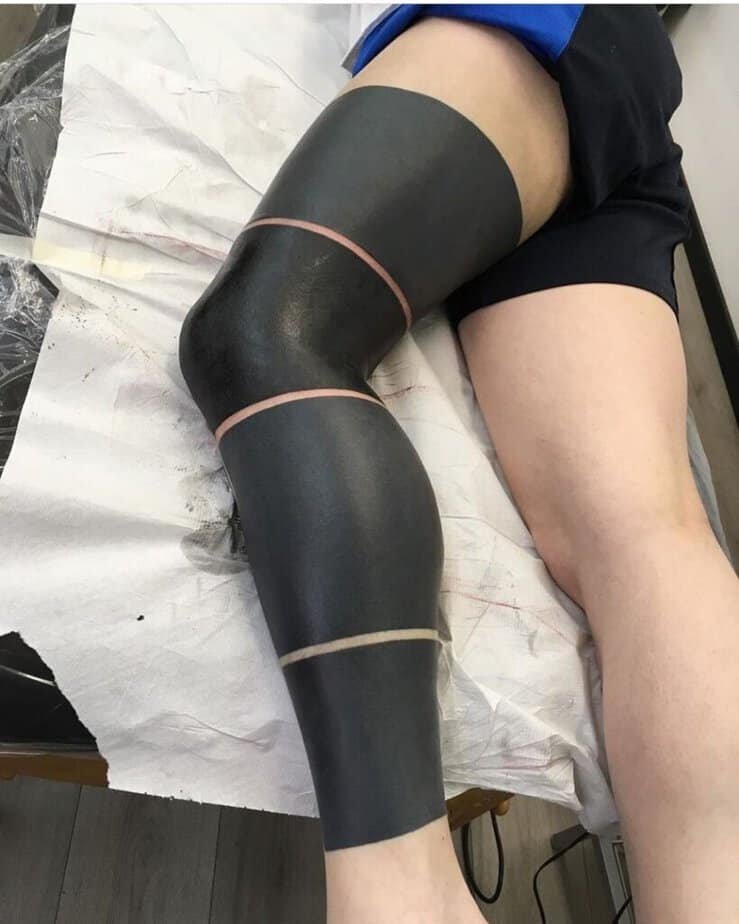
Thick stripes for a statement look
Credit: michelangelotattoo
Thick stripes can be repeated or spaced out — they’re graphic and strong. Place them anywhere: arm, thigh, calf — and adjust the number and width until it feels like you.
Arrows and geometry with dark contrast

Credit: tattoostationlyon
This one mixes arrows with blackout sections for a geometric, directional feel. You can add little extras or keep it stark and graphic depending on how ornate you want to go.
An elegant, feminine forearm blackout

Credit: kny.aska
Think blackout can’t be delicate? Think again. This forearm example proves you can get a graceful, feminine vibe while still using heavy black — it’s all in the shapes and placement.
A bouquet of different flowers

Credit: joshstephenstattoos
If you want that full-sleeve floral energy, use a black backdrop to make each bloom stand out. Different flowers together create movement and depth — like wearing a garden.
Repeating a motif for rhythm

Credit: butterstinker
Picking one favorite motif and repeating it over black is a clever trick. It’s simple, consistent, and somehow ends up looking intricate because of the repetition.
Bright flowers on a dark canvas

Credit: butterstinker
If you want color to scream from your skin, vibrant flowers on black are the move. All those contrasting hues make the design practically magnetic.
Wrap-Up
Anyway, whether you want something small and experimental or a full dramatic sleeve, blackout tattoos give you options — from subtle negative space to white-on-black details or full-on colorful florals. If you’re leaning toward one of these, chat with an artist you trust about placement and how the piece will age. And hey, if you end up getting one, I want to see it — seriously, send me a pic!